
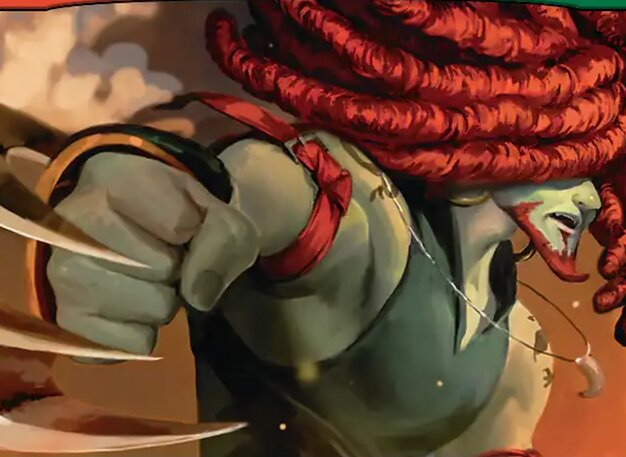
Amarant Coral Commander Deck Guide


 Commander2
Amarant Coral is a Gruul combat commander that turns one successful hit into damage for the entire table.
Public decks: 1Bracket: 3

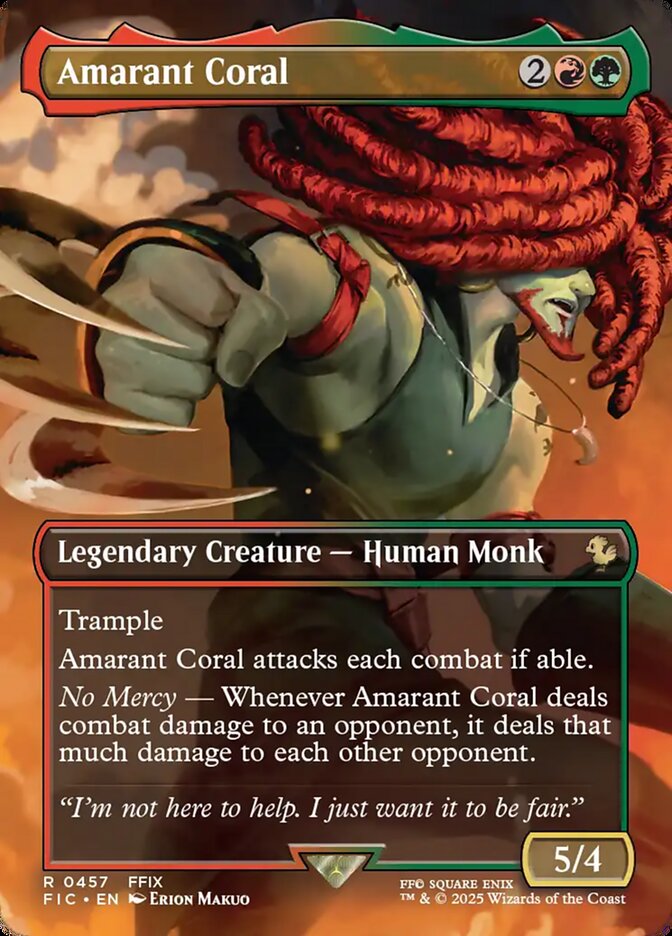
Card text
Legendary Creature — Human Monk
Trample
Amarant Coral attacks each combat if able.
No Mercy — Whenever Amarant Coral deals combat damage to an opponent, it deals that much damage to each other opponent.
Building around this commander?
Use MTG Master to build or analyze a Commander deck around this card, check consistency, and find weak spots before your next game.
Overview
- Build around getting Amarant through combat, then let its combat-damage trigger pressure every other opponent at once.
- Trample helps convert a larger body into reliable player damage, making power boosts and evasion support especially relevant.
- Because Amarant must attack each combat if able, the deck needs to plan for forced attacks and unfavorable blocks.
- The game plan is proactive: develop mana and protection, deploy Amarant, then make each combat step a meaningful threat.
- A single public deck snapshot suggests a combat-focused shell with equipment, protection, removal, and potential extra-combat support, but these are examples rather than established norms.
Common lines
- Ramp into Amarant, then attack the opponent least able to absorb or block the damage.
- Increase Amarant's power or improve its ability to connect so one combat trigger drains the rest of the table.
- Use protection or interaction to keep the attack step from becoming a costly trade.
- Follow up a successful attack with additional combat steps when available to compound table-wide pressure.
Strengths
- Converts combat damage to one opponent into damage against every other opponent.
- Trample gives Amarant a natural way to push damage past blockers.
- A single large attacker can threaten multiple life totals without needing a wide board.
- Gruul colors support a direct, proactive combat plan with access to mana development and permanent interaction.
Weaknesses
- Amarant has to connect in combat before its table-wide damage matters.
- The forced-attack clause can expose it to poor blocks, removal, or unfavorable combat situations.
- A commander-centric plan can lose momentum when Amarant is repeatedly answered.
- Large blockers, fog-style prevention, and damage prevention can blunt the primary plan.
- The deck may struggle to pressure opponents who can consistently deny combat damage.
Rule zero notes
- Amarant's trigger deals damage to every other opponent whenever it connects, so its attacks can rapidly change the whole table's life totals.
- The lone deck snapshot includes extra-combat effects; disclose that possibility if your list leans into repeated attack steps.
- The snapshot also points toward high-damage combat payoffs, which can create sudden multiplayer finishes.
- No established lock or stax package is indicated by the available snapshot.
- With only one public deck represented, discuss your specific list's speed, protection, and finishing lines rather than assuming a standard build.
Matchups
Best into
- Creature-light decks that have difficulty placing meaningful blockers in front of Amarant.
- Midrange tables where opponents' life totals can be pressured over several combat steps.
- Pods that rely on one opponent being safe behind a smaller defensive board.
- Slower battlecruiser games where a large trampling attacker has time to take over combat.
Struggles against
- Token-heavy or creature-dense tables that can repeatedly chump block or force bad attacks.
- Removal-heavy pods that can answer Amarant before combat damage happens.
- Decks built around preventing combat damage or making attacks unprofitable.
- Fast combo tables where combat pressure may not arrive quickly enough.
FAQ
How does Amarant Coral usually win?
Amarant typically wins by repeatedly connecting with a large trampling body and spreading that combat damage to each other opponent. Extra combat steps or high-damage payoffs can make that clock much shorter.
Does Amarant need to deal combat damage to every opponent?
No. It only needs to deal combat damage to the opponent it attacks; its trigger then deals that much damage to each other opponent.
Why is trample important here?
Trample helps convert power into actual player damage through blockers. That matters because the triggered damage is based on the combat damage Amarant dealt to the attacked opponent.
What is the main deckbuilding constraint?
Amarant attacks each combat if able, so the list needs ways to make attacks safe, productive, or worth the risk. Protection, favorable combat tools, and interaction all help support that requirement.
What bracket does this commander fit?
The only available public deck listing is in bracket 3. With such a small sample, the commander can be tuned in different directions and should be discussed based on the actual list.