
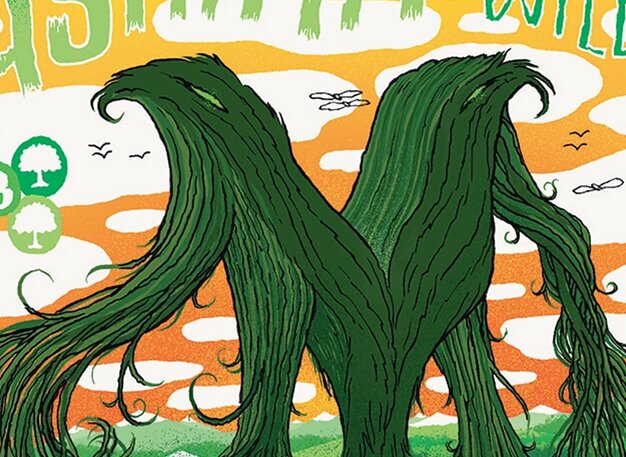
Ashaya, Soul of the Wild

 Commander
A mono-green commander that turns your creature board into lands, letting you scale threats with land count and leverage land-based engines in combat-focused games.

Public decks: 2Bracket: Varies
Card text
Legendary Creature — Elemental
Ashaya's power and toughness are each equal to the number of lands you control.
Nontoken creatures you control are Forest lands in addition to their other types. (They're still affected by summoning sickness.)
Overview
- Plays like a land-and-creature snowball deck: develop mana and bodies, then let Ashaya turn your board into Forests.
- Ashaya itself is often a huge beater, growing naturally as you make land drops and ramp.
- Because nontoken creatures become lands, you can sometimes blur the line between creature ramp and land ramp, and certain land-matters effects get more mileage than usual.
- Games typically hinge on keeping Ashaya on the table long enough to turn small creatures into meaningful mana and board presence.
- Closing often comes from overwhelming combat pressure rather than a single deterministic finish, though land tutors and recursion can support a more focused endgame.
Common lines
- Ramp early, then land Ashaya and immediately convert your existing creatures into functional mana sources and land count.
- Use land tutoring or land recursion to keep land drops flowing and keep Ashaya sized up through interaction.
- Attack with an oversized Ashaya while the rest of your board continues to contribute mana for post-combat development.
- If the table answers Ashaya, rebuild with mana creatures and land engines, then recast and re-stabilize.
Strengths
- Explosive scaling: land count naturally turns into power, toughness, and mana velocity once Ashaya sticks.
- Mono-green consistency at finding lands and keeping land drops flowing.
- Combat pressure is reliable: a large commander plus a wide board can end games without needing many specific pieces.
- Resilience to some spot removal lines because the deck can keep progressing with lands and mana development.
Weaknesses
- Highly commander-centric: removing Ashaya can shut off a lot of the deck’s “creatures-as-lands” leverage.
- Vulnerable to sweepers that punish creature boards; rebuilding can be slower if your ramp was creature-heavy.
- Turning creatures into lands can create awkward exposure to effects that interact with lands, depending on your pod’s answers.
- May struggle to interact with fast, noncombat wins if your build is light on stack interaction (typical for mono-green).
Rule zero notes
- Mention whether your list is primarily combat/ramp or if it includes any combo finishes built around creatures counting as lands.
- Call out if you run strong land-tutor or land-recursion density (for some tables, that reads closer to an engine deck than a stompy deck).
- If you play prison-like land interactions or repeatable resource denial via land-centric lines, flag it up front.
Matchups
Best into
- Creature-heavy midrange pods where a huge board and big commander damage race well.
- Slower tables that give you time to establish ramp, land drops, and a critical mass of creatures.
- Metas where spot removal is common but repeated sweepers are less frequent.
Struggles against
- Fast combo tables that win before combat pressure matters.
- Pods with frequent board wipes and exile-based answers to commanders.
- Heavy land-hate environments where being “land-dense” can be a liability.
FAQ
What is Ashaya trying to do in most games?
Ramp and build a creature board, then let Ashaya convert that board into Forests so your mana and your threats scale together.
How does the deck usually win?
Most wins come through combat: an enormous Ashaya and an increasingly wide board that can keep developing while attacking.
Do I need specific cards to make Ashaya work?
Not necessarily; Ashaya is functional with generic ramp and creatures. With very limited public data, specific inclusions (like Crop Rotation or Life from the Loam) should be treated as examples rather than defaults.
What should I protect most?
Ashaya itself and your ability to keep making land drops; if Ashaya survives a turn cycle, the mana and pressure swing is often dramatic.
What kinds of interaction hurt this plan the most?
Board wipes and commander removal are the biggest setbacks, because so much of the deck’s leverage comes from Ashaya being in play alongside a creature board.