
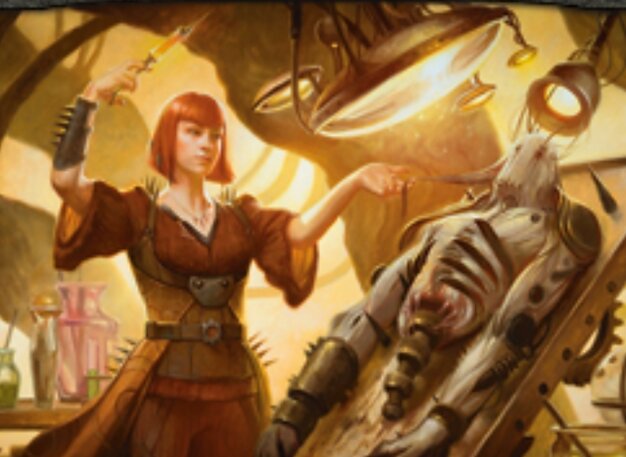
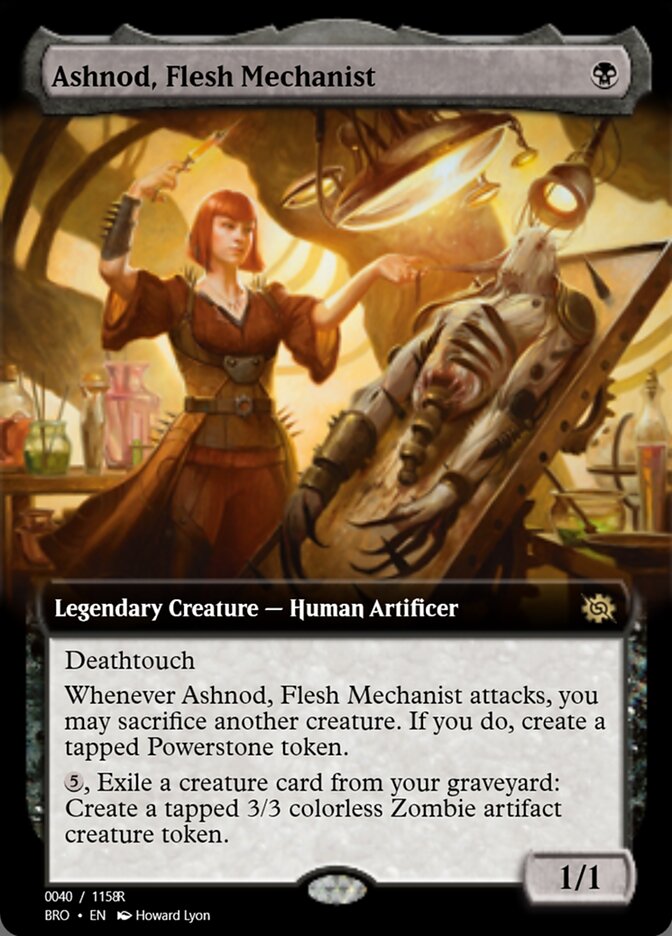
Ashnod, Flesh Mechanist
 Commander
A one-mana mono-black attacker that turns spare creatures into Powerstones, then cashes graveyards in for 3/3 Zombie artifacts and big mana payoffs.
Public decks: 1Bracket: Varies
Card text
Legendary Creature — Human Artificer
Deathtouch
Whenever Ashnod attacks, you may sacrifice another creature. If you do, create a tapped Powerstone token.
 , Exile a creature card from your graveyard: Create a tapped 3/3 colorless Zombie artifact creature token.
Overview
- Get Ashnod down early and start attacking to convert expendable bodies into tapped Powerstone tokens.
- Leans into sacrifice fodder and recursion so the attack trigger stays online without running out of creatures.
- Uses Powerstones as a steady ramp engine to support expensive artifacts and large late-game mana sinks.
- Turns graveyard creatures into board presence with Ashnod’s {5} activation, helping rebuild after trades or sweepers.
- Often closes with a big mana finisher or by overwhelming combat with artifact Zombies and large threats.
Common lines
- Turn 1 Ashnod, then attack early; if blocks happen, deathtouch makes combat awkward while still enabling the sacrifice trigger.
- Attack, sacrifice a disposable creature, make a Powerstone; repeat over multiple turns to quietly stockpile mana.
- Trade creatures aggressively, then later exile them from your graveyard to produce 3/3 Zombie artifact tokens and stabilize the board.
- Use removal to clear profitable attacks, then pivot into spending Powerstones on high-impact plays.
Strengths
- Very fast commander deployment that starts generating value early.
- Natural synergy between sacrifice, combat trading, and using the graveyard as a resource.
- Powerstones give a reliable ramp plan in mono-black that scales into the late game.
- Deathtouch discourages blocks and makes Ashnod a credible early deterrent.
- Can pivot between grind (tokens/attrition) and bursty mana payoffs (e.g., Exsanguinate as an example finisher).
Weaknesses
- Attack-triggered engine can be slowed by pillow-fort effects, repeated fogging, or boards that punish attacking.
- Token production is tapped and mana-intensive, so it can be clunky when behind or under pressure.
- Graveyard hate can shrink the value of the {5} exile activation and reduce rebuild potential.
- If the table keeps your sacrifice fodder cleared, Ashnod may struggle to keep making Powerstones.
- Artifact interaction can matter more than usual because Powerstones and many payoffs are artifacts.
Rule zero notes
- This commander wants to attack early and sacrifice creatures as part of its core engine; games can involve lots of combat trades and resource grinding.
- The deck can generate large amounts of mana over time via Powerstones and mana doublers (Crypt Ghast is an example), which may enable big swing turns.
- Expect some black removal and sacrifice-based card draw (Annihilating Glare and Deadly Dispute are examples).
- Some builds may include fast-start cards (Dark Ritual is an example), so clarify how explosive your opening turns can be.
Matchups
Best into
- Creature-heavy midrange pods where combat trades are common.
- Slower tables that give you time to accumulate incremental Powerstone mana.
- Decks that rely on a few key creatures sticking around (your removal plus deathtouch combat can line up well).
Struggles against
- Turbo-combo pods that race past incremental combat-based value.
- Heavy graveyard-hate tables that keep exile effects online consistently.
- Stax or pillow-fort setups that tax attacking or make combat irrelevant.

FAQ
Do I have to be an all-in sacrifice deck?
Not necessarily; Ashnod mainly asks for expendable creatures to feed the attack trigger, and you can lean more toward artifacts/big mana once Powerstones start stacking up.
How do these games usually end?
Common closes are a big mana drain spell (Exsanguinate as an example) or combat pressure from repeated 3/3 Zombie artifact tokens plus large artifact threats.
Is Ashnod more aggressive or more grindy?
Typically both: you start with early attacks for Powerstones, then transition into a slower inevitability plan fueled by ramp and graveyard-to-board conversion.
What should I sacrifice to the attack trigger?
Usually your least valuable creature or something that wants to die anyway; the goal is to keep Ashnod attacking while maintaining enough bodies to not fall behind on board.
How important is the graveyard activation?
It’s a key late-game lever: exiling creature cards turns earlier trades into real board presence, but it can be pressured by graveyard hate or by running low on creatures in the yard.