
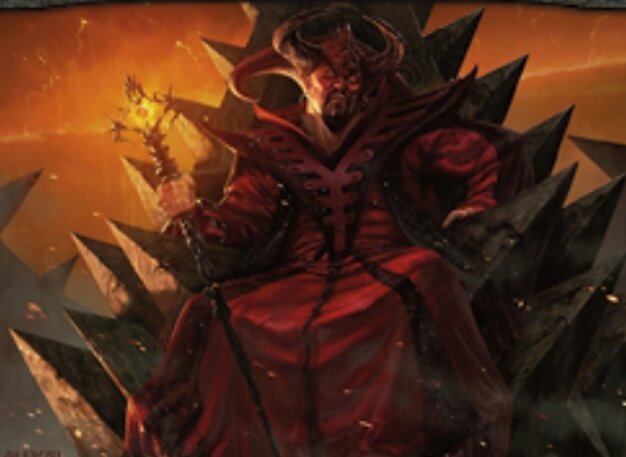
Asmodeus the Archfiend


Asmodeus the Archfiend turns your draw step into a stockpile, then cashes it in for huge hand refills at the cost of time, mana, and life.
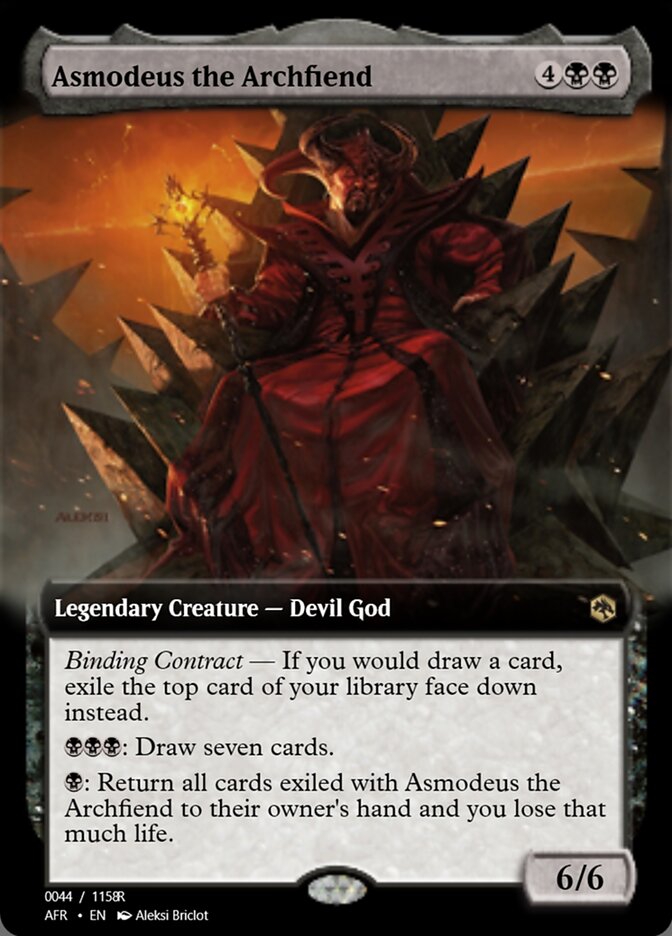
Public decks: 1Bracket: Varies
Overview
- Plays like a mono-black engine deck: stick Asmodeus, bank cards in exile, then convert mana into a burst of seven and a delayed hand reload.
- Because Asmodeus replaces your draws, games often revolve around sequencing your “real” cards (tutors, removal, sweepers) before turning him on.
- Typically wants lots of mana to activate {B}{B}{B} repeatedly and still keep interaction up.
- Often closes by leveraging the massive hand to assemble a finisher or a draining endgame, while managing the life-loss “bill” when you return the exiled cards.
- Table role tends to be control-leaning midrange: answer key threats, then overwhelm with raw card volume.
Common lines
- Develop mana, interact early, then land Asmodeus once you can either protect him or immediately activate him.
- Activate the seven-card draw when you have excess mana, then choose the safest window to pay {B} to put the exiled cards into hand (accepting the life hit).
- Use sweepers to reset creature boards, then pivot into a big-mana turn that refills and stabilizes at once.
- Turn extra cards into a decisive resource swing: tutor for a finisher, or set up a recursion line to keep threats coming back.
Strengths
- Explosive card throughput once online, especially in longer games where you can activate multiple times.
- Mono-black access to efficient removal and board wipes to buy time for your engine.
- Scales well with big mana and can convert resources into a single backbreaking turn.
- Can pivot between control, combo-leaning lines, and drain-based finishes depending on draws.
Weaknesses
- Asmodeus shuts off normal drawing, so mis-sequencing can strand you without access to the cards you’re “banking.”
- Relies heavily on the commander sticking; removal at the wrong moment can set you back significantly.
- Life loss is a real constraint when you finally take the exiled cards, especially under pressure or against chip-damage pods.
- Mana-hungry: you often want lots of black mana to activate and still interact, so stumbles can be punishing.
- Graveyard hate and exile-based answers can reduce the effectiveness of common recursion plans.
Rule zero notes
- This commander replaces all draws; clarify how you handle exiled face-down cards and tracking to avoid confusion.
- If you’re running fast mana or high tutor density (for example Chrome Mox and Demonic Tutor), mention the deck’s speed expectations.
- If you lean into powerful engine turns (for example Bolas's Citadel or Razaketh, the Foulblooded), disclose that the deck can have “one big turn” finishes.
- Call out if your win plan is primarily life-drain (for example Exsanguinate/Gray Merchant of Asphodel) versus a more combo-leaning setup.
Matchups
Best into
- Creature-heavy midrange pods where sweepers and spot removal can keep the board manageable
- Slower value tables where a big draw engine can take over the late game
- Decks that struggle to punish life totals quickly
Struggles against
- Fast combo pods that end the game before a six-mana engine matters
- Aggressive burn or combat tables that pressure life totals early and often
- Heavy permission/stack-interaction metas that can repeatedly stop the key activation windows
- Decks that regularly exile key permanents or blank recursion
FAQ
Do I have to stop drawing cards entirely with Asmodeus out?
Yes; any time you would draw, you exile the top card face down instead. Plan to “draw seven” via his ability and then later return the exiled cards to your hand.
When should I use the {B} ability to take the exiled cards?
Usually when you can safely absorb the life loss and immediately convert the cards into stabilization or a win push. Waiting can be correct, but don’t wait so long that you die with a pile banked.
What kinds of win conditions fit this commander?
Big mana into table-drain and overwhelming card advantage are common directions; examples from the snapshot include Exsanguinate and Gray Merchant of Asphodel. The main idea is to turn your huge hand into a decisive swing.
Is this deck more control or more combo?
It can play either way depending on build choices; the snapshot hints at both interactive control tools (for example Damnation, Deadly Rollick) and explosive engine/tutor lines (for example Demonic Tutor, Bolas's Citadel).
What should I watch out for at the table?
Early life pressure and well-timed removal on Asmodeus are the biggest punishers. Also be mindful that your normal draw effects become “banked” cards, which can slow you down if you weren’t planning for it.