
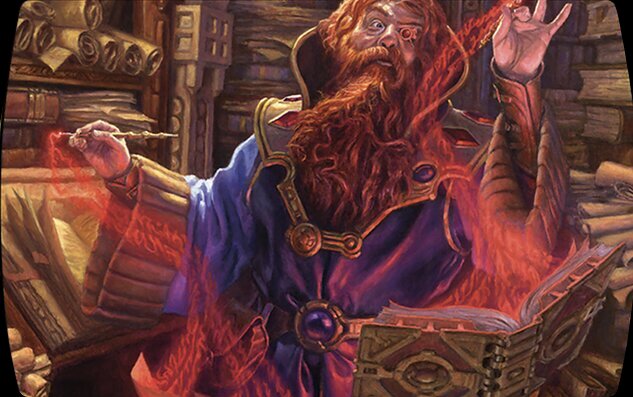
Commodore Guff



 Commander
Jeskai planeswalker-centric commander that snowballs loyalty and converts a growing superfriends board into cards plus table-wide damage.
Public decks: 1Bracket: 4

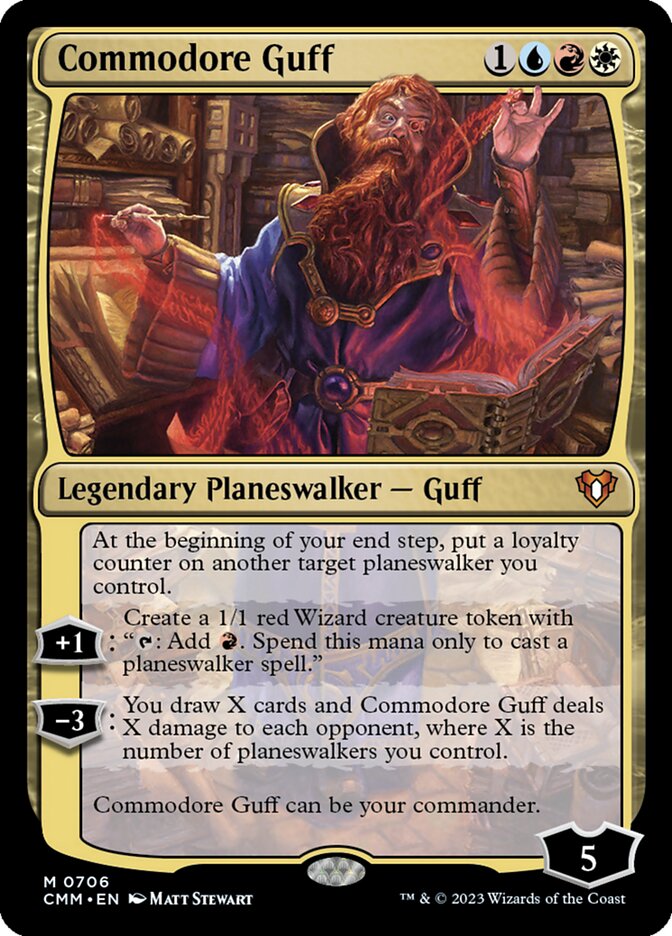
Card text
Legendary Planeswalker — Guff
At the beginning of your end step, put a loyalty counter on another target planeswalker you control.
+1: Create a 1/1 red Wizard creature token with " : Add . Spend this mana only to cast a planeswalker spell."
−3: You draw X cards and Commodore Guff deals X damage to each opponent, where X is the number of planeswalkers you control.
Commodore Guff can be your commander.
Building around this commander?
Use MTG Master to build or analyze a Commander deck around this card, check consistency, and find weak spots before your next game.
Overview
- Plays like a superfriends shell: land a few planeswalkers, protect them, and let loyalty accrue over time.
- Your end step trigger steadily grows a second planeswalker, helping you keep key walkers out of range and closer to ultimates.
- The +1 makes a Wizard that ramps specifically into more planeswalkers, helping you chain walkers in the midgame.
- The −3 is your main pivot turn: it turns your planeswalker count into a burst of cards and damage to every opponent.
- Typically wants time and board stability; the deck performs best when it can set up and keep walkers on board for multiple turns.
Common lines
- Deploy Commodore Guff, then use +1 to generate a mana token that helps cast your next planeswalker.
- Curve into additional planeswalkers, then use the end step trigger to add loyalty to the one most in danger or most important to progress.
- After you assemble multiple planeswalkers, fire −3 to refill your hand and soften the table with a damage sweep to opponents.
- Repeat the pattern of adding walkers, protecting the board, and using −3 as a catch-up or closing tool when your planeswalker count is high.
Strengths
- Scales naturally with the number of planeswalkers you can keep in play; payoff grows without needing a specific combo piece.
- Built-in card advantage and reach via −3, letting you convert board presence into both resources and pressure.
- End-step loyalty support makes it easier for other planeswalkers to survive and reach their higher-impact abilities.
- Mana production from +1 helps you continue committing to the board even after spending turns on noncreature permanents.
Weaknesses
- Relies on maintaining multiple planeswalkers; losing them can turn −3 into a low-impact play.
- Can be pressured by fast combat starts if you can’t stabilize the battlefield early.
- Superfriends-style boards can draw attention; opponents often coordinate attacks and removal to keep walkers off the table.
- The commander’s biggest swing (−3) is tied to board state, so it can be awkward from behind or after a wipe.
Rule zero notes
- Mention that the deck is planeswalker-centric and tends to win by accruing value over multiple turns.
- Call out how quickly you expect to deploy multiple planeswalkers in a typical game at your table.
- Disclose whether your build is focused on incremental advantage or on setting up a big −3 swing to close.
- If you’re running lots of effects that make combat difficult or discourage attacks, flag that up front since it changes table dynamics.
Matchups
Best into
- Slower midrange pods that give you time to assemble multiple planeswalkers
- Creature-light control tables where combat pressure is lower
- Games where opponents are light on direct planeswalker interaction
Struggles against
- Fast aggro and go-wide creature decks that can reliably attack planeswalkers
- Pods with frequent board resets that repeatedly clear your walkers and tokens
- Tables with high density of direct removal aimed at planeswalkers

FAQ
What is Commodore Guff trying to do each game?
Stick multiple planeswalkers, protect them long enough to snowball loyalty, and turn your planeswalker count into cards and damage with −3.
Is the +1 mostly ramp or defense?
Often both: the token can block in a pinch, but its main job is to help you cast more planeswalkers to raise your overall count.
When should I use the −3?
Typically when you have enough planeswalkers that the draw and damage swing the game—either to refuel after committing to the board or to help close before opponents can answer your walkers.
How does the end step loyalty trigger matter in practice?
It usually lets you keep a key planeswalker out of danger or accelerates another walker toward its higher-impact abilities, which compounds over several turns.