

Edea, Possessed Sorceress Commander Deck Guide



 Commander
Edea turns every combat step into a temporary theft effect, then converts borrowed bodies into cards by letting them die on your terms.
Public decks: 1Bracket: Varies

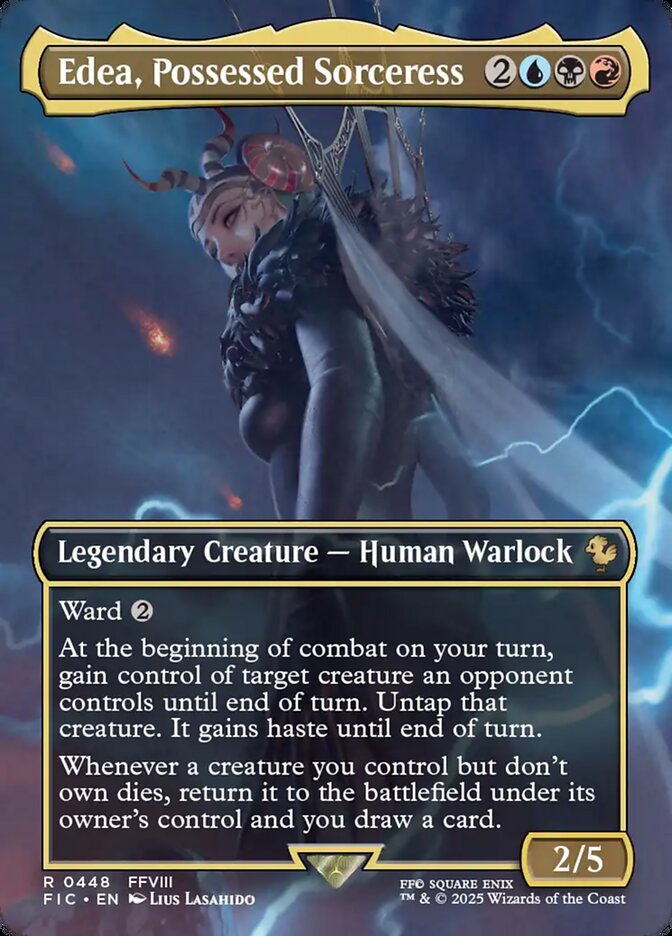
Card text
Legendary Creature — Human Warlock
Ward
At the beginning of combat on your turn, gain control of target creature an opponent controls until end of turn. Untap that creature. It gains haste until end of turn.
Whenever a creature you control but don't own dies, return it to the battlefield under its owner's control and you draw a card.
Building around this commander?
Use MTG Master to build or analyze a Commander deck around this card, check consistency, and find weak spots before your next game.
Overview
- Play a Grixis midrange-control game until Edea sticks, then start stealing the best creature each combat.
- Lean into sacrifice outlets and removal so the creature you borrowed dies under your control, can’t be reclaimed, and replaces itself with a card.
- Use the table’s own threats as your pressure plan, often forcing awkward blocks and redeploys from creature decks.
- Extra combat steps can snowball quickly by letting you steal multiple creatures in a single turn cycle.
- Ward {2} helps Edea survive spot removal, but you still want to plan for recasts and protection.
Common lines
- Resolve Edea, move to combat, steal the scariest attacker/engine creature, then immediately convert it into value via a sac outlet or a favorable trade in combat.
- Hold up interaction, steal a key blocker on your turn to open lanes, then let it die to shrink an opponent’s board while you draw.
- Set up a board wipe where Edea’s borrowed creature also dies, turning a reset into additional card advantage.
- When you find an extra-combat effect, chain combats to repeatedly borrow different creatures and overwhelm the board state.
Strengths
- Strong against creature-based plans: you steal their best piece and make it hard for them to profitably attack or block.
- Built-in card advantage when borrowed creatures die, which can keep you stocked through grindy games.
- Naturally disruptive without needing many dedicated stax pieces, since theft often doubles as removal/tempo.
- Flexible win patterns: you can win via combat using stolen threats, or via sacrifice payoffs if your build leans that way.
Weaknesses
- Relies heavily on opponents presenting good creatures; pods with few creatures can leave your commander underpowered.
- Graveyard exile and replacement effects can reduce the value of sacrifice-centric lines and make your payoffs clunkier.
- Edea is four colors worth of pips in three colors and wants to be recast; mana constraints and commander tax can matter.
- Theft effects can paint a target on you and lead to early coordination from the table.
Rule zero notes
- This deck’s core play pattern involves stealing opponents’ creatures repeatedly; confirm the table is okay with theft.
- Many builds will include sacrifice outlets to kill stolen creatures for value; that can feel harsher than “borrow and give back.”
- Extra-combat cards can create turns where you steal multiple creatures back-to-back; disclose if you’re leaning into that.
- Expect higher-than-normal threat perception once Edea is active, especially from creature-focused players.
Matchups
Best into
- Creature-heavy midrange pods that invest in a few high-impact bodies
- Battlecruiser tables where big attackers dominate combat
- Decks that need their commander-creature to attack or tap to function
Struggles against
- Spell-centric combo/control pods with low creature density
- Token-swarm decks where stealing one body per combat doesn’t meaningfully reduce pressure
- Strategies that don’t care if a creature dies (or actively want it to die)
FAQ
Do I have to sacrifice the creature I steal?
No—Edea only cares if it dies while you control it, so you can also trade it off in combat or let it die to a board wipe and still draw.
What happens when the stolen creature dies?
It returns to the battlefield under its owner’s control and you draw a card, so you’re mostly getting a temporary tempo swing plus a replacement card.
How does Edea actually win the game?
Typically by turning opponents’ best creatures into repeated combat damage and tempo, and by leveraging the steady card flow from creatures dying under your control to keep interaction and pressure coming.
Are extra combats important here?
They can be very strong because each combat is another theft trigger; cards like Aggravated Assault, Breath of Fury, and Full Throttle are examples that can amplify Edea’s ceiling.
What kinds of cards support the plan without being theft spells?
Free or repeatable sacrifice outlets and flexible interaction are the big ones; examples from the snapshot include Ashnod's Altar, Goblin Bombardment, and counterspells like Counterspell or Arcane Denial.