

Firkraag, Cunning Instigator Commander Deck Guide


 Commander1
A proactive Izzet combat commander that uses Dragons and goad to force the table to fight while you grow Firkraag and draw cards.
Public decks: 0Bracket: Varies

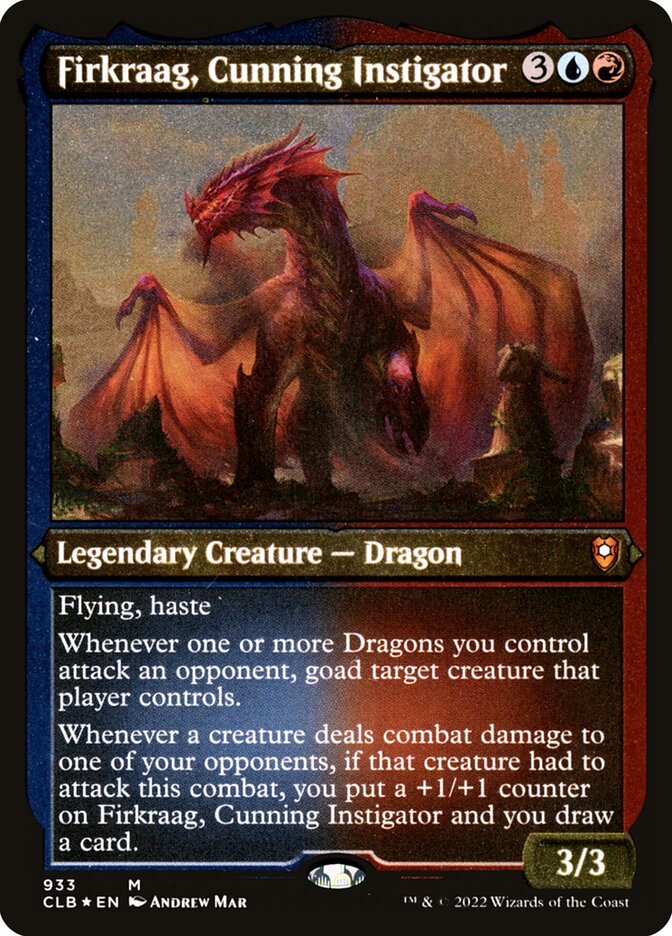
Card text
Legendary Creature — Dragon
Flying, haste
Whenever one or more Dragons you control attack an opponent, goad target creature that player controls.
Whenever a creature deals combat damage to one of your opponents, if that creature had to attack this combat, you put a +1/+1 counter on Firkraag and you draw a card.
Building around this commander?
Use MTG Master to build or analyze a Commander deck around this card, check consistency, and find weak spots before your next game.
Overview
- Lead with evasive pressure: Firkraag swings early thanks to flying and haste.
- Attack to goad key blockers or value creatures, pushing combat away from you and toward your opponents.
- Turn forced attacks into card draw whenever creatures that had to attack connect with your opponents.
- Use the extra cards to keep threats coming and maintain tempo while opponents trade resources in combat.
- Close by snowballing +1/+1 counters on Firkraag and leveraging repeated attack steps to keep the table off-balance.
Common lines
- Deploy Firkraag, immediately attack the most vulnerable opponent, and goad a creature that would otherwise stay back on defense.
- Let opponents’ forced attacks create awkward blocks and trades, then cash in on the resulting combat damage for card draw.
- Pivot attacks each turn to keep multiple players pressured and to keep the most relevant creature(s) pointed away from you.
- As Firkraag grows, start taking more assertive lines where commander damage and air superiority can end games.
Strengths
- Naturally pressures life totals with an evasive, hasty commander.
- Goad can disrupt shields-down value engines and defensive boards without spending removal.
- Card draw tied to combat helps you stay stocked while the table fights.
- Encourages opponents to interact with each other, often reducing the heat on you.
- Scales as the game goes long via +1/+1 counters on Firkraag.
Weaknesses
- Relies heavily on combat; pillow-fort effects and fog-style play patterns can blunt the plan.
- Goad is less effective against decks that don’t need to attack or that can sacrifice/ignore creatures.
- Can draw table attention if you’re consistently forcing bad combats or building a large commander quickly.
- Board states with few creatures limit the goad and draw triggers.
- Removal aimed at your commander can slow momentum, since Firkraag is central to both disruption and card flow.
Rule zero notes
- This commander pushes a lot of forced-combat gameplay; confirm the table is okay with goad-centric plans.
- Games can become politically tense since you’ll often dictate where creatures are attacking.
- Expect frequent combat math and board complexity; make sure the pod is comfortable with that pace.
- Power level can vary widely depending on how hard you lean into fast pressure versus slower Dragon combat.
Matchups
Best into
- Creature-heavy midrange pods that want to build boards and attack selectively
- Tables where players rely on key utility creatures staying back on defense
- Battlecruiser games where combat is the primary axis of interaction
Struggles against
- Spell-based combo/control shells that keep minimal boards and avoid combat
- Dedicated pillow-fort or fog-heavy strategies
- Aristocrats-style decks that profit from forced attacking and creature deaths
Recent public decks
No public decks are available yet.
FAQ
What is Firkraag trying to do each game?
Attack with Dragons to goad opposing creatures, then let forced attacks turn into card draw while Firkraag grows into a real clock.
Do I need to be all-in on Dragons?
Not necessarily, but the commander’s goad trigger keys off Dragons attacking, so most builds tend to want a meaningful Dragon package.
How does this deck usually win?
It often wins through sustained combat pressure, with a large flying commander and repeated attacks finishing weakened opponents.
Who should I attack first?
Typically the player least able to punish you on the crack-back, while goading a creature that would most disrupt your future attacks or blocks.
What should I tell the table before the game starts?
Let them know you’re playing a goad-driven combat plan that can force awkward attacks and steer combat around the table.