
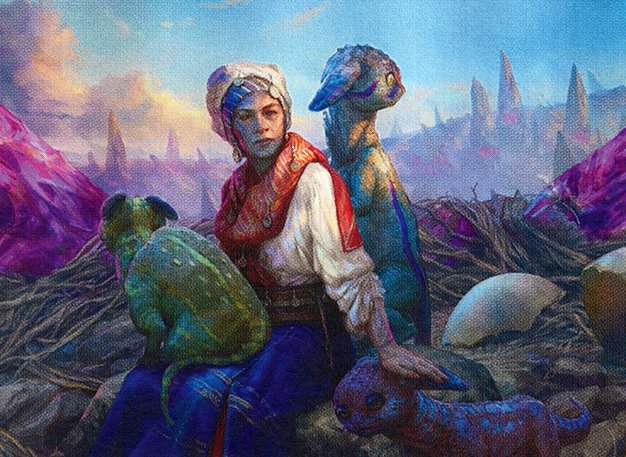
Gavi, Nest Warden Commander Deck Guide



 Commander4
A Jeskai value engine that turns cycling and extra draws into a steady stream of 2/2 Dinosaur Cats.
Public decks: 0Bracket: Varies

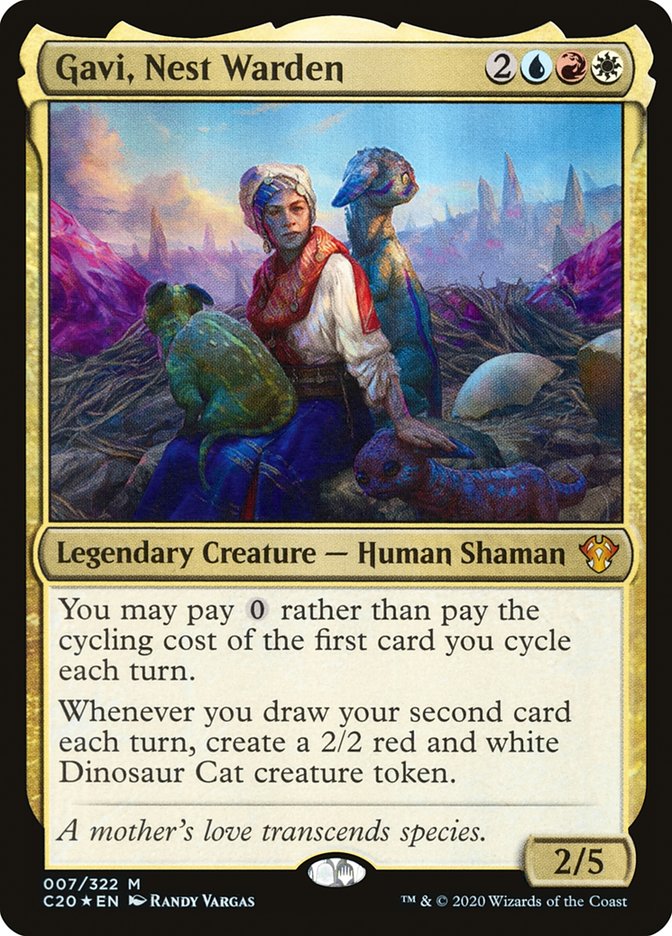
Card text
Legendary Creature — Human Shaman
You may pay  rather than pay the cycling cost of the first card you cycle each turn.
Whenever you draw your second card each turn, create a 2/2 red and white Dinosaur Cat creature token.
Building around this commander?
Use MTG Master to build or analyze a Commander deck around this card, check consistency, and find weak spots before your next game.
Overview
- Plays like a grindy engine deck: convert card flow into board presence over time.
- Wants to cycle on as many turns as possible to keep cards moving, with the first cycle each turn being effectively free.
- Aims to draw a second card on multiple turns to trigger token production and build a wide board.
- Typically pivots between holding up interaction and advancing your engine, depending on table speed.
- Often closes by snowballing tokens into combat damage once you’ve stabilized and kept cards flowing.
Common lines
- Land Gavi, then use cycling as a low-cost way to hit land drops and find answers while staying mana-efficient.
- Set up sequences where you reliably draw twice in a turn cycle (your turn plus opponents’ turns) to stack up tokens.
- Play a reactive game early, then transition into a proactive board plan once tokens accumulate.
- Use the free cycle each turn to keep up shields while still progressing your game plan.
Strengths
- Strong incremental advantage: cards in hand translate into both selection and board presence.
- Plays well at instant speed, letting you adapt to what the pod is doing.
- Resilient to single removal spells once you’ve started producing multiple tokens over several turns.
- Can stabilize against attackers by generating blockers while continuing to dig for interaction.
Weaknesses
- Commander-centric engine; removing Gavi can slow token production significantly.
- Needs a steady density of cycling and/or ways to draw a second card; hands without them can feel clunky.
- Token plan can be vulnerable to sweepers that clear accumulated board presence.
- Can be slower to actually end games if you don’t find a way to convert a wide board into a fast clock.
Rule zero notes
- This commander tends to play a long game focused on repeated value rather than quick kills.
- Let the table know whether you’re leaning into combat-wide token pressure or a more reactive, control-leaning plan.
- Clarify how much instant-speed interaction you’re running, since that can change table dynamics.
- If your build includes frequent extra draw on opponents’ turns, mention that it will generate tokens across the whole turn cycle.
Matchups
Best into
- Creature-heavy midrange pods where repeated 2/2s can trade and stabilize the board
- Interactive tables where playing at instant speed and grinding value matters
- Slower, battlecruiser-style games that give you time to build an engine
Struggles against
- Very fast combo pods that end before your engine turns on
- Heavy commander-removal tables that repeatedly tax your ability to stick Gavi
- Decks that routinely reset the board and invalidate token buildup
Recent public decks
No public decks are available yet.
FAQ
What is Gavi actually trying to do each game?
Stick Gavi, then use cycling and repeatable card draw to trigger your second-draw token maker over and over until you can win through combat.
How important is cycling density?
Very important: the free first cycle each turn is a key engine piece, so you typically want enough cycling cards to use it consistently.
Do I need to draw on opponents’ turns?
It’s often a big upgrade, because getting your second draw on multiple turns per round can multiply token output and keep you ahead.
How does the deck usually win?
Most lines trend toward building a wide board of 2/2s and converting that into lethal combat damage after you’ve stabilized.
What should I protect most?
Gavi and your ability to keep drawing; if either gets disrupted repeatedly, the deck can lose momentum and fall behind.