
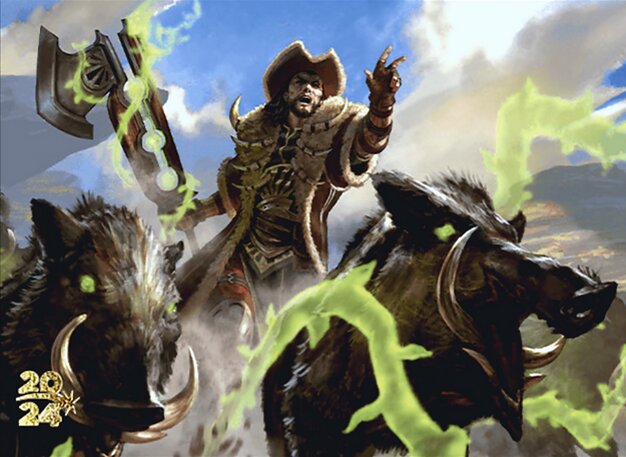
Ghired, Mirror of the Wilds


 Commander
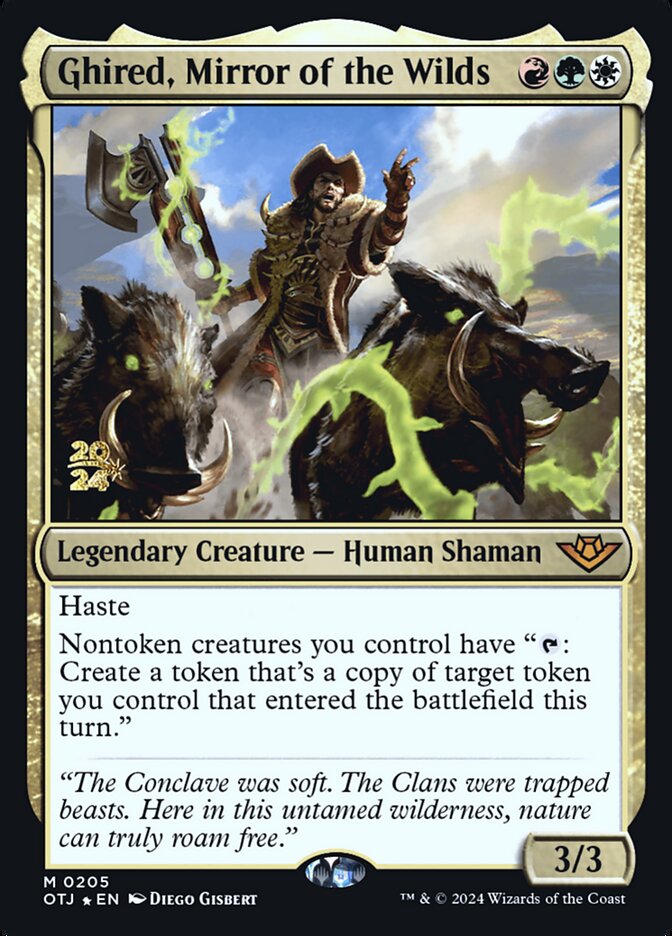
Ghired, Mirror of the Wilds plays like a Naya token engine that turns a single fresh token into a whole board by letting your nontoken creatures tap to copy it.
Public decks: 2Bracket: Varies
Card text
Legendary Creature — Human Shaman
Haste
Nontoken creatures you control have " : Create a token that's a copy of target token you control that entered this turn."
Overview
- Primary plan is to create a token each turn, then use your nontoken creatures as "copy machines" to multiply that token while it’s still the one that entered this turn.
- Because the copy ability lives on all your nontoken creatures, the deck tends to scale hard with board presence: the more bodies you have, the more copies you can make.
- Games often hinge on sequencing: make the token first, then tap creatures to copy it, then leverage the sudden board swing to pressure life totals.
- Typically closes with combat by going wide with copies, or by copying a particularly impactful token to overwhelm blockers and removal.
- You’ll usually want a mix of token production, ways to keep key creatures alive, and card draw that rewards building a battlefield.
Common lines
- Develop a few nontoken creatures early, land Ghired, then prioritize making at least one token before committing your taps for the turn.
- Create a token during your turn, then tap multiple nontoken creatures to copy that token several times, turning one effect into a burst of board presence.
- Hold up protection for the turn you plan to multiply tokens, since losing Ghired or your creature base can shut off the engine mid-setup.
- After a big copy turn, pivot immediately into attacks to convert the temporary "window" of advantage into player kills before sweepers reset the table.
Strengths
- Explosive snowball turns once you have both token production and multiple nontoken creatures online.
- Engine is distributed across your board, so a single creature can represent multiple activations rather than relying on one payoff permanent.
- Strong at converting incremental token creation into a decisive combat step.
- Access to broad Naya-style tools: creature-based value, artifact/enchantment interaction, and combat pressure.
Weaknesses
- Needs a token that entered this turn to get started; if opponents stop token creation, the copy plan can stall.
- Relies on untapped nontoken creatures; summoning sickness and tap requirements can make the deck a turn slower than it looks.
- Board wipes are punishing because they remove both your damage plan and your activation base at once.
- Spot removal aimed at Ghired can strand your setup, since the tap-to-copy text comes from the commander.
- Can struggle to play from behind if opponents keep the battlefield clear and force you to rebuild repeatedly.
Rule zero notes
- This commander can generate very large boards quickly once it starts copying tokens; mention if your build is aiming for explosive, swingy turns.
- Call out any infinite or near-infinite lines if you’re running repeatable token creation plus ways to reuse/tap/untap creatures repeatedly.
- Let the table know whether the deck is primarily combat-focused or if it’s built to assemble a combo finish.
- If you’re playing lots of protection to force through a single huge turn (for example, cards like Alseid of Life's Bounty or Loran's Escape), it’s worth flagging upfront.
Matchups
Best into
- Creature-light, removal-light pods that give you time to assemble a board
- Midrange tables where combat pressure matters and players tap out often
- Decks that rely on a few blockers rather than frequent sweepers
Struggles against
- Sweep-heavy control pods that reset the battlefield repeatedly
- Decks with lots of instant-speed interaction that can remove Ghired in response to your token-making turn
- Fast combo tables where combat-based snowballing is too slow to matter
FAQ
Do I need token-makers in the 99, or can Ghired do it alone?
You’ll need ways to create tokens yourself; Ghired only copies a token that entered this turn and doesn’t make the first one.
Why does the deck care so much about nontoken creatures?
Only nontoken creatures get the tap ability, so your creature count directly translates into how many copies you can make in a turn.
What’s the typical win condition?
Most games end through combat after a "burst" turn where you copy a fresh token multiple times and swing with an suddenly overwhelming board.
How do I protect the engine?
Protection tends to matter most on the turn you plan to start copying; some builds may use effects like Alseid of Life's Bounty, Selfless Savior, or Loran's Escape as examples.
How do I keep cards flowing once I’m committing to the board?
You generally want draw that scales with having creatures; as examples, some lists might include Harmonize, Garruk's Uprising, or Return of the Wildspeaker.