

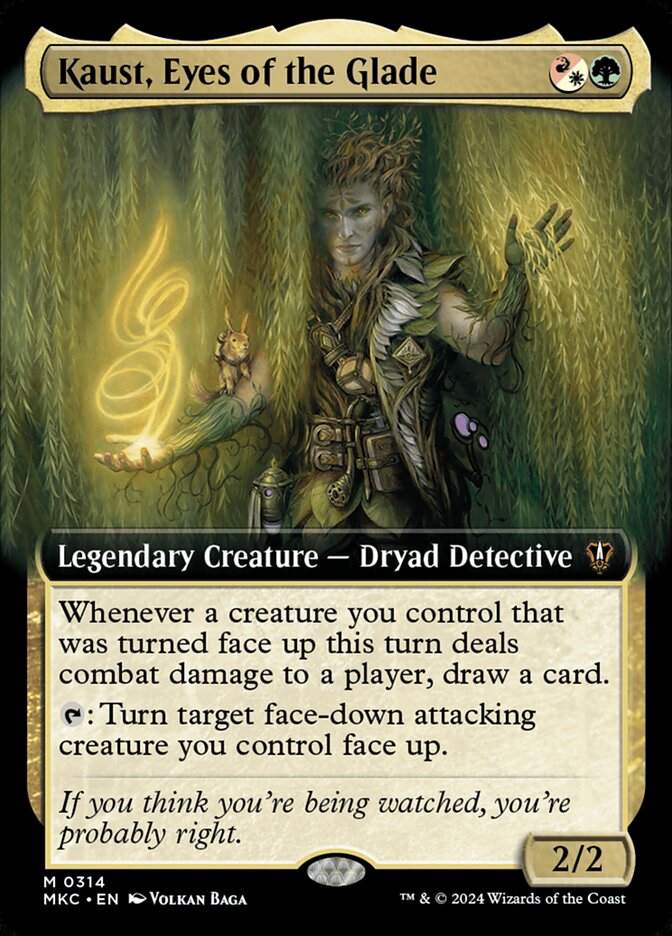
Kaust, Eyes of the Glade


A Naya combat commander that rewards turning your creatures face up mid-attack by converting damage into extra cards.
Public decks: 0Bracket: Varies
Overview
- Build around face-down attackers and ways to turn them face up during combat.
- Use Kaust’s tap ability to flip an attacking creature at the right moment, then connect to draw.
- Play a proactive combat game: pressure life totals while refilling your hand off successful hits.
- Your best turns often involve setting up attacks that make blocks awkward, then flipping post-blocks to trade up or push damage.
- Because the draw is player-damage gated, evasion and combat positioning tend to matter a lot.
Common lines
- Deploy face-down creatures early, then attack to force uncertain blocks.
- Flip one attacker with Kaust after blocks to change combat math, then try to connect for a draw.
- Use the extra cards to keep presenting attackers and maintain pressure rather than overextending into a wipe.
- Rotate which creature you flip to spread risk and keep opponents guessing.
Strengths
- Card advantage tied to combat, letting an aggressive plan keep pace in longer games.
- Combat trick potential from flipping after blocks, which can punish greedy blocks and removal timing.
- Proactive game plan that can pressure slower pods and planeswalker setups.
- Incentivizes interactive combat decisions, often creating tough blocking puzzles for opponents.
Weaknesses
- Draw engine depends on connecting with combat damage, so fogs, pillowfort, and plentiful blockers can stall you out.
- Kaust needs to tap to flip, making the engine slower and vulnerable to removal or repeated disruption.
- Creature-based plan is sensitive to sweepers; rebuilding can be awkward if you fall behind on board.
- If opponents can prevent attacks or force unfavorable combats, your card flow can dry up.
Rule zero notes
- This commander’s primary card advantage is combat-damage based; games tend to be attack-focused.
- Expect frequent combat step decisions and post-blocks flipping that can change outcomes quickly.
- Power level can swing based on how consistently the deck can enable safe connections; discuss how combat-centric the pod is.
- If you include any stealthy win lines beyond straightforward combat, it’s worth disclosing up front.
Matchups
Best into
- Slow, spell-heavy pods that take time to establish defenses
- Midrange tables relying on a few key blockers rather than wide boards
- Decks that spend early turns ramping and setting up instead of interacting in combat
Struggles against
- Pillowfort and fog-heavy strategies that shut off combat damage triggers
- Creature-swarm boards that can block profitably all game
- High-removal tables that repeatedly pick off your commander or key attackers
Recent public decks
No public decks are available yet.
FAQ
What is Kaust trying to do each game?
Attack with face-down creatures, flip them at the right time, and turn successful hits into steady card draw to keep the pressure on.
When should I activate Kaust’s tap ability?
Most often after blockers are declared, when flipping changes combat math or protects your creature while still letting you connect for the draw trigger.
Do I need to flip multiple creatures each turn to be effective?
Not necessarily; consistently setting up one good connection per turn can be enough to keep cards flowing while you develop the board.
How does this deck usually close games?
Typically by maintaining a stream of attacking creatures and using the extra cards to keep up pressure until opponents can’t stabilize.
What should I watch out for at the table?
Effects that prevent combat damage, repeated commander removal (since Kaust wants to tap), and board wipes that reset your attacking setup.