

Lightning, Army of One



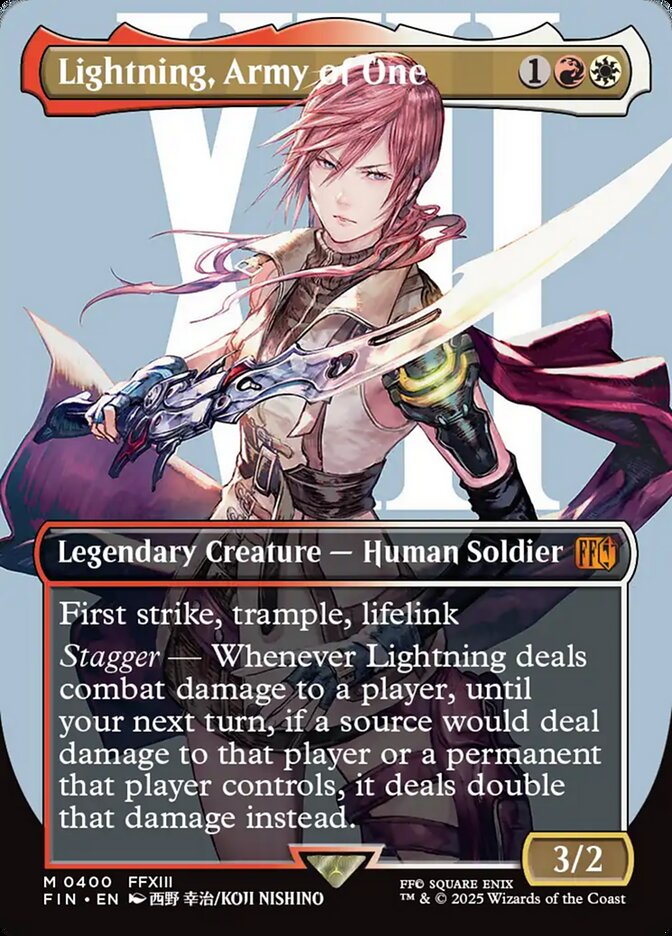
A Boros combat commander that pressures life totals and can set up a one-player damage-doubling window after connecting.
Public decks: 1Bracket: Varies
Overview
- Game plan usually revolves around getting Lightning into combat and safely connecting with a player.
- When you hit a player, you create a temporary window where that player (and their board) is much more vulnerable to incoming damage until your next turn.
- First strike, trample, and lifelink make Lightning a credible attacker that can stabilize races while still pushing damage through blocks.
- Typical turns involve choosing the “right” player to tag, then lining up a follow-up turn where your damage sources can punish them heavily.
- Plays well as a proactive, combat-forward Boros deck that can pivot between racing and survivability.
Common lines
- Deploy Lightning, then look for an opening to connect with the player least able to block profitably.
- After triggering the damage-doubling window on a player, pressure their key permanents via combat damage lines and attack sequencing.
- Use lifelink swings to buffer against crackbacks while continuing to force trades thanks to first strike.
- Pick a “marked” player, then commit to a follow-up turn where multiple damage sources point at them or their board.
Strengths
- Strong combat stats: first strike plus trample makes blocking awkward, and lifelink helps win races.
- Creates explosive, time-limited pressure on a single opponent once you connect.
- Naturally rewards tight combat math and target selection to convert one hit into a swingy next turn.
- Can threaten both life totals and board presence by making damage to that player and their permanents more punishing.
Weaknesses
- Highly combat-dependent; fog effects, pillow-fort play patterns, or repeated chump blocks can stall the plan.
- Often needs to connect with a player to unlock the scarier turns, making interaction or blockers a big deal.
- Encourages focusing one opponent, which can leave you exposed to the other two players’ development.
- Can draw table attention after the first big “marked player” turn, leading to removal and defensive play from the pod.
Rule zero notes
- This commander can create a bursty, one-player damage-doubling window after connecting; mention if your build leans into sudden lethal swings.
- Games can involve “marking” one opponent and focusing them for a turn cycle; check if your pod is okay with that dynamic.
- Because available data is very limited, clarify whether your list is primarily fair combat, or built to maximize explosive damage turns.
Matchups
Best into
- Creature combat tables where first strike/trample/lifelink translate into favorable attacks and blocks.
- Pods that tap out and give you clear attack windows to reliably connect.
- Midrange decks that rely on stabilizing with blockers and incremental life gain.
Struggles against
- Pillow-fort and fog-heavy strategies that invalidate combat steps.
- Removal-dense pods that can repeatedly answer your commander before it connects.
- Fast combo tables where combat pressure isn’t fast enough without additional support.
FAQ
What is Lightning, Army of One trying to do?
Attack early and often, then use the on-hit trigger to set up a turn cycle where one opponent takes dramatically more damage from your sources.
Do I always target the same player with the trigger?
Often you pick the player you can reliably connect with and then punish, but it can be correct to tag whoever is most vulnerable or most threatening in the moment.
How does the trigger change combat decisions?
It tends to reward planning a full turn ahead: connect now, then sequence attacks and damage on your next turn to capitalize while the window is active.
What are the main ways the deck closes games?
Typically by chaining combat steps where Lightning connects and then the follow-up turn converts the damage-doubling window into massive life-total swings against the marked player.
What should I watch out for at the table?
Expect more removal and defensive play once you demonstrate how explosive the marked-player window can be, and be careful not to overextend into a blowout.