
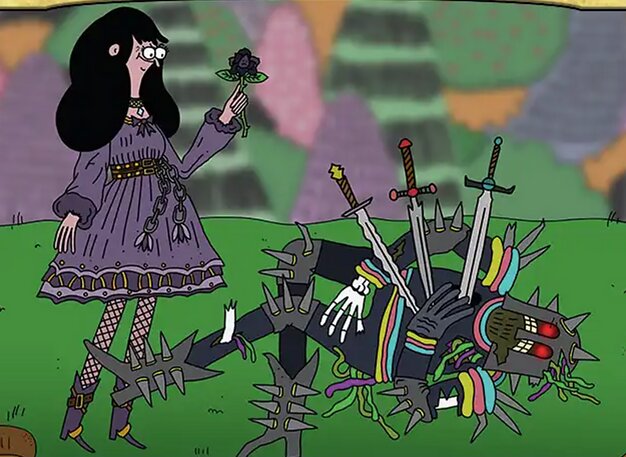
Marchesa, the Black Rose



 Commander
Marchesa, the Black Rose is a Grixis midrange-aristocrats commander that turns +1/+1 counters into repeatable sacrifice value and sticky boards.
Public decks: 4Bracket: 4


Card text
Legendary Creature — Human Wizard
Dethrone (Whenever this creature attacks the player with the most life or tied for most life, put a +1/+1 counter on it.)
Other creatures you control have dethrone.
Whenever a creature you control with a +1/+1 counter on it dies, return that card to the battlefield under your control at the beginning of the next end step.
Building around this commander?
Use MTG Master to build or analyze a Commander deck around this card, check consistency, and find weak spots before your next game.
Overview
- Get +1/+1 counters onto your creatures (often via dethrone attacks) so they come back after dying.
- Lean on sacrifice outlets to cash creatures in for value while setting up end-step rebuys.
- Play a grindy, interactive game where your creatures are awkward to answer with normal removal.
- Pivot from incremental advantages into a drain/mill finish once you can loop deaths reliably.
Common lines
- Deploy Marchesa, then attack the player with the highest life total to start stocking counters on your key creatures.
- Use a sacrifice outlet (for example Ashnod's Altar or Goblin Bombardment) to trade creatures for mana/damage while ensuring they die with counters.
- Turn death triggers into inevitability (for example Blood Artist) while protecting your setup with cheap interaction (for example Counterspell or Arcane Denial).
- Clear the board and rebuild faster than the table (for example Blasphemous Act or Crux of Fate) if your creatures are set up to return.
Strengths
- Excellent resilience to destroy-based removal and sweepers once counters are established.
- Strong grind game: repeated enters/dies patterns can generate steady cards, mana, and pressure.
- Naturally threatens multiple angles (combat, attrition, sacrifice drains, and sometimes mill).
- Access to efficient interaction in Grixis to force key turns through.
Weaknesses
- Heavily dependent on keeping +1/+1 counters on creatures; if you can’t attack safely, the engine slows down.
- Exile-based removal, bounce at the wrong time, and graveyard hate can break the recursion plan.
- End-step return timing can be punishing: creatures don’t come back immediately, so you can be exposed to crack-backs or follow-up wipes.
- Sacrifice engines can paint a target; tables may prioritize removing outlets and Marchesa.
Rule zero notes
- This commander can enable repetitive sacrifice loops; clarify whether your list is aiming for deterministic loops or just value.
- If you’re running heavy tutor density (for example Demonic Tutor, Diabolic Intent), mention it up front.
- If your win plan includes milling via a sacrifice outlet (for example Altar of Dementia), call that out for expectations.
- Explain how controlling the deck is at your table (number of counterspells/instant-speed answers).
Matchups
Best into
- Creature-heavy midrange pods that rely on combat and spot removal
- Tables that expect board wipes to reset the game
- Slow value decks that can’t pressure your life total while you set up attacks
Struggles against
- Decks packed with exile removal and graveyard hate
- Stax shells that tax attacking, sacrifice, or creature-based engines
- Fast combo tables that end the game before your recursion engine matters
Recent public decks
Staples
Browse all public decksFAQ
Do my creatures come back immediately when they die?
No. Marchesa returns them at the beginning of the next end step, so you usually plan for a delayed rebuild rather than instant protection.
What’s the easiest way to turn Marchesa on?
Attacking the player with the highest life total (or tied) gives your creatures dethrone counters, which is often the simplest way to ensure they return.
How does the deck typically win once it’s set up?
It commonly closes by converting repeated deaths into damage or other inevitability, such as draining with Blood Artist or leveraging a sacrifice outlet like Goblin Bombardment.
What kinds of removal are most annoying to face?
Exile effects and graveyard disruption are the big ones, since they stop the return trigger from mattering even if you had counters.
Is this more of a combat deck or a combo deck?
It often plays as an interactive midrange deck that uses combat to place counters, then pivots into sacrifice-based inevitability; some builds can lean harder into combo depending on card choices.