
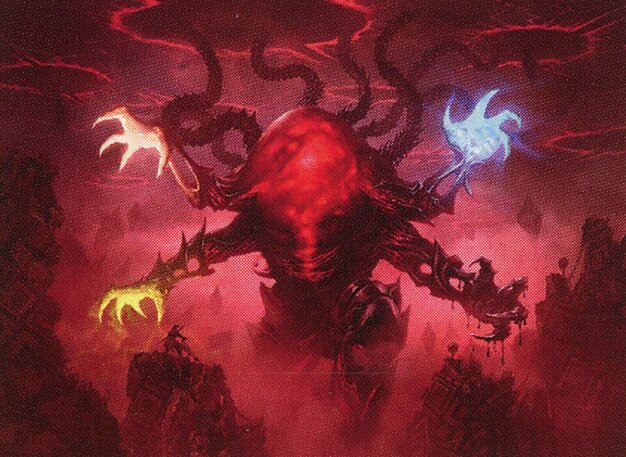
Omnath, Locus of All




 Commander
A five-color value engine that turns your first main phase into extra cards and bursts of colored mana, with a unique twist of banking leftover mana as black.
Public decks: 2Bracket: 5
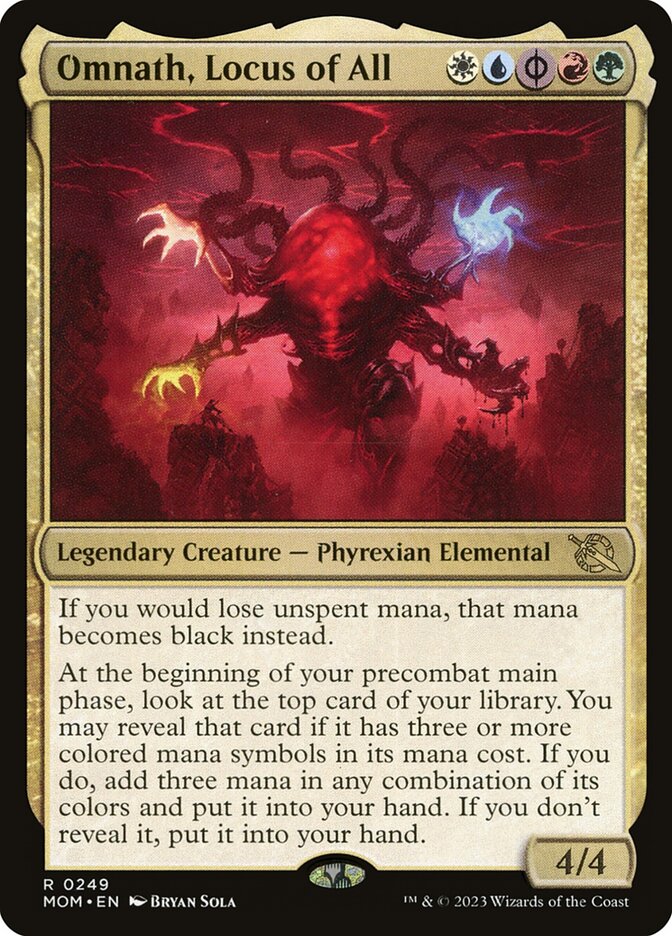
Card text
Legendary Creature — Phyrexian Elemental
If you would lose unspent mana, that mana becomes black instead.
At the beginning of your first main phase, look at the top card of your library. You may reveal that card if it has three or more colored mana symbols in its mana cost. If you do, add three mana in any combination of its colors and put it into your hand. If you don't reveal it, put it into your hand.
Overview
- Leans on Omnath’s first-main trigger to convert the top card into either a clean draw or a draw plus three mana if it’s a heavy-colored spell.
- Often plays like a ramp-and-fix deck that wants to hit land drops, keep mana open, then roll into high-impact spells with lots of colored pips.
- The “unspent mana becomes black” clause rewards floating mana across steps/phases and makes it easier to keep interaction up without wasting resources.
- Typically appreciates some amount of topdeck control so you can line up three-plus-colored hits when you need a burst turn.
- As a five-color commander, it can pivot between proactive development and reactive play depending on what the pod is doing.
Common lines
- Develop fixing early, land Omnath, then treat your first main phase as a mini-draw engine that sometimes refunds three mana to jump a turn ahead.
- Hold up mana for interaction; if you don’t spend it, you can often roll that mana forward as black for future turns instead of losing it.
- Sequence your most color-intensive spells to maximize how often Omnath’s reveal mode is live, rather than just casting the first thing you draw.
Strengths
- Consistent card access from the command zone: you always get the top card in hand each of your turns.
- Explosive turns when you reveal a high-colored card, effectively turning a draw step into a draw plus a three-mana rebate.
- Mana efficiency and flexibility: leftover mana not going to waste lets you play a more reactive, “keep options open” style.
- Five-color identity gives wide access to answers and finishers, letting the deck adapt to many table textures.
Weaknesses
- Five-color mana requirements can be punishing; stumbles in early fixing make the commander and your high-pip spells awkward.
- The burst-mana mode is conditional and can be inconsistent without ways to influence the top of your library.
- Omnath doesn’t directly protect itself; repeated removal can slow the engine and tax your mana development.
- If your build leans heavily on expensive, color-dense spells, faster pods can pressure you before your value engine takes over.
Rule zero notes
- Call out how fast your mana development is (especially if you’re running lots of artifact ramp like Arcane Signet, Fellwar Stone, Everflowing Chalice, or Basalt Monolith).
- If you include repeatable interaction engines (for example Isochron Scepter plus instants), mention it up front since it can feel lock-adjacent to some tables.
- Clarify whether your win plan is combat/value or a more compact setup based on artifacts and mana engines (example cards in this snapshot include Clock of Omens and Encroaching Mycosynth).
- Let the table know if you’re planning to play a more controlling game with multiple counters (examples here include Counterspell, Dovin's Veto, and An Offer You Can't Refuse).
Matchups
Best into
- Midrange pods where games go long enough for repeated extra-card turns to matter.
- Tables where holding up interaction is important; banking unused mana helps you keep pace.
- Battlecruiser-style games where a three-mana rebate on big spells can swing turns.
Struggles against
- Very fast combo pods that end the game before your first-main value snowballs.
- Heavy mana-denial or repeated land destruction strategies that punish five-color setups.
- Decks packed with cheap commander removal that can keep Omnath off the table.
FAQ
Do I have to reveal the top card to get the three mana?
Yes. You only get the three mana if you reveal a card with three or more colored mana symbols in its mana cost; otherwise you just put the card into your hand.
Does Omnath let me keep mana between turns?
Not exactly. Instead of losing unspent mana, it becomes black, so you can often carry it forward within the same turn structure where you’d normally lose it.
What kinds of cards make Omnath’s reveal trigger hit more often?
Cards with dense colored mana requirements tend to enable the three-mana mode more frequently, especially if you also have ways to influence your top card.
Is this commander more about value or combo?
From the card text alone it reads primarily as a value engine, but it can be built in multiple directions; with only a small public snapshot available, assume flexibility and set expectations with your pod.