
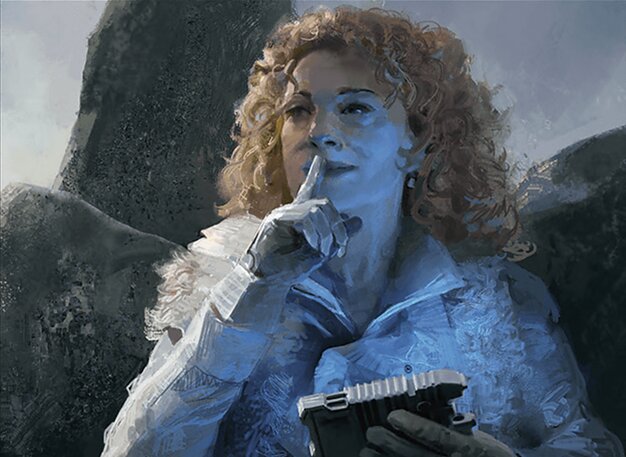
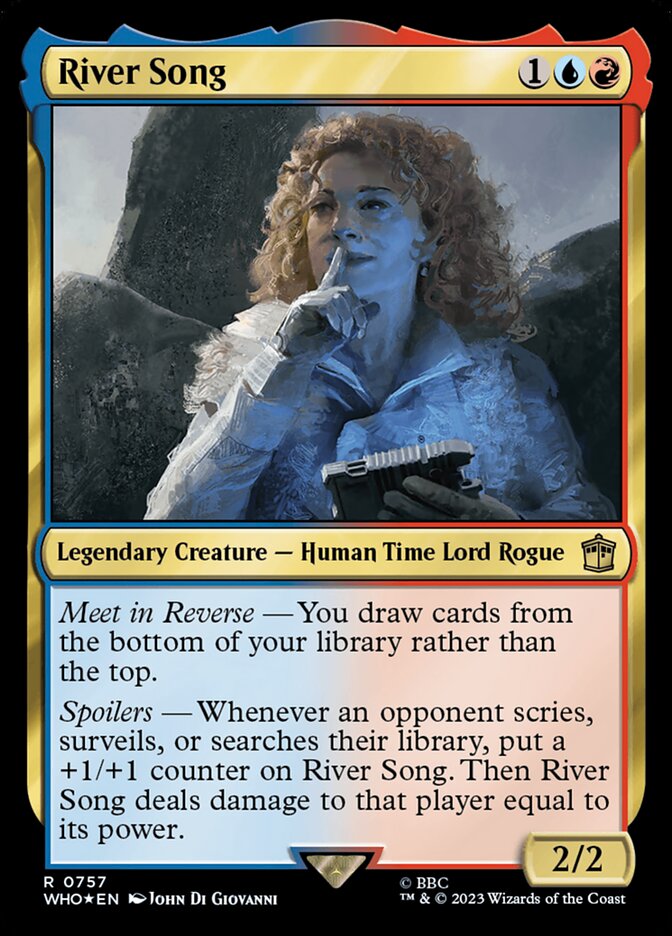
River Song



A quirky Izzet control-voltron commander that naturally punishes the table for doing normal Commander things like searching and scrying while you draw from the bottom and keep your shields up.
Public decks: 1Bracket: 4
Overview
- River Song rewrites your card flow: you draw from the bottom, so you care more about what ends up down there than what’s on top.
- Her damage trigger scales with power and hits opponents for common game actions (scries, surveils, and especially library searches), letting you convert “table development” into pressure.
- Many builds will want to keep River on the battlefield and protected long enough for counters to accumulate and the damage trigger to matter.
- Because the trigger is tied to opponents’ choices, games often play like tempo-control: answer the scariest plays, then let incidental triggers whittle life totals down.
- Closing can be commander-damage-esque combat when River gets large, plus repeated direct damage triggers when opponents can’t avoid searching forever.
Common lines
- Deploy River, then pass with interaction up and let opponents’ fetches/tutors/ramp searches turn into counters plus a damage burst.
- Use cheap card selection to stabilize hands while the commander’s unusual draw pattern keeps your draws “off-axis” from typical topdeck manipulation.
- Protect River with auras/equipment, then pivot into attacking once she’s big enough that each opponent search becomes a meaningful life swing.
- When the board gets clogged or you fall behind, reset creature swarms with a sweeper and rebuild around a protected commander.
Strengths
- Punishes ubiquitous table actions (search/scry/surveil), so opponents can feel pressured even while “just developing.”
- Scales well into the midgame: the bigger River gets, the more threatening each trigger becomes.
- Naturally fits a reactive posture; Izzet interaction can let you pick spots and protect a lead.
- Can threaten multiple axes: incremental burn from triggers plus combat pressure once River is large.
Weaknesses
- Highly commander-centric: removing River can shut off both the growth and the damage plan.
- Opponents can sometimes play around the trigger by reducing voluntary searches or sequencing them when you’re least able to capitalize.
- Creature-light or spell-heavy builds can struggle to close if River is answered repeatedly or can’t connect in combat.
- Graveyard-to-library effects and reshuffles can make “bottom-of-library” planning less reliable over a long game.
Rule zero notes
- Disclose how heavy your interaction suite is (for example, counterspells like Counterspell, Arcane Denial, or An Offer You Can't Refuse).
- If you run extra-turn effects, mention it up front (for example, Capture of Jingzhou).
- Call out any land-attack elements if present (for example, From the Ashes or Cleansing Wildfire) since that can change table expectations.
- If you include topdeck-control style pieces that can feel “locky” with the right support (for example, Counterbalance plus consistent card selection), give the table a heads-up.
- Let the pod know whether your win plan is mostly commander pressure, trigger-based burn, or a mix.
Matchups
Best into
- Ramp-and-tutor heavy pods where players search early and often
- Midrange tables that rely on repeated card selection (scry/surveil) to smooth draws
- Creature boards you can manage with sweepers while River grows into a finisher
Struggles against
- Low-search metas and battlecruiser tables that rarely tutor or fetch
- Decks packed with cheap spot removal that can keep River off the table
- Fast combo pods that can win without much searching or that force you to hold up mana every turn
FAQ
Do I need to build around drawing from the bottom?
Not strictly, but you typically get more mileage if your deck includes some way to influence what ends up on the bottom or to cash in on knowing your draw flow.
How does River Song usually win?
Many games end with River getting large from opponent triggers and either finishing via combat or turning each search into a sizable damage hit.
Will opponents just stop searching?
They can try, but in many pods searching is baked into ramp and tutoring; even “playing around it” often slows them down, which buys you time.
Is this more of a control deck or a Voltron deck?
It can lean either way; River’s trigger rewards a reactive control posture, but once she’s protected and big, pivoting into commander-style pressure is common.
What kinds of cards support the plan?
Protection and interaction tend to matter a lot, and some lists also like efficient card selection and resets (for example, Cyclonic Rift or Blasphemous Act as ways to swing tempo).