
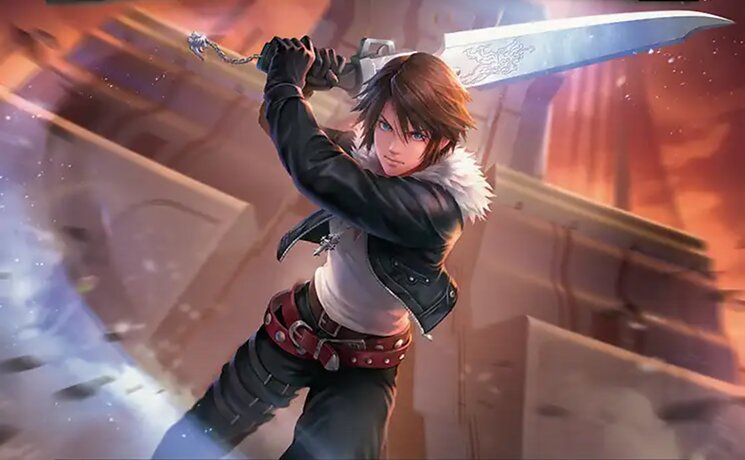
Squall, SeeD Mercenary Commander Deck Guide


 Commander14
Squall is an Orzhov lone-attacker commander that turns clean hits into a steady stream of small-permanent reanimation and snowballs combat advantages.
Public decks: 2Bracket: Varies

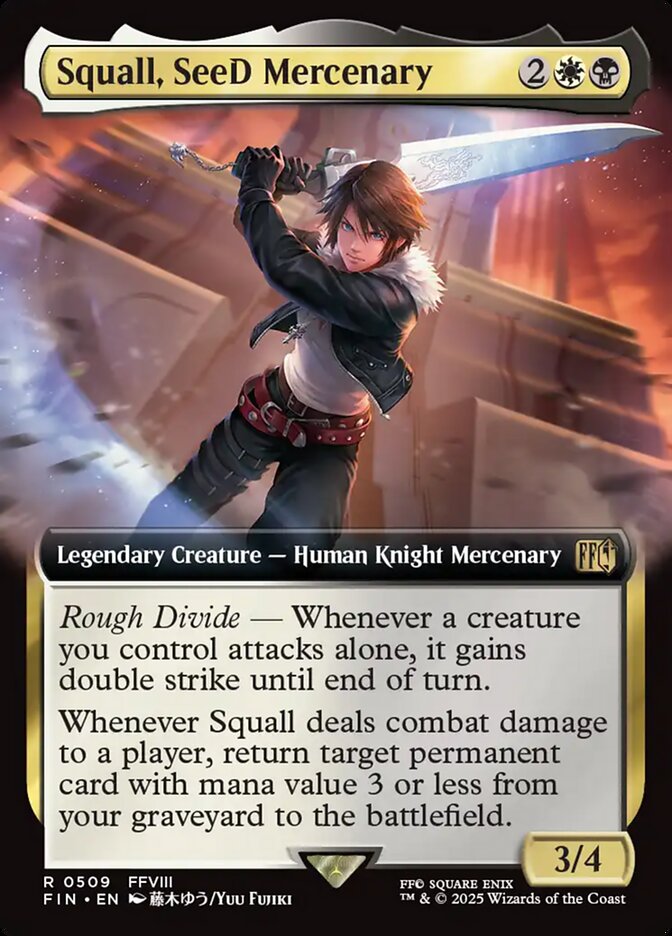
Card text
Legendary Creature — Human Knight Mercenary
Rough Divide — Whenever a creature you control attacks alone, it gains double strike until end of turn.
Whenever Squall deals combat damage to a player, return target permanent card with mana value 3 or less from your graveyard to the battlefield.
Building around this commander?
Use MTG Master to build or analyze a Commander deck around this card, check consistency, and find weak spots before your next game.
Overview
- Leans into attacking with a single creature to pick up double strike and push meaningful damage through blocks.
- Wants Squall to connect with players so you can reanimate a permanent with mana value 3 or less from your graveyard each hit.
- Often plays a grindy, resource-denial slant where your cheap permanents trade off early and then come back repeatedly.
- Can pivot between a Voltron-like plan (make one attacker scary and evasive) and a value plan (recurring utility permanents).
- Typically stabilizes with removal and sacrifice/edict-style effects, then closes by chaining combat-damage triggers over multiple turns.
Common lines
- Develop early with cheap permanents, then land Squall and start taking “one attacker” swings that are awkward to block thanks to double strike.
- Trade creatures and utility pieces early, then use Squall’s combat-damage trigger to rebuild while opponents are still spending cards to answer threats.
- Set up a path for Squall to connect (evasion or protection) so each hit effectively “draws” a permanent back onto the battlefield.
- Loop small interaction pieces over time to keep boards in check while your single attacker keeps pressure on life totals.
Strengths
- Strong snowball potential: one successful hit can immediately re-establish board presence.
- Plays well in longer games by recurring cheap permanents instead of relying on big top-end threats.
- Combat math is punishing for blockers because the lone attacker gets double strike.
- Can grind through spot removal by rebuilding from the graveyard repeatedly.
Weaknesses
- Heavily dependent on dealing combat damage to a player; fogs, pillowfort, and strong blockers can shut off your engine.
- Graveyard hate turns off a major source of advantage and can leave you playing fair off the top.
- Voltron-leaning lines can be vulnerable to well-timed removal before combat damage happens.
- Board wipes can be rough if you can’t quickly re-establish a way to connect and start reanimating again.
Rule zero notes
- This commander is combat-centric and expects to win via repeated lone-attacker hits and snowballing value.
- The deck can include grindy recursion of cheap permanents; some tables may find repeated reuse of interaction oppressive.
- May run discard and edict-style effects as part of a resource-denial plan (for example cards like Delirium Skeins, Innocent Blood, or Fleshbag Marauder).
- May use self-mill/discard enablers to stock the graveyard (for example Codex Shredder or Ghoulcaller's Bell).
- Power expectation here is bracket 1; if you tune toward faster protection/evasion to guarantee hits, mention that up front.
Matchups
Best into
- Slower, creature-based midrange pods where combat matters and games go long
- Decks that rely on a few key creatures (edict-style interaction can line up well)
- Removal-light tables where Squall can safely connect multiple turns in a row
Struggles against
- Pillowfort and token-heavy defenses that prevent clean attacks
- Graveyard-focused hate packages (rest in peace-style effects) that blank the reanimation plan
- Faster combo tables where “hit you in combat” is too slow to matter
FAQ
Do I have to attack with Squall to get double strike?
No. Any creature you control that attacks alone will gain double strike, so Squall can support a separate lone threat.
What kind of cards does Squall like to reanimate?
Permanents with mana value 3 or less that trade early or provide repeatable value, like small removal pieces, utility artifacts/enchantments, or cheap creatures.
How does this deck usually win?
Most wins come from combat: a protected/evasive lone attacker chips hard with double strike while Squall’s hits keep refilling your board until opponents can’t keep up.
Is this a Voltron commander?
It can be, but it doesn’t have to be; Squall often plays like a midrange value engine that happens to reward a Voltron-style “one attacker” plan.
What stops Squall the most?
Not being able to connect (blockers, fogs, pillowfort) and graveyard hate are the biggest checks on the deck’s engine.