

Suki, Kyoshi Warrior


A Selesnya go-wide combat commander that turns every attack into more bodies and grows into a massive threat.
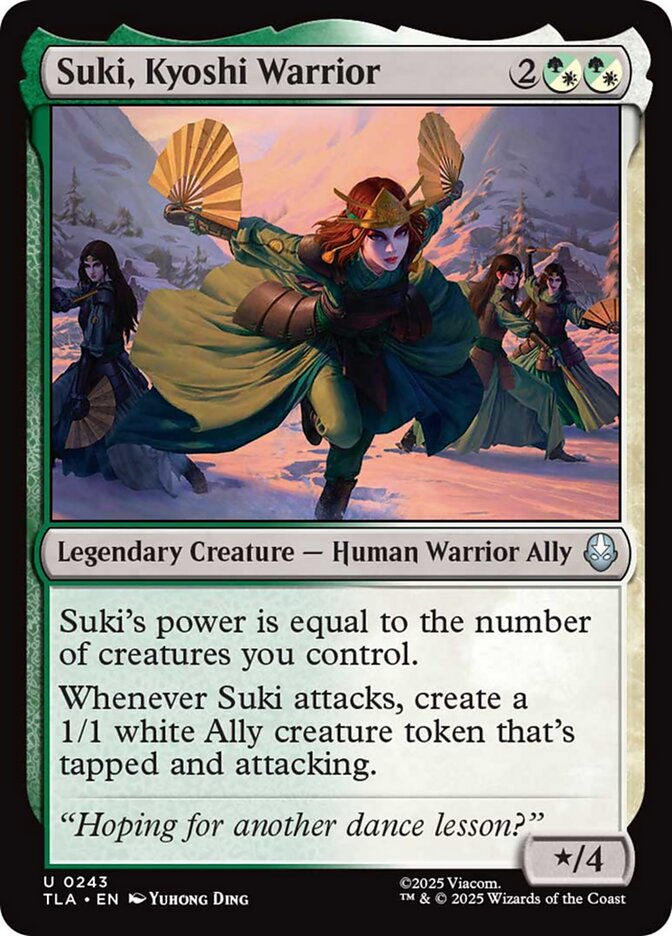
Public decks: 1Bracket: Varies
Overview
- Build a wide creature board so Suki naturally becomes a huge attacker.
- Attack early and often; each swing adds an extra tapped-and-attacking Ally token to pressure life totals.
- Lean on creature count payoffs (teamwide buffs, combat tricks, and overrun-style finishes) to convert board size into damage.
- Protect your board and your commander so your creature count (and Suki’s power) doesn’t collapse to a single reset.
- Typically plays as proactive midrange/aggro that wins through combat rather than stack-based combos.
Common lines
- Develop multiple small creatures, then land Suki and immediately start attacking to snowball token count.
- Use combat to force trades while your token from attacking keeps your board from shrinking as fast.
- After establishing a wide board, deploy a team pump effect and swing for a decisive turn.
- Hold up protection when you’re ahead on board to avoid getting blown out by removal or sweepers.
Strengths
- Self-contained engine: Suki both scales with your board and helps grow it via attack triggers.
- Excellent at pressuring planeswalkers and life totals through continuous tapped-and-attacking token production.
- Rewards straightforward creature-heavy construction with lots of redundancy.
- Can rebuild incrementally after spot removal by simply continuing to attack.
Weaknesses
- Highly vulnerable to board wipes; losing your creature count shrinks Suki dramatically.
- Attack-triggered value can be blunted by fog effects, pillow-fort style defenses, or combat deterrents.
- Often needs combat steps to generate advantage, making it slower into fast combo pods.
- Commander removal before combat can reduce pressure and delay the token snowball.
Rule zero notes
- This commander tends to play as a combat-centric go-wide/token deck; expect frequent attacks and board development.
- Wins are usually through creature damage and teamwide pumps rather than intricate stack-based combos.
- Power level hinges on how many mass pump effects, extra combat-like effects, and protection pieces you run.
- If your build includes high densities of protection or lock-style combat denial, mention it up front (not implied by the commander itself).
Matchups
Best into
- Creature-heavy midrange pods where combat and board presence matter most.
- Tables light on sweepers, where going wide can stay online for multiple turns.
- Decks that rely on single blockers rather than wide defenses.
Struggles against
- Control pods with frequent board wipes and efficient spot removal.
- Pillow-fort or fog-heavy strategies that invalidate combat steps.
- Fast combo tables that don’t care about combat pressure.
FAQ
What is Suki trying to do each game?
Make a wide board, attack to generate extra tokens, and use that growing creature count to turn Suki into a lethal combat threat.
How does Suki’s power work in practice?
Suki’s power tracks your current number of creatures, so it fluctuates with tokens, trades, and removal.
Does the token created when Suki attacks count toward Suki’s power that turn?
Typically yes after it’s created, but it enters tapped and attacking, so it won’t help for things that check Suki’s power before the trigger resolves.
What are the usual win conditions?
Overwhelming combat steps with a wide board, often capped by a big team pump to push through lethal damage.
What should I mulligan for?
Hands that develop multiple early creatures and have a clear path to casting Suki on time tend to perform best, especially if they include some form of protection or resilience.