
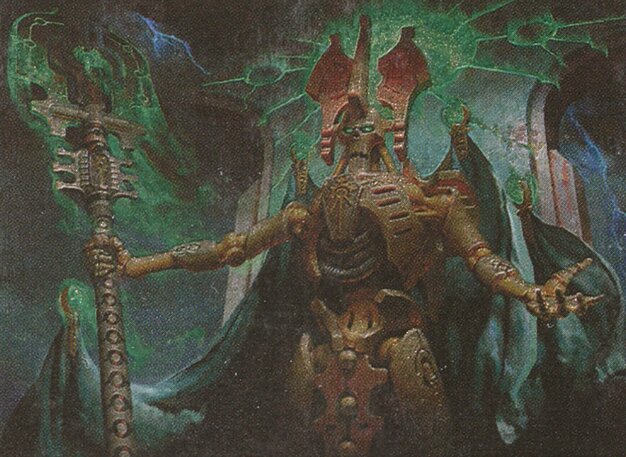
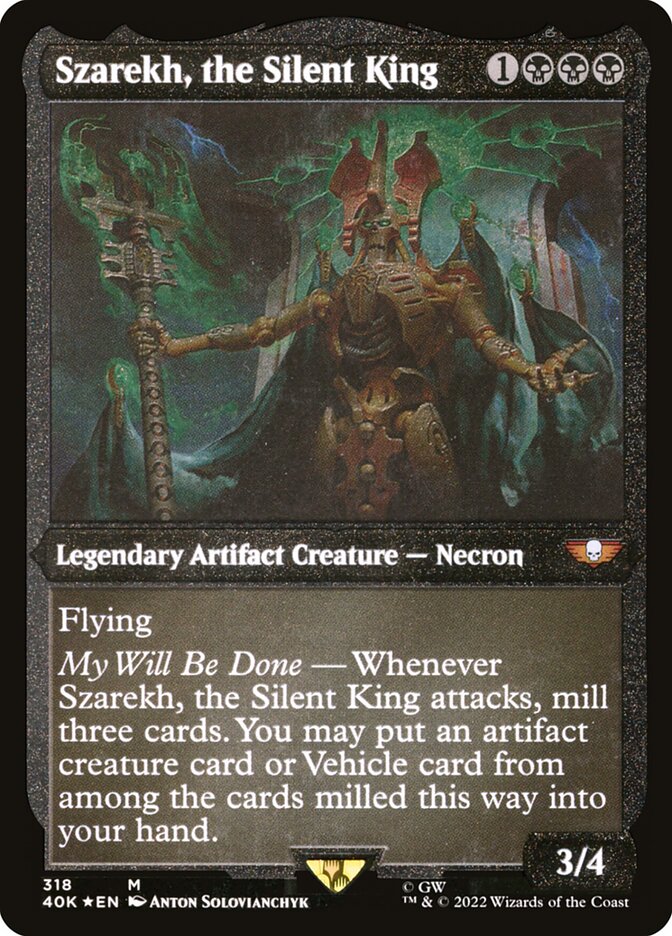
Szarekh, the Silent King


A mono-black attacker that turns combat steps into self-mill and artifact-leaning card selection, rewarding steady pressure over time.
Public decks: 0Bracket: Varies
Overview
- Game plan typically revolves around getting Szarekh attacking to trigger My Will Be Done every combat.
- Uses repeated milling to stock the graveyard while selectively picking up artifact creatures or Vehicles for future turns.
- Often plays as a grindy midrange deck: chip in with a flyer, accrue material, and keep threats flowing.
- Encourages building with a meaningful artifact creature/Vehicle count so the attack trigger reliably draws into action.
- Wins tend to come from sustained combat damage and outlasting the table with incremental advantage.
Common lines
- Cast Szarekh, then start attacking as soon as it’s safe to convert combat into milling and a potential card pickup.
- Use early turns to set up your mana and board so you can keep attacking while still developing behind Szarekh.
- Let the mill fill your graveyard incidentally while your hand refills with relevant artifact bodies or Vehicles.
Strengths
- Repeatable value engine tied to a simple play pattern (attack each turn).
- Evasive body makes it easier to trigger consistently in many board states.
- Self-mill can smooth draws by turning top-of-library variance into selection over time.
- Can pivot between aggression and attrition depending on the table’s speed.
Weaknesses
- Value is combat-dependent; fogs, pillow-fort effects, and stalled boards can shut off the engine.
- Needs enough artifact creatures/Vehicles in the list to avoid whiffing on the trigger.
- Graveyard hate can reduce the upside of milling and any incidental graveyard plans you adopt.
- Mono-black constraints can make certain problem permanents harder to answer cleanly.
Rule zero notes
- This commander’s core engine is attack-trigger value; clarify whether your build is mostly fair combat or has dedicated combo finishes.
- If your list leans heavily into graveyard recursion enabled by self-mill, mention it so opponents know graveyard interaction matters.
- If you include a high density of discard, tutor chains, or prison elements to force attacks through, call that out before the game.
- With very limited public data, expectations can vary—briefly describe your deck’s speed and primary win condition at the start.
Matchups
Best into
- Midrange creature pods where incremental card flow wins longer games.
- Tables light on flyers or early pressure that let you attack freely.
Struggles against
- Pillow-fort or heavy-removal pods that regularly prevent attacks or remove your commander on sight.
- Fast combo tables where combat-based value engines don’t get enough time to matter.
Recent public decks
No public decks are available yet.
FAQ
Do I have to build around artifacts to play Szarekh?
Not strictly, but you typically want a solid artifact creature/Vehicle package so the attack trigger reliably turns mills into cards.
Is this commander more aggressive or more grindy?
It often plays grindy: you attack to build advantage, then use the extra material to keep presenting threats until opponents run out of answers.
How does Szarekh usually win the game?
Most wins come from repeated combat pressure backed by the steady flow of threats generated from attack triggers.
What’s the biggest thing that stops Szarekh from doing its thing?
Anything that consistently prevents attacking or removes Szarekh before combat can shut off the engine and force you to play from parity.