
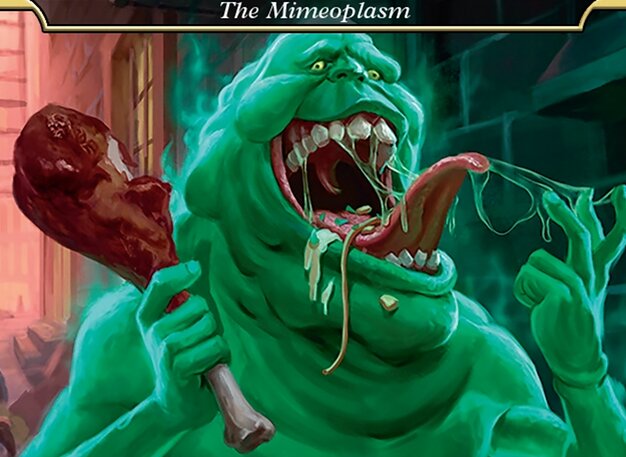
The Mimeoplasm Commander Deck Guide



 Commander
A Sultai graveyard commander that turns the best creatures in any yard into a custom-built threat as it enters.
Public decks: 0Bracket: Varies

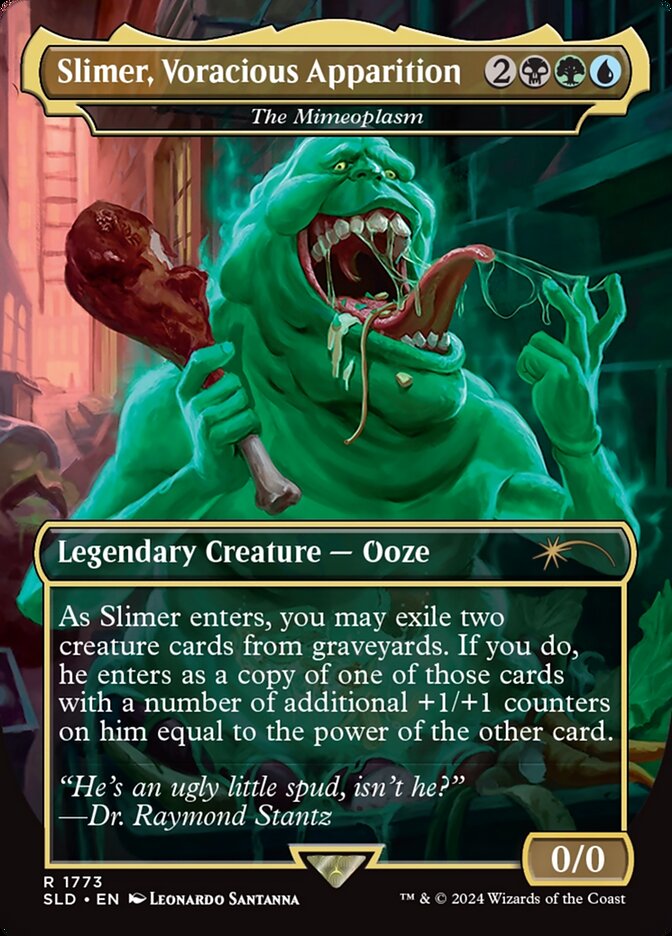
Card text
Legendary Creature — Ooze
As The Mimeoplasm enters, you may exile two creature cards from graveyards. If you do, it enters as a copy of one of those cards with a number of additional +1/+1 counters on it equal to the power of the other card.
Building around this commander?
Use MTG Master to build or analyze a Commander deck around this card, check consistency, and find weak spots before your next game.
Overview
- Plays like a graveyard-value deck that can pivot into a single huge finisher when the time is right.
- The commander rewards stocking graveyards (yours and opponents') and timing your cast to copy the most impactful creature available.
- Often aims to set up one high-leverage Mimeoplasm entry rather than repeatedly recasting it.
- Can function as a table-scaling threat: the better the graveyards, the better your commander gets.
- Typically wants a mix of self-mill, looting/tutoring for creatures, and protection for a one-shot swing or combo-style finish.
Common lines
- Spend early turns filling graveyards and developing mana; hold the commander until there are premium targets to copy/exile.
- Cast The Mimeoplasm to copy a creature with an evasive or game-ending body, then pile counters from a high-power exile to make it lethal quickly.
- Use interaction to keep graveyard hate off the table long enough to stick your commander plan, or pivot to a more normal Sultai midrange game when needed.
Strengths
- Explosive scaling: can create an immediate must-answer threat from whatever creatures are available.
- Flexible win construction since the commander adapts to different graveyard contents and board states.
- Strong in longer games where graveyards naturally fill and resource exchanges happen.
- Access to Sultai tools for self-mill, recursion, and broad interaction.
Weaknesses
- Highly sensitive to graveyard hate and effects that exile or shut off graveyards.
- Commander is a single high-investment play that can be tempo-negative if answered cleanly.
- Can be inconsistent if creature density or graveyard setup is low.
- Often relies on combat or creature-based lines, which can run into fogs, exile removal, or bounce at key moments.
Rule zero notes
- Disclose whether your build is aiming for one-shot lethal commander swings or a slower value-and-recursion game.
- Call out if you run dedicated graveyard denial/lock pieces, since they can be especially polarizing in graveyard pods.
- Mention if your deck uses commander-as-combo-finisher lines versus mostly fair creature beats.
- Let the table know how all-in you are on the graveyard plan, because a single hate piece can heavily shape the game.
Matchups
Best into
- Creature-heavy midrange pods that naturally fill graveyards through trades and removal.
- Slower, grindier tables where you have time to set up graveyard selection and protection.
- Metas where opponents’ decks incidentally stock strong creatures in the yard.
Struggles against
- Pods with frequent graveyard hate or main-deck exile effects that keep yards empty.
- Fast combo tables where you don’t have time to set up a meaningful Mimeoplasm entry.
- Heavy control shells that can repeatedly answer a single large threat.
Recent public decks
No public decks are available yet.
FAQ
Is The Mimeoplasm more of a value commander or a finisher?
It can be either, but it often plays best as a finisher you cast once graveyards contain the right mix of bodies to end the game quickly.
Do I need to rely on opponents' graveyards?
Not strictly, but the commander gets much more flexible when you can use any graveyard as a toolbox, especially in longer games.
How does the deck usually win?
Most builds tend to close with a single oversized Mimeoplasm that threatens lethal quickly, sometimes supported by recursion to reload if the first attempt is answered.
What should I prioritize in opening hands?
Early setup for graveyards plus stable mana development; a hand that only has payoff without a way to stock yards often stalls.
What’s the biggest threat to the gameplan?
Graveyard hate and clean exile-based answers are the main problems, since they can remove both your resources and your payoff in one shot.