
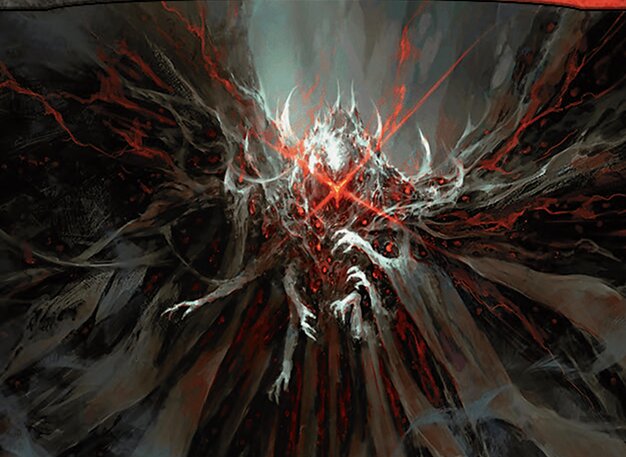
Valgavoth, Harrower of Souls


 Commander
A Rakdos flying threat that turns consistent chip damage on each opponent's turn into steady cards and a growing commander.
Public decks: 2Bracket: Varies

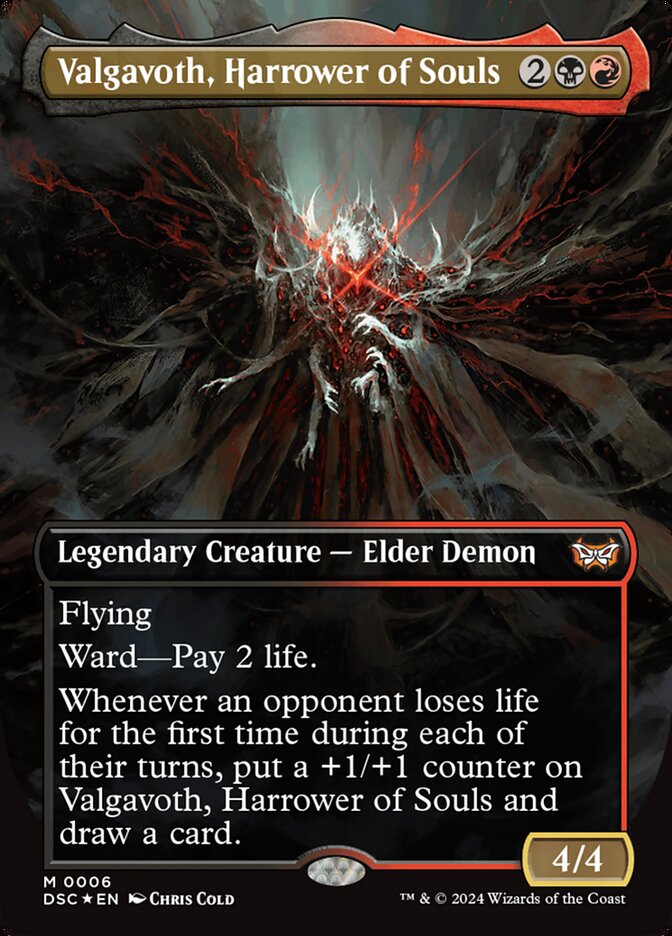
Card text
Legendary Creature — Elder Demon
Flying
Ward—Pay 2 life.
Whenever an opponent loses life for the first time during each of their turns, put a +1/+1 counter on Valgavoth and draw a card.
Building around this commander?
Use MTG Master to build or analyze a Commander deck around this card, check consistency, and find weak spots before your next game.
Overview
- Wants opponents to lose life on every turn cycle, not just on your own turn, to trigger a draw and a +1/+1 counter repeatedly.
- Plays like a value engine commander: land Valgavoth, then keep the life-loss pings flowing to snowball cards and size.
- Typically shifts from setup to pressure quickly, since the commander scales into a real clock while refilling your hand.
- Ward—Pay 2 life makes targeted removal awkward for opponents, but it also invites tables to use sweepers or exile effects instead.
- Often wins by turning the commander into a large evasive finisher while leveraging the extra cards to maintain pressure and interaction.
Common lines
- Cast Valgavoth, then prioritize ways to make each opponent lose life on their own turns so you can trigger on multiple turns per round.
- Use the extra draws to keep deploying threats and removal while Valgavoth grows into a lethal flyer.
- Force awkward combat math by presenting a fast-growing commander that can threaten commander damage in the air.
- If the table answers the board, rebuild by re-establishing reliable life-loss sources and recasting Valgavoth when needed.
Strengths
- Strong sustained card advantage if you can reliably trigger on each opponent's turn.
- Commander doubles as both engine and win condition, reducing the need to draw a separate finisher.
- Evasion plus scaling power makes closing games through combat realistic.
- Ward tax pressures spot-removal lines and can buy extra turns of value.
Weaknesses
- Highly dependent on having consistent ways to cause life loss on opponents' turns; without that, Valgavoth can be underwhelming.
- Can draw table attention once the card draw engine starts, increasing the odds of coordinated answers.
- Mass removal and exile-based interaction can answer the growing threat more cleanly than targeted damage-based removal.
- Life totals can be a resource on both sides: ward taxes opponents with life, but racing and pressure can still punish you if you fall behind.
Rule zero notes
- This commander can generate a lot of cards if built to trigger on every opponent’s turn; mention how consistently your list does that.
- Clarify whether your build is primarily combat/pressure or if it includes any fast win conditions beyond attacking.
- If you’re running lots of group life-loss effects that tax the table every turn, flag that as it can feel like constant pressure.
- Note how interactive your list is (spot removal and sweepers), since repeated drawing can support higher interaction density.
Matchups
Best into
- Creature-heavy midrange pods where a large evasive commander can dominate combat.
- Slower tables that give you time to establish repeatable life-loss and accrue cards.
- Decks relying heavily on targeted removal rather than sweepers
Struggles against
- Fast combo pods where combat clocks and incremental value may be too slow.
- Heavy board-wipe metas that reset your commander’s counters and tempo repeatedly.
- Decks with lots of exile effects or edict-style interaction that sidestep ward

FAQ
What does Valgavoth want you to do?
Make opponents lose life on each of their turns so you trigger repeatedly each round, drawing cards and growing Valgavoth.
How do you usually win with Valgavoth?
Often by turning Valgavoth into a large flying threat that can pressure life totals and commander damage while your extra cards keep you ahead.
Does Valgavoth trigger multiple times per turn?
No; it cares about the first time an opponent loses life during each of their turns, so you want one reliable trigger per opponent turn.
How much does Ward—Pay 2 life matter?
It frequently discourages casual spot removal, but it won’t stop sweepers or exile-based answers, and some decks can pay the life easily.
Is this commander more aggressive or more controlling?
It tends to play like a value-aggro engine: you’re incentivized to apply steady pressure while using the extra cards to stay interactive.