

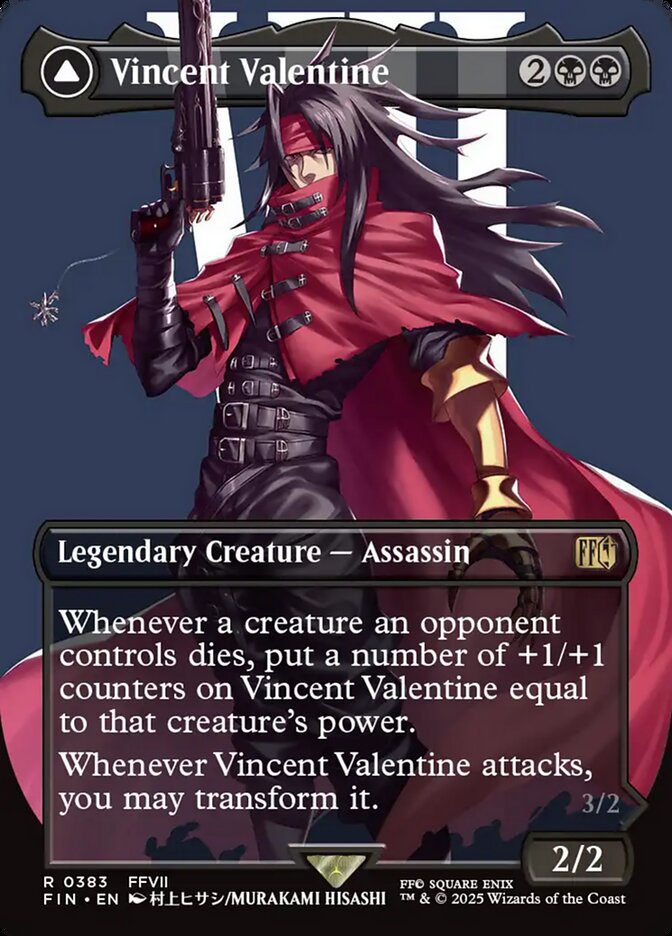
Vincent Valentine // Galian Beast


A mono-black grow-on-death assassin that turns every opposing casualty into commander-damage pressure, then flips into a sticky lifelinking trampler.
Public decks: 2Bracket: Varies
Overview
- Leans on killing creatures to pile +1/+1 counters onto Vincent, scaling with the size of what dies.
- Often plays like removal-plus-threat: answer key creatures, then swing with an ever-growing commander.
- Attacking gives you the option to transform into Galian Beast for trample and lifelink, helping convert size into damage and stabilize races.
- Galian Beast’s death trigger can make it hard to keep off the table, letting you keep applying pressure through removal and combat.
- Typically closes by turning one or two big combat steps into lethal commander damage, sometimes backed by additional drain or attrition pieces.
Common lines
- Spend early turns on mana and setup, then start trading removal for opponents’ creatures to grow Vincent.
- Use edict-style effects to force deaths even through hexproof/ward boards, then attack and decide whether flipping improves the combat math.
- Flip to Galian Beast when trample/lifelink matters most (pushing through blockers or recovering life), accepting that it can come back if it dies.
- Transition into a “remove it or die” posture once Vincent is large, holding interaction to protect your combat window.
Strengths
- Scales naturally with the table’s creature size: big creatures dying translate into big counter bursts.
- Strong into creature-centric pods thanks to repeatable incentives to kill and trade.
- Lifelink plus trample on the back face helps stabilize and end games through board stalls.
- Resilience on the back face can punish opponents who rely on spot removal to answer the commander.
- Mono-black access to efficient removal, edicts, and card draw supports an attrition game plan.
Weaknesses
- Creature-light or spell-heavy tables can starve the commander of counters and slow the clock.
- Graveyard hate and exile effects can undermine the back-face recursion and overall staying power.
- Can struggle to punch through go-wide token boards unless you consistently find trample timing or sweepers.
- Often needs to tap into combat to win, which can be awkward into fogs, pillow-fort effects, or repeated chump-blocking.
- As a single large threat, it can draw table attention once it starts one-shotting players.
Rule zero notes
- This commander tends to play a removal-heavy, attrition style; confirm the table is OK with lots of creature interaction.
- Wins are usually through commander combat damage; games can become very “answer my threat or die” once it’s large.
- If you run many forced-sacrifice (edict) effects, mention it up front since it can be frustrating for some decks.
- If you include fast mana or early burst starts (for example, Dark Ritual), call out the deck’s speed expectations.
Matchups
Best into
- Creature-heavy midrange pods where trading bodies is common
- Voltron and tall-creature strategies that put high power on the table
- Board states that rely on a few key creatures rather than wide token swarms
Struggles against
- Spellslinger/combo pods with few creatures to fuel counters
- Decks heavy on exile-based removal and graveyard hate
- Go-wide token strategies that can endlessly chump-block without needing to commit large creatures
FAQ
How does the deck usually win?
Most wins come from building a huge Vincent off opposing creature deaths and converting that into lethal commander damage, often with a flip to trample through blockers.
When should I transform into Galian Beast?
Transform when trample or lifelink changes the race or breaks a stalled board; if you expect more profitable deaths first, staying as Vincent can be better.
What kind of interaction fits best here?
Creature removal and edict effects are especially synergistic because they both answer threats and grow your commander; sweepers can also reset wide boards while leaving you with a threat.
Is this a sacrifice deck or a Voltron deck?
It often plays like Voltron powered by attrition: you’re not required to sacrifice your own board, but you can lean into forced-sacrifice and trading to keep opponents’ creatures dying.
What are example support cards if I want to lean into the plan?
With limited data available, examples that match the theme include edict creatures like Fleshbag Marauder, scaling payoffs like Blade of the Bloodchief, and grind engines like Black Market or Harvester of Souls.