
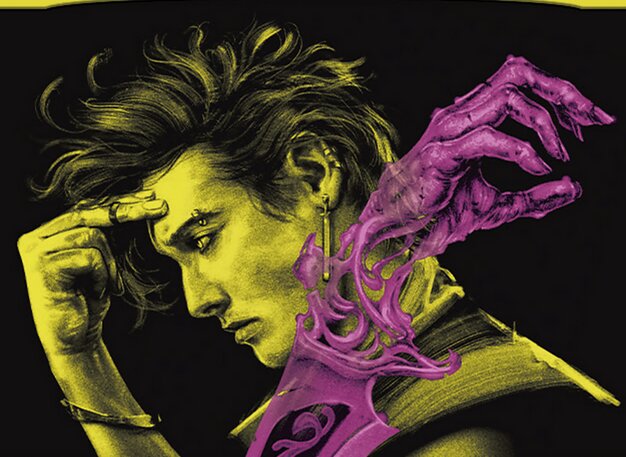
Winter, Misanthropic Guide




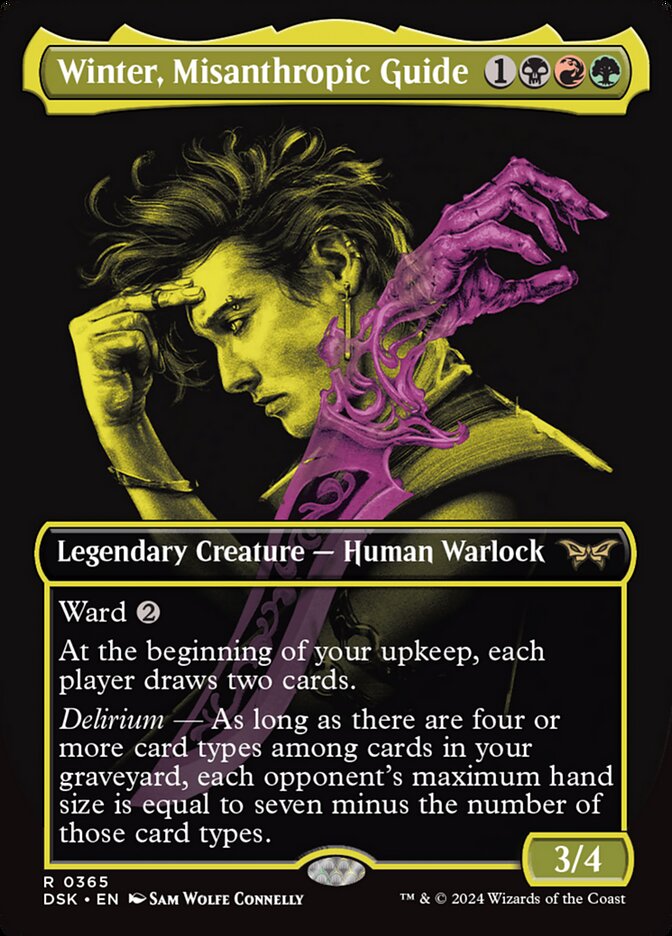
Winter, Misanthropic Guide turns symmetrical extra draw into a pressure cooker by stocking your graveyard for delirium and squeezing opponents’ hand sizes down to something manageable.
Public decks: 2Bracket: Varies
Overview
- Plays like Jund “group draw, group slug”: everyone draws two on your upkeep, then you try to be the deck that benefits most from the flood of cards.
- Aims to turn on delirium quickly so opponents can’t just hoard the extra cards; once active, their maximum hand size shrinks based on your graveyard’s card types.
- Often leans on self-mill/looting and varied permanent types to enable delirium while still interacting with the board.
- Uses the extra cards to hit land drops, find removal, and keep recasting threats through attrition.
- Typically closes by converting the constant draw and forced discards into damage and tempo, then finishing with combat or chip-damage engines.
Common lines
- Ramp early (for example, Arcane Signet), land Winter, then immediately start generating extra cards every upkeep cycle.
- Spend the early turns filling your graveyard with multiple card types (for example, Grisly Salvage) so delirium turns on reliably.
- Once delirium is online, force opponents to discard down to their reduced maximum hand size and capitalize on the resource squeeze.
- Use flexible answers to stay alive while the table is drawing extra (for example, Beast Within or Chaos Warp).
- Pivot into a finisher that punishes all the drawing/discarding (for example, Fate Unraveler or Fell Specter) or simply ride a board presence to the end.
Strengths
- Massive, repeatable card flow from the command zone that keeps you stocked on interaction and land drops.
- Delirium hand-size reduction can translate into real advantage in longer games by turning extra draw into forced discards.
- Jund colors support broad answers and resilient, grindy play patterns.
- Ward {2} makes Winter meaningfully harder to pick off with incidental spot removal.
- Can pressure combo and control players by limiting how many cards they’re allowed to keep.
Weaknesses
- You’re giving opponents a lot of cards; if you can’t leverage delirium quickly, you may fuel the table’s best deck.
- Graveyard hate or graveyard exile can shut off delirium and blunt the commander’s main “misanthropic” payoff.
- Hand-size reduction is indirect pressure; opponents can still deploy what they draw immediately, especially at lower curves.
- Can become the table’s lightning rod once opponents realize their hands will be constrained.
- Games can get politically messy: symmetrical draw changes threat assessment and can accelerate everyone into splashier turns.
Rule zero notes
- Winter is symmetrical group draw; confirm the table is okay with everyone drawing extra cards every upkeep.
- Delirium can create a persistent “soft hand lock” where opponents are routinely forced to discard down well below seven; call that out upfront.
- If you’re including wheel effects (for example, Magus of the Wheel), mention it, since it amplifies the discard pressure dramatically.
- If your build uses dedicated draw-punish pieces (for example, Fate Unraveler), note that the deck can feel like group slug rather than group hug.
Matchups
Best into
- Slow, battlecruiser pods where extra draw helps you hit your engines first and delirium punishes sandbagging
- Control-heavy tables that like to sculpt big hands
- Midrange mirrors where incremental advantage and attrition matter
Struggles against
- Fast combo tables that can convert extra draw into a quick win before the hand-size squeeze matters
- Graveyard-hate dense pods
- Low-curve aggro decks that dump their hands and don’t care about maximum hand size
FAQ
Do I always want to cast Winter as soon as possible?
Often yes, because the upkeep trigger is a huge engine, but into very fast pods it can be correct to develop mana and interaction first so you don’t just fuel an opponent’s win.
How do I reliably turn on delirium?
You typically need to put a mix of card types into your graveyard (creature, instant, sorcery, artifact, enchantment, land, etc.), often via self-mill, looting, and trading resources early.
Does the hand-size reduction affect me too?
No. The delirium clause only sets each opponent’s maximum hand size based on the number of card types in your graveyard.
What does winning look like with Winter?
Many games end with opponents repeatedly discarding while you keep drawing into threats and answers, then you close with combat or with effects that punish all the drawing and discarding.
What should I protect most: Winter or my graveyard?
The graveyard often matters more than it looks, since delirium is what turns the symmetrical draw into a one-sided squeeze; Winter’s ward helps, but graveyard disruption can undo your pressure.