
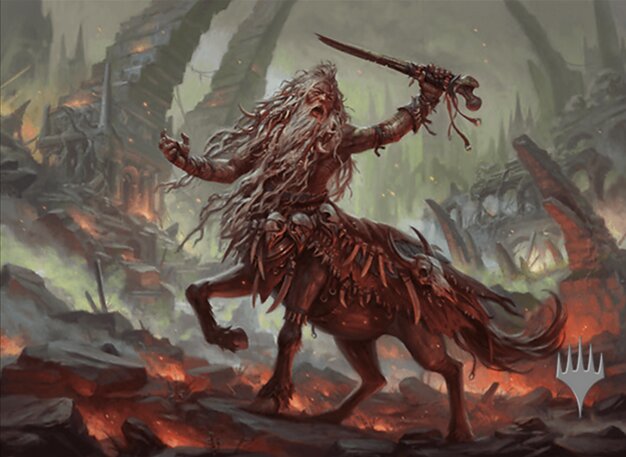
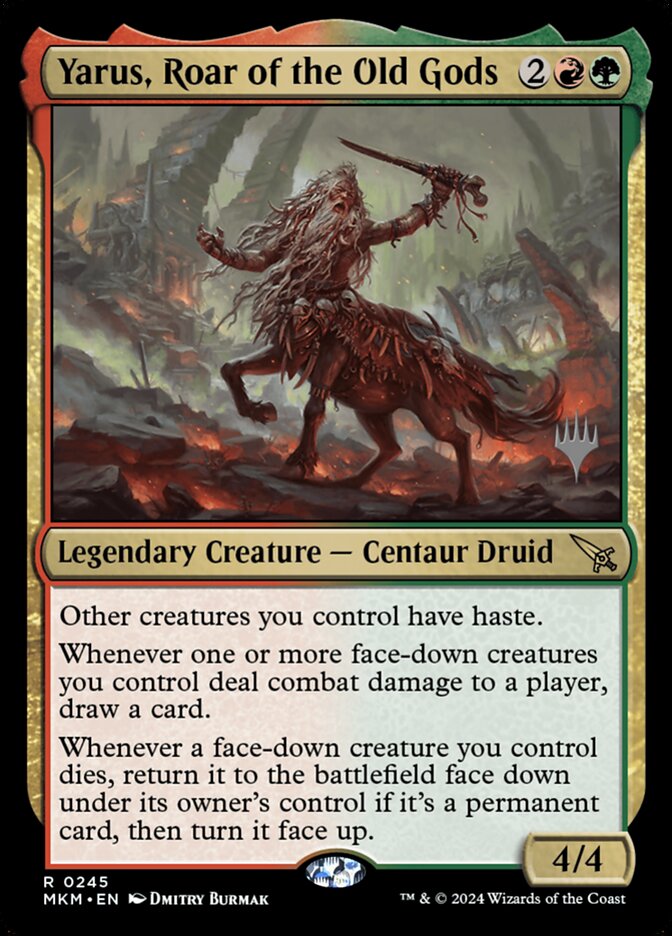
Yarus, Roar of the Old Gods


 Commander
A Gruul combat engine that turns face-down creatures into hasty attackers, card draw, and resilient recursion loops.
Public decks: 1Bracket: Varies
Card text
Legendary Creature — Centaur Druid
Other creatures you control have haste.
Whenever one or more face-down creatures you control deal combat damage to a player, draw a card.
Whenever a face-down creature you control dies, return it to the battlefield face down under its owner's control if it's a permanent card, then turn it face up.
Building around this commander?
Use MTG Master to build or analyze a Commander deck around this card, check consistency, and find weak spots before your next game.
Overview
- Leans on a high density of face-down creatures to fuel both card advantage and staying power.
- Gives your whole team haste, so new creatures (and freshly returned face-down bodies) can pressure immediately.
- Wants to connect with face-down creatures in combat to draw cards and keep the gas flowing.
- Turns dying face-down creatures into pseudo-recursion by returning them face down, then flipping them up for value.
- Typically plays as proactive midrange: develop board, attack often, and grind through removal with repeat bodies.
Common lines
- Develop a board of creatures, then pivot into constant attacks thanks to global haste.
- Chip in with face-down attackers early to start drawing cards and pull ahead on resources.
- Trade in combat or into removal, then use the death trigger to keep bodies on the table and rebuild quickly.
- Use repeated combat steps to convert board presence into cards, then overwhelm with sustained pressure.
Strengths
- Strong ability to keep attacking: global haste reduces the tempo loss from rebuilding.
- Card draw tied to combat damage can snowball quickly if opponents can’t block effectively.
- Resilient to many destroy-based removal patterns because face-down deaths can recycle into more board presence.
- Naturally pressures slower decks by forcing answers while you keep refilling.
Weaknesses
- Heavily combat-dependent; fogs, pillow-fort effects, or clogged boards can shut off the draw engine.
- Exile-based removal and exile-heavy sweepers can break up the recursion plan.
- Needs a meaningful face-down creature count to function; low density can make the commander feel like only a haste anthem.
- Board wipes can still be rough if they remove Yarus repeatedly or prevent you from sticking attackers.
Rule zero notes
- This commander encourages frequent combat and repeated attack steps; games often hinge on combat triggers.
- Expect some board-state bookkeeping with face-down creatures and repeated return/flip sequences.
- The deck can be grindy if it repeatedly trades creatures and rebuilds via the death trigger.
- Power level can swing a lot depending on how dense the face-down package is and how aggressively it’s built.
Matchups
Best into
- Slower value pods that take time to set up and can’t punish early attacks.
- Decks relying mostly on destroy-based interaction rather than exile effects.
- Creature-light tables where getting combat damage through is realistic.
Struggles against
- Pillow-fort, fog, or heavy-propaganda style defenses that stop combat damage triggers.
- Exile-forward control and sweepers that remove creatures without letting them die normally.
- Highly efficient combo tables where combat pressure isn’t fast enough to matter.

FAQ
What is Yarus trying to do each game?
Get a steady stream of face-down attackers connecting for damage to draw cards, then leverage the death trigger to keep a board through trades and removal.
Is this more of an aggro deck or a value deck?
It often plays like aggressive midrange: you pressure life totals early, but your commander’s draw and recursion let you pivot into a longer grind.
How does the death trigger change combat decisions?
It can make blocking and trading favorable for you, since a face-down creature dying can come back face down and keep your board density high.
What kinds of interaction are most annoying for Yarus?
Exile-based answers and effects that prevent combat damage are the biggest problems, because they stop your recursion and your draw engine respectively.
How does the deck usually win?
Most wins come from sustained hasty combat pressure backed by card draw, eventually overwhelming blockers and removal with repeat bodies and attacks.