
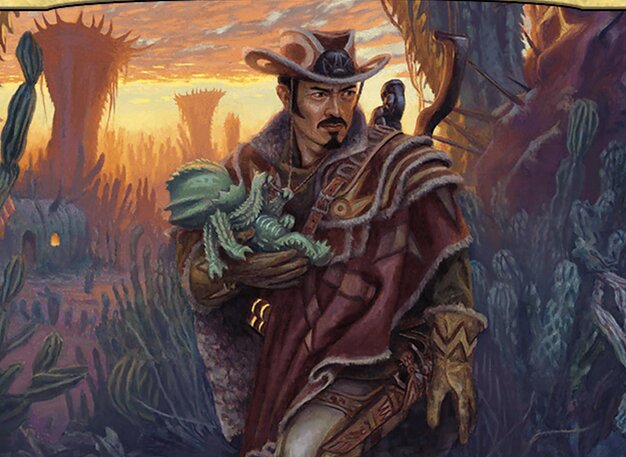
Yuma, Proud Protector



 Commander
A Naya lands-in-graveyard commander that turns sacrificed lands and Desert churn into cards and sizeable reach tokens.
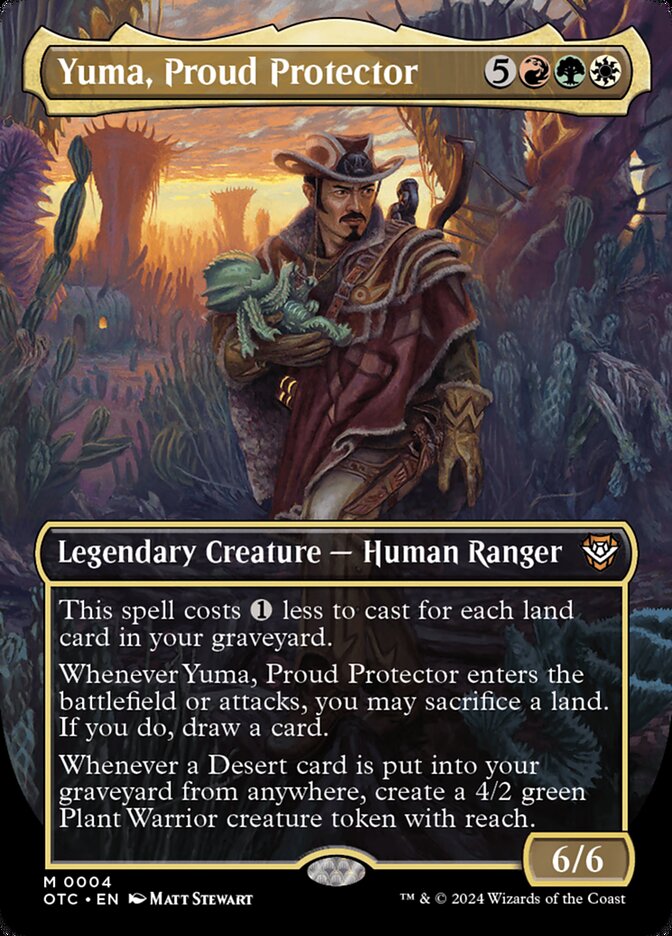
Public decks: 0Bracket: Varies
Card text
Legendary Creature — Human Ranger
This spell costs  less to cast for each land card in your graveyard.
Whenever Yuma enters or attacks, you may sacrifice a land. If you do, draw a card.
Whenever a Desert card is put into your graveyard from anywhere, create a 4/2 green Plant Warrior creature token with reach.
Overview
- Leans into getting lands into your graveyard to reduce Yuma’s cost and keep recasting through interaction.
- Uses Yuma’s enter/attack trigger to convert extra lands into card draw, often treating lands as a resource to spend.
- Wants Deserts to hit the graveyard so they become 4/2 reach bodies, letting you pivot from value to board pressure.
- Typically plays a longer game where your “mana base” doubles as fuel for draw and token production.
- Wins by building a critical mass of Plant Warriors and turning the corner with combat, backed by steady card flow.
Common lines
- Fill the graveyard with lands early so Yuma comes down cheaper than it looks on paper.
- Cast Yuma, then start attacking to repeatedly cash in a land for a card while advancing your board.
- Loop Deserts into the graveyard over the course of the game to accumulate 4/2 reach tokens and stabilize the air.
Strengths
- Strong attrition plan: your commander naturally replaces resources and keeps pressure up.
- Resilient commander tax patterns when you can keep lands in the graveyard to discount Yuma.
- Combat presence that also defends well, since the token bodies come with reach.
- Built-in engine that doesn’t require other permanents to start generating value once Yuma is online.
Weaknesses
- High upfront mana value if you can’t stock the graveyard with lands early.
- Sacrificing lands can set you back on mana if you don’t manage your land drops and ramp carefully.
- Token plan is tied to Deserts going to the graveyard; without that, you can feel like a slower Naya value deck.
- Graveyard disruption can reduce Yuma’s discount and slow both your setup and recovery.
Rule zero notes
- Mention how heavily you plan to lean on the graveyard for lands (and how much graveyard interaction will affect you).
- Call out whether your build is primarily combat/token-based or includes any dedicated combo finishes (if applicable).
- Set expectations on pace: Yuma can be a grindy value engine rather than a quick closer.
- If you run effects that repeatedly sacrifice lands as a core play pattern, warn the table that your deck treats lands as expendable resources.
Matchups
Best into
- Creature-midrange pods where repeated 4/2s and draw can outlast spot removal.
- Tables that try to win through combat, since reach tokens help stabilize and race.
- Slower metas where you have time to turn lands into sustained value.
Struggles against
- Fast combo tables where a value-and-combat plan may not line up in time.
- Pods heavy on graveyard hate or repeated exile-based interaction.
- Land-denial strategies that punish you for sacrificing or falling behind on mana development.
Recent public decks
No public decks are available yet.
FAQ
Is Yuma mainly a lands deck or a tokens deck?
Typically it plays like a lands-in-graveyard value deck that incidentally turns Desert churn into a real token board. The best games often do both: draw off land sacrifices while accumulating 4/2s.
How do you usually close games?
Most builds will tend to win through combat by going wide with Plant Warriors and keeping cards flowing so you can reload after wipes. The reach bodies also let you pivot from defense to offense cleanly.
How risky is sacrificing lands to Yuma?
It’s a real cost, and you generally can’t fire it off recklessly early. Once you’re ahead on mana or have spare lands, turning them into cards becomes a strong engine.
What kind of interaction hurts Yuma the most?
Graveyard hate can reduce Yuma’s cost reduction and limit how reliably you can keep recasting it. Repeated pressure on your mana development also punishes the land-sacrifice play pattern.