
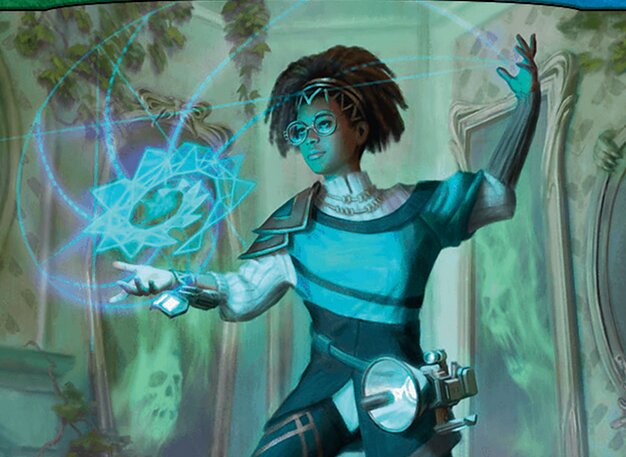
Zimone, Mystery Unraveler


 Commander
A Simic landfall commander that turns extra land drops into face-down threats and steady value by flipping permanents face up over time.
Public decks: 1Bracket: 3

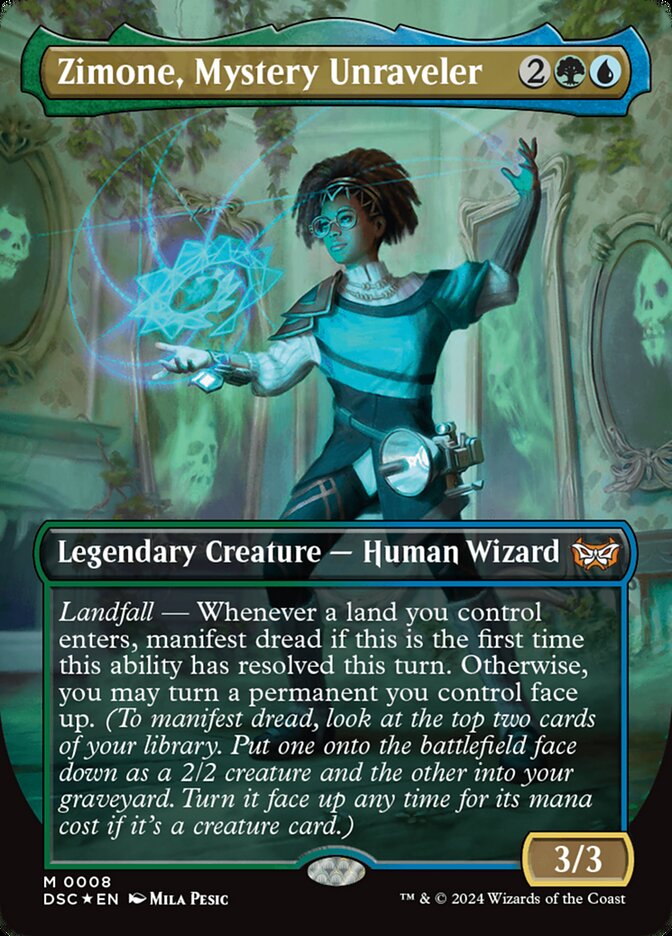
Card text
Legendary Creature — Human Wizard
Landfall — Whenever a land you control enters, manifest dread if this is the first time this ability has resolved this turn. Otherwise, you may turn a permanent you control face up. (To manifest dread, look at the top two cards of your library. Put one onto the battlefield face down as a 2/2 creature and the other into your graveyard. Turn it face up any time for its mana cost if it's a creature card.)
Building around this commander?
Use MTG Master to build or analyze a Commander deck around this card, check consistency, and find weak spots before your next game.
Overview
- Use land drops to trigger Zimone each turn, starting with a single manifest dread and then converting later triggers into face-up flips.
- Plays like a value-midrange engine: develop mana, stock the graveyard a bit, and let your board of disguised cards become real threats.
- Prioritizes sequencing so you get at least one landfall trigger on each player’s turn when possible, not just your own.
- Wins by turning face-down material into real bodies/value permanents and snowballing advantage until combat finishes the job.
- Naturally rewards decks that can play lands from hand or otherwise find additional land drops without overcommitting into sweepers.
Common lines
- Land Zimone, make your normal land drop to get the first manifest dread of the turn, then plan future land drops to enable face-up flips.
- Use end-step or instant-speed land entries (when available) to get a trigger on opponents’ turns and keep your board progressing through interaction.
- Attack and block with expendable face-down creatures early, then flip key permanents face up once you can afford the mana and timing is safe.
- Treat the graveyard card from manifest dread as a resource: you’re gaining selection and setup while still adding a body to the table.
Strengths
- Consistent incremental value from something every deck already wants to do: play lands.
- Board presence without spending extra cards from hand, which helps in longer, grindier games.
- Flexibility in play patterns: you can stay defensive with face-down bodies or turn the corner quickly once flips start mattering.
- Can generate advantage across multiple turns without needing to commit to a single all-in win line.
Weaknesses
- Heavily commander-centric; removing Zimone can slow your engine and make land drops feel less impactful.
- Mana-intensive in practice: flipping permanents face up and staying interactive can strain your turn cycles.
- Face-down creatures can be vulnerable to sweepers and exile-based removal that ignores their “hidden” nature.
- If you can’t reliably trigger landfall on multiple turns, the deck may feel slower than other Simic engines.
Rule zero notes
- Call out whether your build is mainly precon-style value and combat, or if you’ve tuned toward faster landfall loops and higher-end engines.
- Mention if you’re aiming to trigger landfall on multiple players’ turns consistently, as it can feel like you’re taking a lot of micro-actions.
- Clarify your primary win condition (combat snowball vs. a tighter combo finish) so the table can pick appropriate decks.
- Disclose how interactive your list is, especially if you lean into frequent instant-speed plays to maximize turn-cycle triggers.
Matchups
Best into
- Creature-heavy midrange pods where extra blockers and gradual value matter.
- Slower tables that give you time to build a board and convert face-down material into real threats.
- Interactive pods where flexible, repeatable value helps you recover from trades.
Struggles against
- Fast combo tables that end the game before your landfall engine meaningfully ramps up.
- Decks packed with board wipes and exile effects that repeatedly reset your face-down army.
- Heavy commander-tax patterns where Zimone is removed multiple times early.
FAQ
What does Zimone actually want you to do each turn?
Hit at least one landfall trigger per turn cycle: the first makes a manifest dread, and later triggers can turn your permanents face up for value.
Do I need to build around face-down synergies to make this work?
Not strictly; Zimone already supplies face-down bodies and a way to convert them later, so a solid land-focused shell can carry the plan.
How does the deck usually close games?
It typically snowballs board presence into combat damage, using flips to turn “mystery” creatures into real threats and maintain pressure.
Is this more of a ramp deck or a value deck?
It plays like value-midrange that naturally benefits from ramp; extra land drops help both trigger Zimone and pay for face-up costs.
What’s the biggest gameplay trap with this commander?
Dumping all your land drops on your own turn and running out of ways to trigger on opponents’ turns; pacing your resources usually yields better long-game output.