
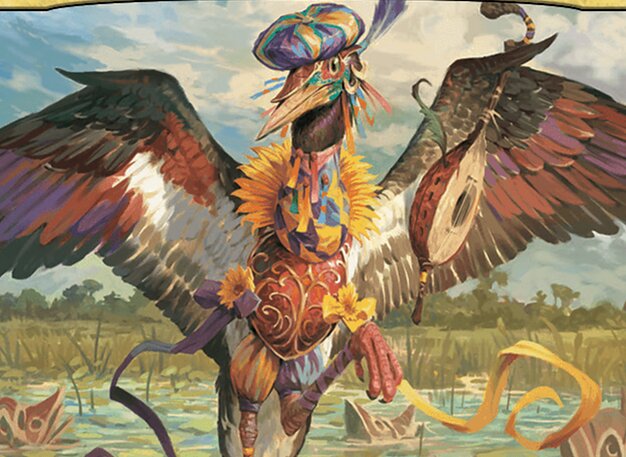
Zinnia, Valley's Voice


 Commander
A Jeskai creature deck that snowballs a wide board of small bodies into extra value and big flying pressure via offspring.
Public decks: 1Bracket: Varies

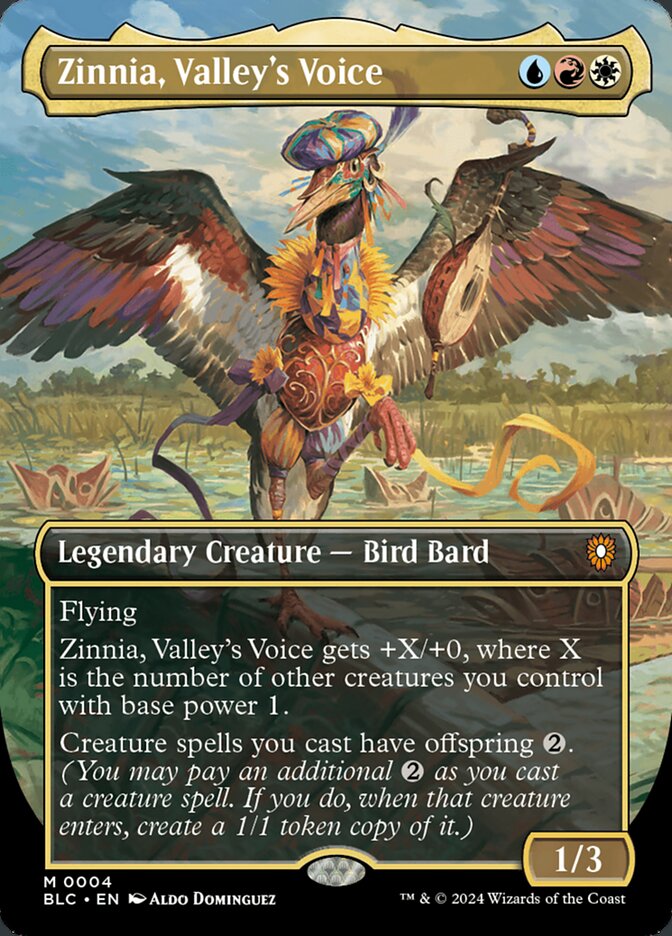
Card text
Legendary Creature — Bird Bard
Flying
Zinnia gets +X/+0, where X is the number of other creatures you control with base power 1.
Creature spells you cast gain offspring  as you cast them. (You may pay an additional as you cast a creature spell. If you do, when that creature enters, create a 1/1 token copy of it.)
Building around this commander?
Use MTG Master to build or analyze a Commander deck around this card, check consistency, and find weak spots before your next game.
Overview
- Plays to the battlefield: cast creatures, optionally pay {2} to offspring them, and turn one creature into two bodies.
- Naturally rewards creatures with base power 1, since Zinnia scales as your board fills with them.
- Often wants a steady mana curve so you can keep developing while holding up the extra {2} when it matters.
- Wins by going wide and staying wide, then converting that board into evasive commander damage and/or overwhelming combat steps.
- Zinnia tends to be a centerpiece engine; protecting it usually matters if you’re leaning on offspring for your velocity.
Common lines
- Deploy a couple of small creatures early, then land Zinnia and start doubling key creature casts with offspring {2}.
- Use offspring to rebuild after removal: one spell can re-establish multiple bodies and keep your board count high.
- Stack up base-power-1 creatures to grow Zinnia into a credible airborne threat while your ground team clogs combat.
- Sequence turns around spare mana: sometimes you cast two creatures without offspring instead of one creature with it to keep tempo.
Strengths
- Board development is efficient: offspring can turn each creature spell into multiple permanents.
- Strong at scaling into the midgame by converting “small creatures” into both wide pressure and commander-sized damage.
- Resilient to spot removal on individual creatures, since your plan naturally produces extra bodies.
- Flexible pacing: can play value-game or pivot to aggression depending on table speed.
Weaknesses
- Can be vulnerable to sweepers that clear both your creatures and your token copies.
- Offspring being an extra {2} can make you mana-hungry; falling behind on mana development can stall your engine.
- Reliant on maintaining board presence; if you can’t keep creatures around, Zinnia’s scaling and pressure drop off.
- Creature-heavy plans can struggle into repeated fog effects or pillow-fort style combat denial.
Rule zero notes
- Clarify whether your build is primarily combat damage or if it includes non-combat combo finishes (if any).
- Mention how heavily you’re leaning into base-power-1 creature density versus generic goodstuff creatures.
- Call out if you’re playing a high volume of protection/countermagic to keep Zinnia and your board intact.
- Set expectations on token volume and board-state complexity from repeated offspring triggers.
Matchups
Best into
- Creature-heavy midrange pods where extra bodies dominate combat and trading favors you.
- Slow-to-medium tables where you have time to invest the additional {2} into offspring repeatedly.
- Decks leaning on spot removal over sweepers.
Struggles against
- Board-wipe-dense pods that reset the battlefield repeatedly.
- Fast combo tables where combat-based pressure arrives too late without early disruption.
- Decks that punish going wide or invalidate combat over multiple turns.
FAQ
What does Zinnia want you to build around?
Zinnia rewards casting lots of creatures and especially likes having many other creatures with base power 1 to grow its power while you go wide.
When should I pay for offspring?
Typically when the extra body will matter immediately (pressure, blocking, rebuilding) or when the creature’s enter-the-battlefield impact is worth duplicating.
How does this deck usually win?
Most games end through combat: a wide board overwhelms defenses, and Zinnia can become a large evasive attacker to close via commander damage.
Is Zinnia more aggressive or more value-oriented?
It can play either role; it often starts value-focused to build a board, then pivots to aggression once Zinnia’s power and your creature count are high.
What’s the biggest risk to plan for?
Sweepers are the main problem—your investment in board presence and token copies can disappear at once, so pacing and recovery matter.