
How to Build a Voltron Commander Deck: One Creature, 21 Damage, and a Lot of Protection
By MTG Master EditorialPublished Updated 17 min read
Sometimes you don't need an army of creatures to win a Commander game.
Sometimes one is enough.
That's basically the idea behind Voltron. Instead of filling your battlefield with creatures, you focus on turning one of them, usually your commander, into something your opponents really don't want to see attacking.
You give it Equipment, Auras, extra power, protection, evasion, maybe double strike, and eventually you start eliminating players with commander damage.
It sounds simple, and in some ways it is.
But there's a big difference between making your commander enormous and building a Voltron deck that actually works.
I've seen commanders with ten Equipment attached to them, enough power to eliminate anyone at the table, and absolutely no way to get past a 1/1 token.
I've also seen players spend their entire hand making one creature powerful, only to lose everything to a single removal spell.
That's the challenge with Voltron.
You want to make one creature dangerous enough to win games, but you also need to make sure it survives long enough to do so.
And preferably without turning yourself into the biggest target at the table before you're ready.
What Is a Voltron Commander Deck?
Voltron is a strategy built around making one creature extremely powerful through Equipment, Auras, counters, and other effects.
The name comes from the idea of combining several pieces into one powerful threat.
In Commander, that creature is usually your commander, because commander damage gives you another way to win.
A player who receives 21 or more combat damage from the same commander over the course of the game loses, regardless of how much life they have.
That changes how you think about damage.
You don't necessarily need to deal 40 damage to eliminate an opponent. If your commander can reliably connect for seven combat damage, three attacks are enough.
Give it double strike, and things can get even more interesting.
But remember: commander damage only counts combat damage dealt by the actual commander. Damage from an Equipment ability, a triggered ability, or another creature doesn't count toward those 21 points.
And each opponent tracks commander damage separately.
Making your commander a 12/12 doesn't mean you've won. You still need to connect with the right players, survive their responses, and deal with the rest of the table.
Choosing the Right Voltron Commander
I think commander selection matters especially much in Voltron.
In some strategies, your commander is just another useful piece of the deck.
In Voltron, it's often the reason the entire deck works.
I'd look for a commander that already does at least one of these things well: protect itself, grow quickly, draw cards, avoid blockers, or make Equipment and Auras more efficient.
A commander that does several of those things is even more interesting.
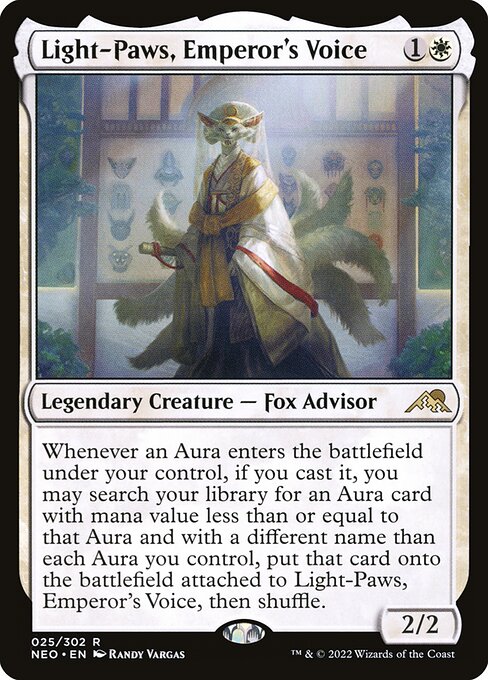
Light-Paws, Emperor's Voice: The Aura Specialist
Light-Paws, Emperor's Voice is a great example of a commander that provides its own consistency.
When an Aura you cast enters under your control, Light-Paws lets you find another Aura and put it onto the battlefield attached to her. The Aura you cast does not have to target Light-Paws. The one you find must have mana value no greater than the Aura that entered and a different name from each Aura you control.
That means you're not simply making your commander stronger. You're also finding the pieces you need.
Maybe you want more power. Maybe you need protection. Maybe you need a way to get past blockers.
What I like about Light-Paws is that the deck can feel like a toolbox. You're choosing Auras based on what the current game requires.
The downside is that you're still putting a lot of resources into one creature. And because her strategy revolves around Auras, removal can be particularly unpleasant if you don't have protection ready.
Sram, Senior Edificer: Keep the Cards Coming
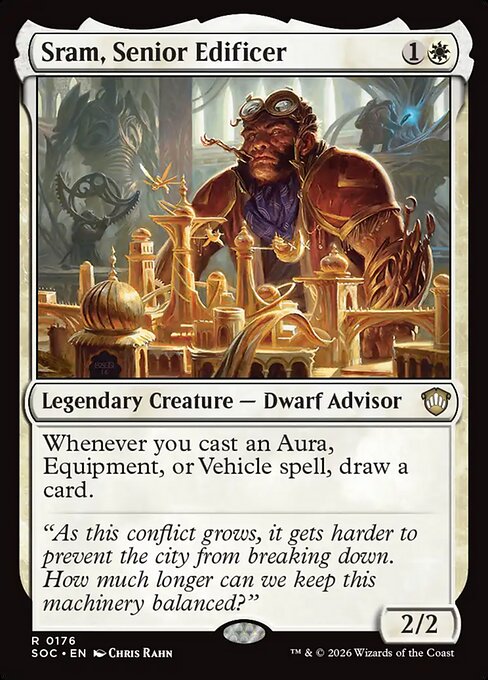
Sram, Senior Edificer takes a different approach.
He rewards you for casting Auras, Equipment, and Vehicles by drawing cards.
One of the biggest weaknesses of Voltron is running out of resources, and Sram helps address that directly.
You can play Equipment, draw cards, and continue developing your board without relying entirely on what you started with in your hand.
He's also inexpensive to cast, which is very useful in a strategy where you may need to replay your commander several times.
Personally, I like Voltron commanders that help solve one of the archetype's weaknesses rather than simply giving themselves more power.
Uril, the Miststalker: Big and Difficult to Remove
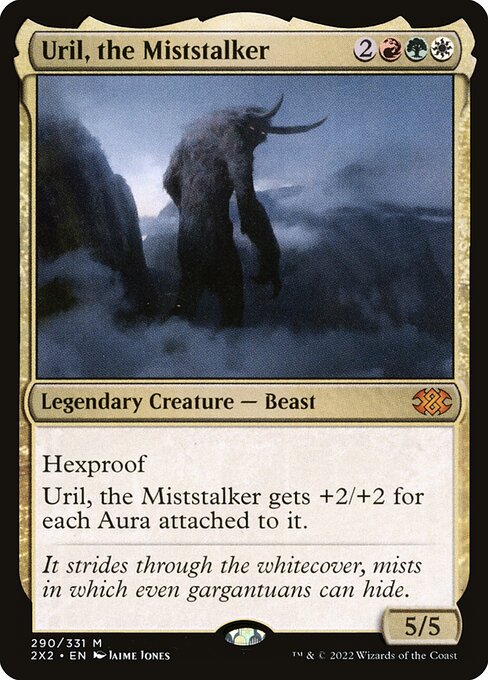
Uril, the Miststalker is a classic Aura-based Voltron commander.
He gets +2/+2 for each Aura attached to him, and his hexproof makes him difficult for opponents to target.
That gives you a very clear game plan.
Play Uril, attach Auras, and attack with an increasingly dangerous creature.
The interesting part is that Uril already has some protection built in. You can concentrate more on making him powerful and getting him through blockers.
But hexproof isn't invincibility.
Board wipes, sacrifice effects, and other removal that doesn't target Uril can still deal with him.
And with a five-mana commander, having to cast him repeatedly can become expensive.
Wyleth, Soul of Steel: Attack and Draw
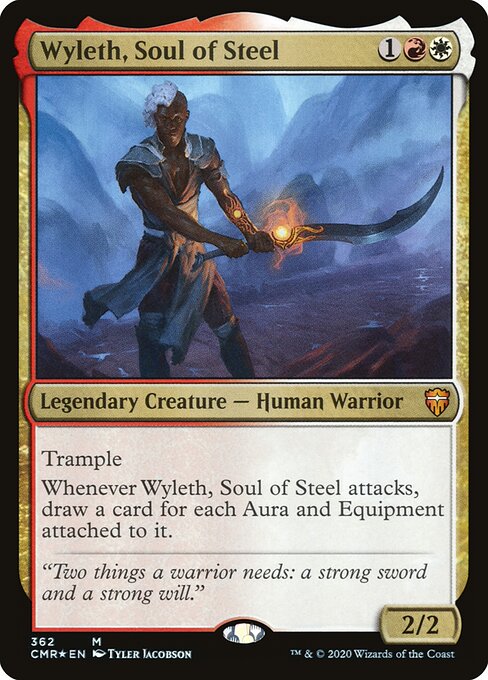
Wyleth, Soul of Steel rewards you for attacking while equipped or enchanted.
He draws cards based on the number of Auras and Equipment attached to him, making him particularly interesting for a hybrid approach.
You can play both Equipment and Auras, attack, and hopefully keep your hand full while applying pressure.
The downside is that you need to attack to get that card advantage.
And sometimes attacking isn't particularly safe.
Still, I like the idea of a Voltron commander that rewards doing what the deck already wants to do.
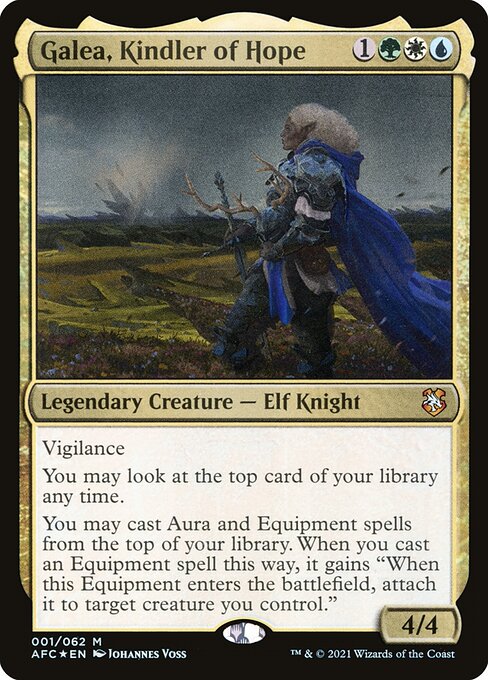
Galea, Kindler of Hope: Equipment and Auras Together
Galea, Kindler of Hope is another interesting option if you don't want to focus exclusively on one type of card.
She allows you to look at the top card of your library and cast Auras and Equipment from there. Equipment you cast this way gets an enters-the-battlefield trigger that attaches it to a target creature you control; Equipment you cast from your hand does not get that benefit.
That gives you access to more resources and makes it easier to keep developing your board.
Galea also has vigilance, which is useful when your strategy involves attacking with one important creature.
You don't necessarily want your only major threat to be tapped and defenseless every turn.
Equipment or Auras? They Aren't the Same
This is one of the first decisions I'd make when building Voltron.
Equipment and Auras can both make your commander stronger, but they behave very differently.
Equipment: More Expensive to Set Up, Easier to Reuse
Equipment usually stays on the battlefield when the creature carrying it dies.
That's a huge advantage.
If your commander gets removed, you can cast it again and reattach your Equipment.
Of course, you'll often need to pay an equip cost, and that can become expensive if you're constantly rebuilding.
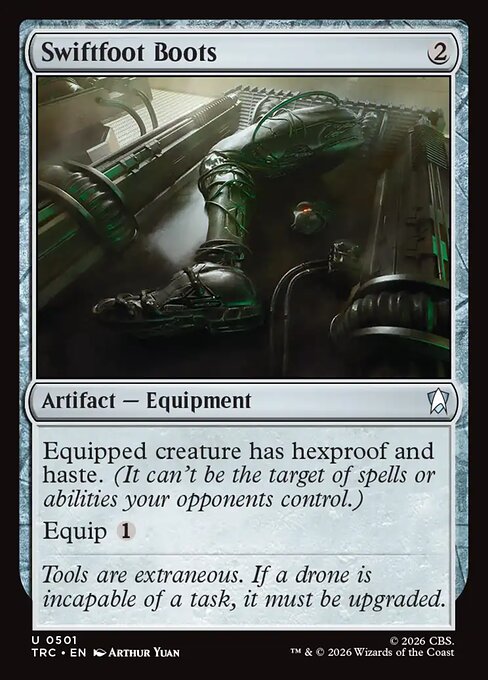
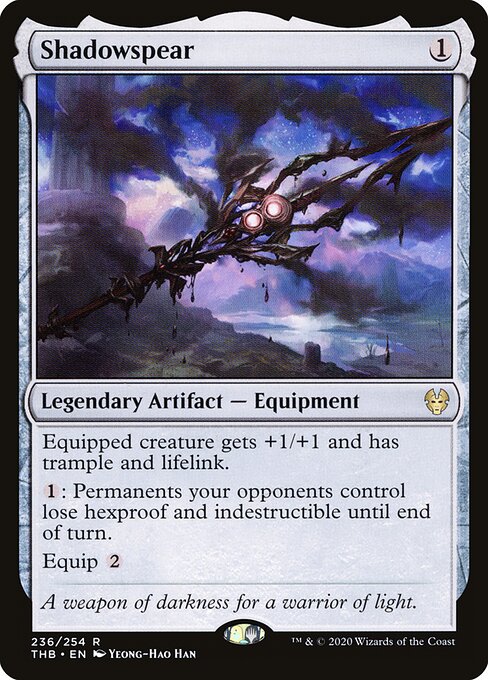
Cards like Sword of Fire and Ice, Blackblade Reforged, Shadowspear, and Swiftfoot Boots are examples of Equipment that can provide different kinds of value.
Some increase damage. Others provide protection, lifelink, trample, or card advantage.
I wouldn't choose Equipment simply because it gives the biggest power boost.
A smaller bonus with a useful ability can be considerably more valuable.
Auras: Often Faster, but Riskier
Auras can be extremely efficient.
Some provide a lot of power for very little mana, while others give protection, evasion, or powerful abilities.
Cards like Ethereal Armor, All That Glitters, Rancor, and Shielded by Faith can be interesting depending on your colors and commander.
The problem is that if the creature enchanted by an ordinary Aura leaves the battlefield, that Aura generally ends up in the graveyard.
So if you've attached four Auras to your commander and somebody removes it, you might lose five cards' worth of board presence at once.
That's a painful exchange.
It doesn't mean Auras are bad. Far from it.
Aura-based Voltron can be extremely powerful, especially with commanders that search for Auras, draw cards from casting them, or help protect the enchanted creature.
You just need to understand the risk.
Personally, I'd choose the balance based on the commander rather than forcing the same mix into every Voltron deck.
Light-Paws obviously wants lots of Auras. An Equipment-focused commander has different priorities.
And there's nothing wrong with combining both if they support your plan.
Protection Is More Important Than Another +5/+5
This is probably the biggest lesson I'd emphasize when building Voltron.
It's very tempting to keep adding cards that make your commander bigger.
But once your commander already has enough power to kill somebody in two or three attacks, adding another five power might not change much.
Keeping it alive, however, changes everything.
Cards like Swiftfoot Boots, Lightning Greaves, Heroic Intervention, Tamiyo's Safekeeping, and Teferi's Protection can help protect your investment, depending on your colors.
You don't need all of them, and they don't all solve the same problems.
Hexproof can stop targeted removal from opponents.
Indestructible helps against destruction effects and lethal damage, but not exile, sacrifice, or effects that reduce toughness to zero.
Protection from a color can be excellent, but it also affects which Auras and Equipment can legally remain attached.
And sometimes the best protection is simply having one mana available and a useful instant in your hand.
I especially like cheap protection in Voltron because keeping mana open becomes much easier.
A one-mana spell that saves your commander can be worth much more than an expensive threat.
One practical warning: Lightning Greaves gives shroud, which means you can't target the equipped creature with your own Aura spells or equip abilities either. It's a fantastic card, but timing matters.
Evasion: A Huge Creature That Can't Connect Isn't Winning
Imagine you've built a 15/15 commander.
It has lifelink, vigilance, indestructible, and an impressive collection of Equipment.
Then your opponent blocks it with a 1/1 token.
Congratulations. You've created a very expensive creature that isn't dealing any commander damage.
That's why evasion matters so much.
Flying, unblockable effects, trample, menace, and other ways to get past blockers can be just as important as raw power.
Rogue's Passage, Trailblazer's Boots, Shadowspear, and Whispersilk Cloak are examples of cards that can help your creature connect.
They solve different problems, though.
Trample is excellent against small blockers, but opponents can still block and reduce the damage that reaches them.
Unblockable effects avoid that issue, but might offer less utility elsewhere.
Flying is useful, but it doesn't help much if everyone at your table has flying creatures.
I'd try to include several ways to get through blockers, rather than hoping the opponent won't have anything available.
Because they will.
Especially once your commander starts looking dangerous.
Double Strike and the 21-Damage Rule
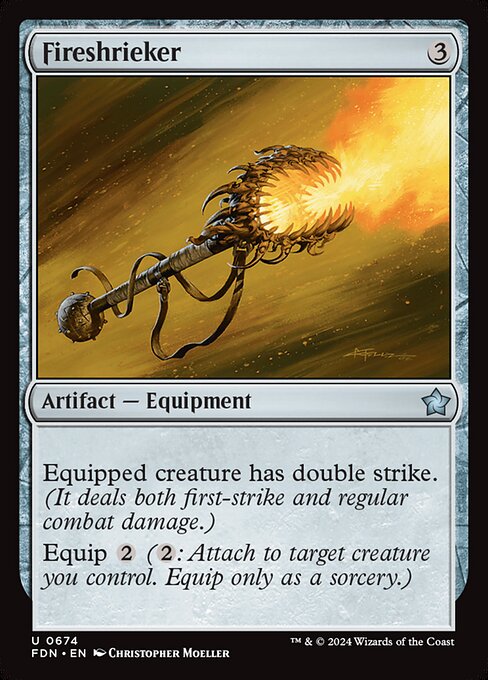
Double strike can be particularly powerful in Voltron because your commander deals combat damage in two separate combat damage steps.
If your commander has seven power, double strike, and connects with an opponent in both steps, that's 14 commander damage in a single combat.
Two such attacks are enough to eliminate that player.
And if your commander has 11 power with double strike, one unblocked attack can deal 22 commander damage.
That's a one-hit elimination.
Cards such as Duelist's Heritage, Fireshrieker, and Embercleave can help depending on the deck.
But remember that double strike isn't the same as being unblockable.
Your commander still needs to deal damage to the player, and blockers can change how combat works.
If it kills its blocker in the first damage step, it remains blocked. Without trample or another relevant effect, it will not deal damage to the player in the second step just because the blocker is gone.
Also, commander damage doesn't reset if your commander leaves the battlefield and comes back.
If an opponent has already taken 12 combat damage from your commander, that amount remains recorded even if the commander dies and gets recast.
That's one reason I like keeping track of commander damage properly. In Voltron, those numbers matter a lot.
Don't Forget Ramp and Card Draw
One mistake I see in Voltron decks is focusing so heavily on Equipment and Auras that the rest of the deck gets neglected.
You still need lands.
You still need ramp.
And you absolutely need card advantage.
Equipment can be mana-intensive. You pay to cast the Equipment, then often pay again to attach it.
If your commander costs four or five mana and you also need several mana to equip it, your turns can become surprisingly expensive.
Cards like Sol Ring, Arcane Signet, and color-appropriate ramp can help you keep developing.
But I'd also look at the overall mana curve.
If your deck contains lots of expensive Equipment, expensive creatures, and expensive protection spells, you're probably going to struggle to do everything you want.
Card draw is equally important.
Sram, Senior Edificer, Puresteel Paladin, Mask of Memory, and Tome of Legends can provide useful card advantage in the right decks.
You don't necessarily need dozens of draw engines, but you should have reliable ways to refill your hand.
Otherwise, after the second or third removal spell, you might have nothing left to rebuild with.
And that's not where you want to be.
How Many Equipment, Auras, and Protection Spells?
I wouldn't follow a fixed formula.
A Light-Paws deck and an Equipment-focused Voltron deck have very different requirements.
But I'd start by looking at roughly 12–18 cards that actively strengthen or support the main attacker, then adjust based on the commander and how much overlap those cards have with your other needs.
I'd also want a meaningful protection package, perhaps 7–10 relevant effects as a starting point, including protection built into the commander or other cards when appropriate.
Evasion, card draw, removal, and ramp still need space.
And remember that some cards perform multiple jobs.
Shadowspear gives both trample and lifelink.
Sword of Fire and Ice can provide extra damage and card advantage when the equipped creature connects.
Swiftfoot Boots provides protection and haste.
Those are valuable slots because they contribute to the attack plan without simply adding more power.
I'd rather have a slightly smaller commander that consistently connects than a 30/30 that gets blocked every turn.
When Should You Attack?
One of the more interesting parts of Voltron is that you're often deciding who to attack and when.
In multiplayer Commander, eliminating one player doesn't automatically mean you've won.
You still have the other opponents to deal with.
And once you demonstrate that your commander can eliminate somebody in one or two attacks, you can expect the table to pay attention.
Sometimes attacking early is correct. You can start accumulating commander damage before opponents develop enough defenses.
Other times it's better to wait until you have protection available or can guarantee that your attack will accomplish something meaningful.
I'd also think carefully before putting all my resources into the commander when everybody has untapped mana.
You don't always have to cast every Aura or attach every Equipment immediately.
Sometimes holding back one useful card is the difference between recovering from removal and losing everything.
Voltron rewards aggression, but that doesn't mean attacking without thinking.
What Happens When Your Commander Gets Removed?
Sooner or later, it will happen.
Somebody will remove your commander.
Maybe several times.
And because you're building around one creature, that can be particularly painful.
The commander tax increases by two generic mana each time you cast your commander from the command zone after the first.
If your commander originally costs four mana, the next cast from the command zone costs six, then eight, and so on.
That becomes expensive very quickly.
This is why I like having a backup plan.
Maybe you can move your Equipment to another creature.
Maybe your commander is cheap enough to recast.
Maybe you have card draw and recursion to recover your lost resources.
Or perhaps your deck includes another creature that can temporarily carry your Equipment and still threaten opponents.
I don't think every Voltron deck needs a second complete win condition.
But it should be able to continue playing after losing its commander.
If your entire deck becomes useless whenever the commander isn't on the battlefield, you're going to have some frustrating games.
Common Voltron Mistakes
A few things I'd watch out for:
Too much power, not enough evasion. Your 20/20 commander isn't doing much if a token blocks it every turn.
Not enough protection. Spending your whole hand on one creature without keeping it alive is asking for trouble.
Ignoring card draw. Eventually somebody will deal with your commander. You need resources to rebuild.
Too many expensive Equipment. Casting and equipping them costs mana. A deck full of impressive swords can still be painfully slow.
Forgetting about the other two opponents. Eliminating one player is satisfying, but you still need a plan for the rest of the table.
Assuming hexproof solves everything. Sacrifice effects, board wipes, and other non-targeting answers can still remove your commander.
And one more thing: just because a card gives +10/+10 doesn't automatically make it good in Voltron.
Sometimes a cheap card that gives trample or protects your commander is much more useful.
Should You Include Other Creatures?
Yes, absolutely.
Voltron focuses on one main attacker, but that doesn't mean the rest of your creature slots should be empty.
Support creatures can draw cards, reduce Equipment costs, protect your commander, or provide useful abilities.
Puresteel Paladin, Stoneforge Mystic, and Danitha Capashen, Paragon are examples of creatures that can support certain Voltron builds.
You might also want creatures that can carry Equipment when your commander isn't available.
And having a few blockers doesn't hurt.
Commander is a multiplayer format, and sometimes your opponents will notice that you have one enormous attacker and absolutely nothing defending you.
That's usually when they decide to attack.
Test Your Voltron Deck Before Buying Everything
Voltron is one of those strategies that can look amazing on paper.
You find a commander, add your favorite Equipment, include a few powerful Auras, and imagine attacking for 30 damage.
But during actual games, you might discover that your Equipment costs too much mana, you don't have enough protection, or your commander keeps getting blocked.
That's why I'd test the deck before spending money on every card.
In MTG Master Deck Builder, you can build your Voltron Commander deck, explore cards that support your strategy, and analyze how the deck performs.
I like checking the mana curve, consistency, interaction, resilience, and synergy.
The opening-hand simulator is particularly useful here.
Try several hands and ask yourself whether you can realistically cast your commander, strengthen it, and still keep enough resources available to protect it.
A hand with three expensive Equipment might look exciting, but it may not actually do anything useful during the first few turns.
And remember that the strongest-looking card isn't always the one your deck needs.
Sometimes removing an expensive Equipment and adding a cheap protection spell improves the deck more than you'd expect.
Is Voltron the Right Archetype for You?
I think Voltron is a great choice if you enjoy combat, making one creature incredibly powerful, and putting real pressure on your opponents.
It's also a fun strategy if you like Equipment, Auras, and finding combinations of cards that make your commander difficult to stop.
And there's something very satisfying about eliminating an opponent with commander damage.
But it's not for everyone.
If you prefer building huge boards, managing complicated engines, or having lots of different threats, relying on one main creature might feel restrictive.
And if your group plays an enormous amount of removal, you might spend more time recasting your commander than actually attacking.
Personally, I think the most enjoyable Voltron decks aren't necessarily the ones that make the biggest creature.
They're the ones that balance power, protection, and consistency well enough to keep applying pressure.
Because turning your commander into a 25/25 is impressive.
But turning it into a protected 11/11 with double strike that nobody can block?
That's usually a much bigger problem.
Build a Voltron deck that can keep attacking
Choose your commander and balance Equipment, Auras, protection and card advantage around your own attack plan.