
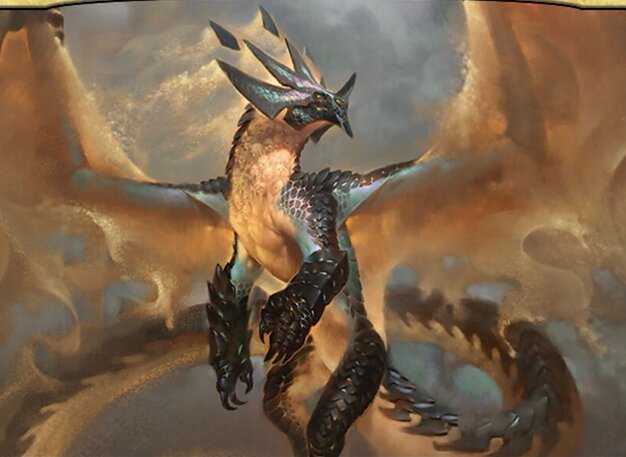
Betor, Ancestor's Voice



 Commander
Betor, Ancestor's Voice plays like an Abzan life-swing engine: gain life to grow a threat, lose life to reanimate, and convert those swings into inevitability.
Public decks: 4Bracket: 3

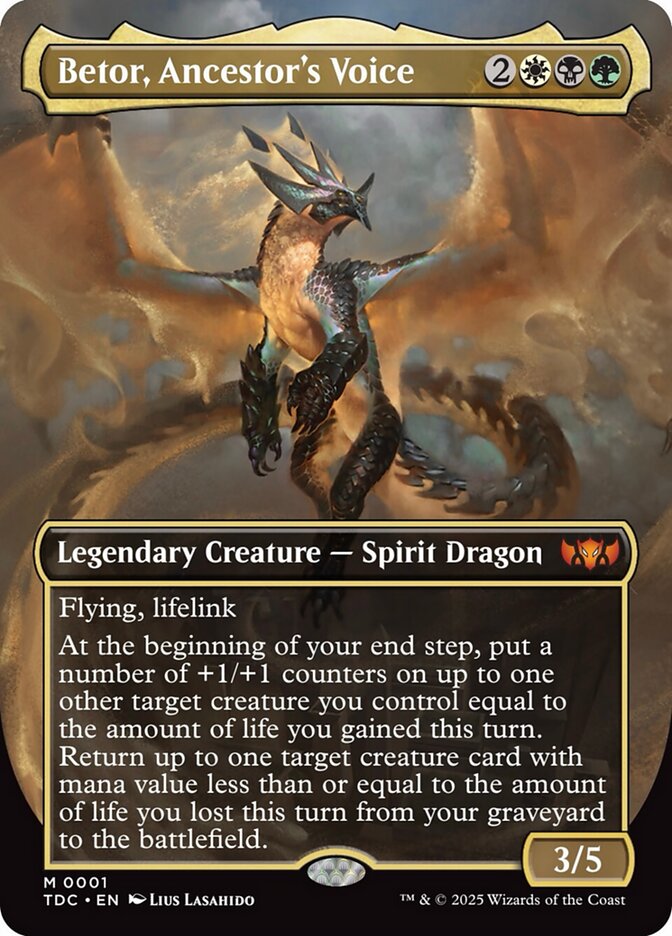
Card text
Legendary Creature — Spirit Dragon
Flying, lifelink
At the beginning of your end step, put a number of +1/+1 counters on up to one other target creature you control equal to the amount of life you gained this turn. Return up to one target creature card with mana value less than or equal to the amount of life you lost this turn from your graveyard to the battlefield.
Building around this commander?
Use MTG Master to build or analyze a Commander deck around this card, check consistency, and find weak spots before your next game.
Overview
- Leans on repeated life gain to stack a huge pile of +1/+1 counters onto a single attacker each end step.
- Uses life loss as a resource to reanimate creatures with mana value up to the life you lost that turn.
- Often plays a longer game where lifelink and incremental drains keep you out of range while your board keeps refilling.
- Typically closes via oversized evasive combat, grinding value from repeated reanimation, or a big life-drain spell once you’re ahead on mana.
Common lines
- Develop mana, then land Betor and start banking life gain so your end step turns one creature into a real clock.
- Intentionally take some life loss in a turn, then use Betor’s end step trigger to bring back a key creature from the graveyard.
- Stabilize with lifelink attacks and selective removal, then pivot to a protected swing that creates a must-answer threat every turn.
- After a sweeper, rebuild quickly by reanimating at end step and immediately re-growing a finisher with counters.
Strengths
- Strong inevitability: Betor turns routine life swings into permanent board advantage.
- Resilient to creature trades and many wipes thanks to built-in reanimation timing at end step.
- Can race damage-based pods by padding life totals while still advancing a win condition.
- Naturally supports both combat and drain finishes, so it can pivot based on the table.
Weaknesses
- Needs life gain and/or life loss setup; if those are disrupted, Betor can feel like a slow 5-drop.
- Graveyard hate and exile-based answers can shut off the reanimation half cleanly.
- End-step triggers are telegraphed and give opponents a full turn cycle to plan removal or interaction.
- Can struggle into repeated commander removal if the deck’s payoff is too centralized on Betor.
- Big single-threat counter plans are vulnerable to spot exile, bounce, and sacrifice effects.
Rule zero notes
- Disclose if you’re running combo-style lifedrain finishes (for example cards like Exquisite Blood can push games toward sudden endings).
- Call out how much mass removal you’re on (examples seen include Farewell, Austere Command, and Cleansing Nova).
- Mention whether the build is combat-focused (giant lifelink flier + counters) or more reanimator/grind focused.
- If you include tax/tempo pieces that slow creature decks (an example is Authority of the Consuls), flag that up front.
Matchups
Best into
- Creature-heavy midrange pods where lifelink stabilizes and your end step triggers snowball
- Board-wipe-heavy games where you can recover with end step reanimation
- Damage-based aggro tables that have trouble pushing through repeated life gain
Struggles against
- Graveyard-hate-heavy pods and decks that exile key creatures
- Fast combo tables where incremental life engines don’t buy enough time
- Control pods with lots of instant-speed interaction aimed at your commander or your one big threat
Recent public decks
Staples
Browse all public decksFAQ
What is Betor actually paying you for?
Every turn cycle, Betor rewards life gain by permanently growing a creature, and rewards life loss by upgrading your graveyard into the battlefield.
Do I have to attack with Betor to make it work?
Not strictly, but flying lifelink makes Betor a reliable way to turn combat into a huge life-gain number that supercharges the counter trigger.
How do games usually end?
Many games end with an enormous, repeatedly grown attacker, or by leveraging life-drain spells as a finisher once you’ve stabilized and ramped.
What kind of creatures does Betor want to reanimate?
Typically the ones that swing the board immediately when they enter or that help you keep looping life gain/life loss; the exact package varies a lot right now.
What should I protect first: the graveyard plan or the counters plan?
It depends on the table, but if opponents are showing graveyard hate, leaning harder into the counter-based combat plan can keep you functional without overcommitting.