
How to Build a Blink Commander Deck: Reuse Abilities, Generate Value, and Win
By MTG Master EditorialPublished Updated 20 min read
Some creatures are great because of their power and toughness. Others have abilities that make them useful throughout the game.
And then there are creatures that do something fantastic when they enter the battlefield.
Draw two cards. Destroy an artifact. Remove a threat. Create some tokens. Return a card from your graveyard.
Normally, you get that effect once.
But what if you could use it again?
And again?
That's basically the idea behind Blink.
Instead of looking for increasingly powerful creatures, you're building a deck that gets more value out of the creatures you already have.
A creature that draws two cards when it enters the battlefield is pretty good. A creature that draws two cards every turn becomes a serious problem for your opponents.
And the funny thing is that some of the most dangerous cards in a Blink deck don't look particularly threatening.
A harmless 1/3 creature that draws a card might not worry anyone.
Until it's drawn you seven cards.
Let's look at how I'd build a Blink Commander deck, which cards make the strategy work, and how to avoid creating a deck that generates endless value but never actually wins.
What Exactly Is Blink in Commander?
Blink, sometimes called Flicker, is a strategy built around temporarily exiling your own permanents and returning them to the battlefield.
Most Blink decks focus on creatures because so many creatures have useful enter-the-battlefield abilities, often called ETB abilities.
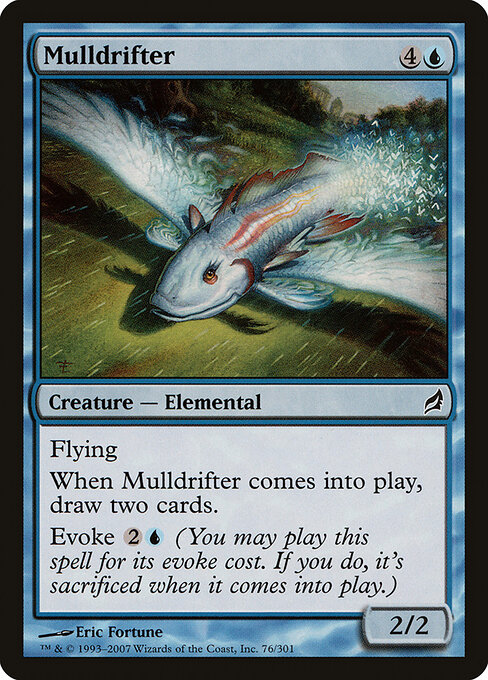
For example, imagine you control Mulldrifter.
When Mulldrifter enters the battlefield, you draw two cards.
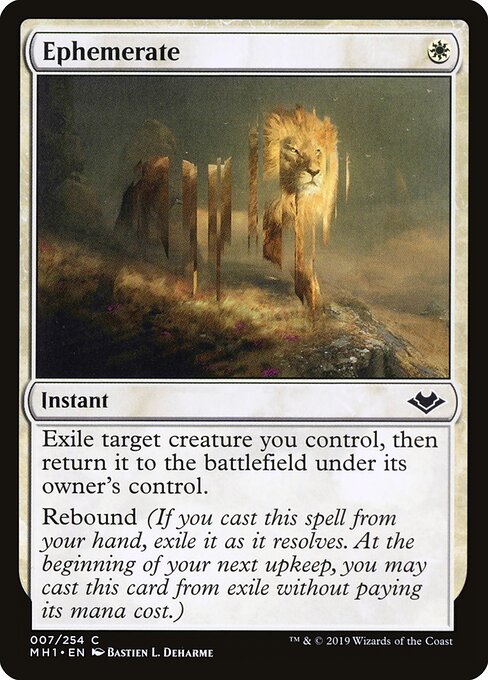
Now you cast Ephemerate, targeting Mulldrifter.
You exile it and immediately return it to the battlefield.
Because Mulldrifter has entered again, you draw another two cards.
And if you cast Ephemerate from your hand, its rebound ability lets you cast it again for free at the beginning of your next upkeep.
Rebound only happens if Ephemerate resolves. If its only target becomes illegal, it won't be exiled for rebound.
Assuming Mulldrifter is still available, that's another two cards.
You've potentially drawn six cards from one creature and one inexpensive Blink spell, counting the creature's original entry.
That's what makes the strategy so interesting.
You're not necessarily playing individually broken cards. You're making ordinary useful abilities considerably more valuable by repeating them.
But there is an important distinction.
Blink isn't the same as bouncing a creature to your hand.
When you blink something, it normally returns directly to the battlefield without having to pay its mana cost again.
That efficiency is what allows these decks to build powerful engines.
Choosing the Right Blink Commander
The commander you choose changes the strategy quite a lot.
Some commanders provide repeatable Blink effects. Others reward creatures entering the battlefield or help generate additional value.
And while Blink is most commonly associated with white and blue, adding other colors can open up some interesting options.
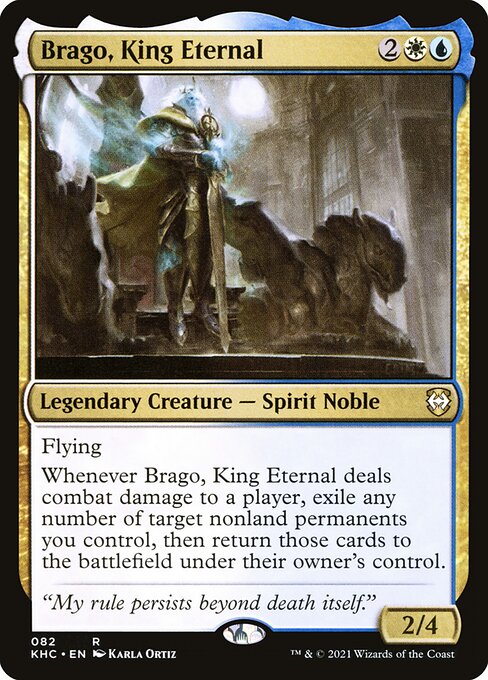
Brago, King Eternal: Blink Half Your Battlefield
Brago, King Eternal is one of the classic Blink commanders.
Whenever Brago deals combat damage to a player, you can exile any number of target nonland permanents you control and return them to the battlefield.
That's incredibly powerful.
You can reuse several ETB abilities at once, but you can also blink mana rocks, utility artifacts, and even Brago himself.
Imagine you have Brago, Mulldrifter, Solemn Simulacrum, and a couple of mana rocks on the battlefield.
Brago connects with an opponent.
You blink the creatures to draw cards and find another land. Mana rocks that normally enter untapped return untapped and can potentially generate more mana.
One successful attack can give you a lot of resources.
What I like about Brago is that he rewards you for building a battlefield full of useful permanents.
The downside is that he needs to deal combat damage to a player.
If opponents can block him or remove him before combat damage, your engine might never get started.
I'd include enough protection and ways to connect rather than assuming Brago will always get through.
Roon of the Hidden Realm: Blink When You Need It
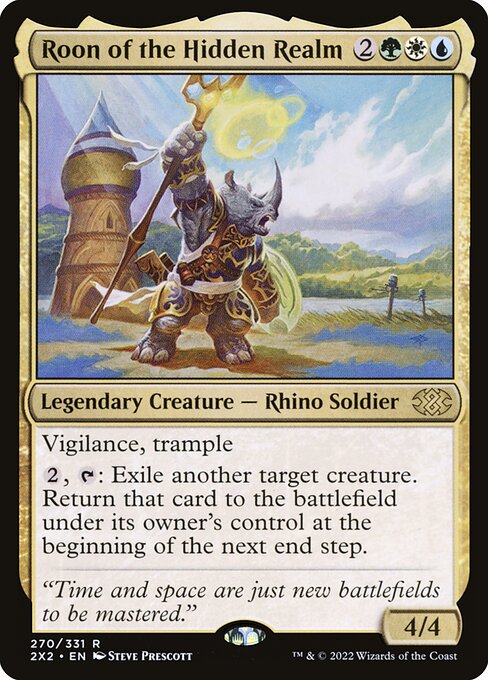
Roon of the Hidden Realm is another interesting option, especially if you enjoy Bant colors.
His activated ability lets you exile another target creature, returning it at the beginning of the next end step under its owner's control.
That gives you more control over when you blink something.
You can reuse your own creatures, temporarily remove an opposing creature, or disrupt certain combat situations.
And because the ability can be activated at instant speed, timing becomes an important part of the strategy.
What I like about Roon is the flexibility.
You aren't limited to blinking creatures during your turn.
But his ability requires mana and tapping him, so you won't necessarily be blinking several creatures every turn without additional support.
Also, remember that the creature returns at the next end step, not immediately.
Sometimes that's exactly what you want. Other times, you might prefer a Blink effect that returns the creature straight away.
Aminatou, the Fateshifter: Blink More Than Creatures
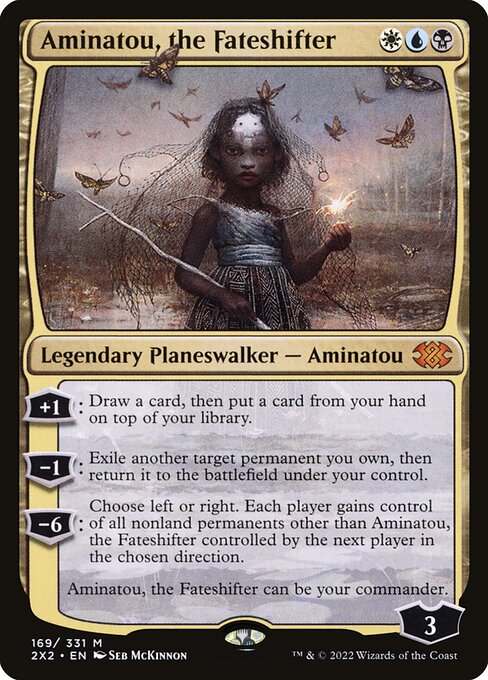
Aminatou, the Fateshifter is a particularly interesting choice if you enjoy unusual interactions.
Her -1 loyalty ability lets you exile another permanent you own and return it to the battlefield under your control.
That means you're not limited to creatures.
You can reuse artifacts, enchantments, and other useful permanents with enter-the-battlefield abilities.
Having access to Esper colors also gives you excellent removal, card draw, and recursion.
I like commanders that open up several deckbuilding possibilities rather than forcing every card into exactly the same role.
The main challenge is protecting Aminatou.
She's a planeswalker, and in a four-player Commander game there are usually plenty of creatures ready to attack her.
Yorion, Sky Nomad: Blink Everything Together
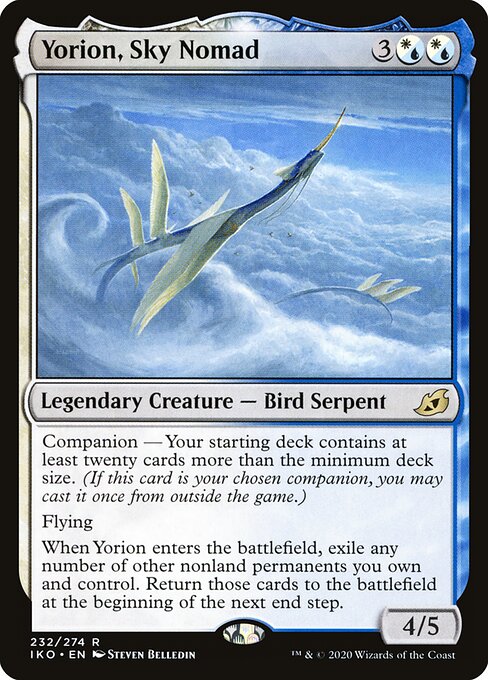
Yorion, Sky Nomad is another commander worth considering.
When Yorion enters the battlefield, you can exile any number of other nonland permanents you own and control, then return them at the beginning of the next end step.
That can generate an enormous amount of value if your battlefield is full of useful ETB permanents.
Imagine blinking several creatures that draw cards, remove threats, or create additional creatures.
All those abilities trigger again when the permanents return.
And because Yorion's own ability triggers when it enters, you can build the deck around reusing Yorion itself.
I particularly like this approach if you enjoy building a board where several small advantages accumulate into something much more powerful.
Just be careful with timing.
The permanents exiled by Yorion don't return immediately, so they won't be available for the rest of that turn until the appropriate end step.
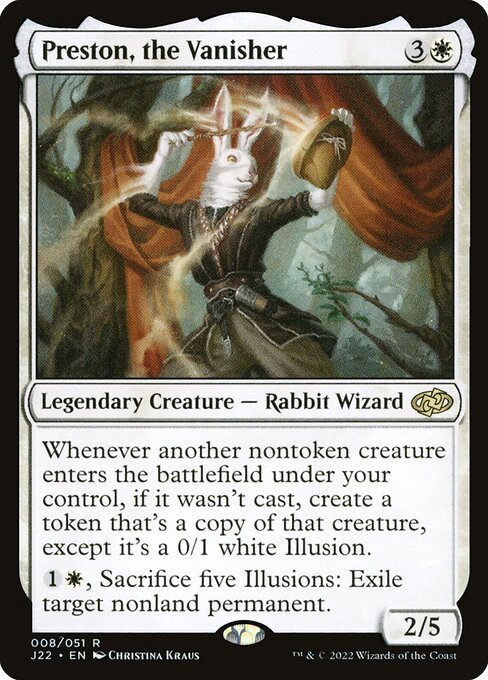
Preston, the Vanisher: Every Blink Can Create Another Creature
Preston, the Vanisher takes the strategy in a different direction.
Whenever another nontoken creature enters the battlefield under your control without being cast, Preston creates a token copy of it, except that the token is a 0/1 white Illusion.
Since blinking a creature returns it directly to the battlefield without casting it, Preston can reward you with additional copies.
And if the original creature has an ETB ability, the token copy may trigger that ability too.
That's where things can become ridiculous.
You blink one creature, get its ability again, and potentially create another creature that provides the same effect.
The downside is that those token copies are still tokens.
You can't repeatedly blink them and expect them to return, because tokens that leave the battlefield don't come back.
But you can still generate enormous value from the copies you create.
The Most Important Part: Creatures Worth Blinking
I think this is where a lot of Blink decks are won or lost during construction.
It's very easy to add every creature with an ETB ability.
But not every ETB ability is worth repeating.
A creature that gains you two life when it enters isn't necessarily bad.
But if you're spending several cards and lots of mana repeatedly blinking it, you should ask whether that effect is actually advancing your game.
I like creatures that provide resources, solve problems, or help close the game.
Card Draw and Card Advantage
This is one of the strongest reasons to play Blink.
Mulldrifter, Cloudblazer, Wall of Omens, and Spirited Companion can provide useful card advantage when they enter the battlefield.
A card that draws one or two cards might not look particularly exciting.
But repeat that effect several times and suddenly you're seeing a large part of your library.
I especially like inexpensive creatures with useful ETB abilities.
They give you something to do during the early game and become much better once your Blink engine is available.
And you don't need to save every Blink effect for a spectacular creature.
Sometimes blinking a small creature to draw one more card is exactly what keeps your deck moving.
Removal Attached to Creatures
This is another category I particularly like.
Cards like Reclamation Sage, Loran of the Third Path, and Skyclave Apparition can help you deal with opposing permanents.
The advantage is that you're combining interaction with your main strategy.
Instead of using a separate removal spell, you play a creature that answers something and can potentially be reused later.
That doesn't mean these cards replace all your conventional removal.
Some threats need answers immediately, and not every ETB creature can deal with every type of permanent.
Also, some removal creatures have drawbacks or unusual interactions when they leave the battlefield.
Read those cards carefully before assuming blinking them repeatedly is always beneficial.
Ramp and Mana Development
Blink can also help you generate mana and develop your lands.
Solemn Simulacrum is a classic example.
Whenever it enters the battlefield, you search for a basic land and put it onto the battlefield tapped.
Blink it repeatedly and you can keep finding lands.
Other creatures, such as Farhaven Elf and Wood Elves, can perform similar roles depending on your colors.
I like this approach because it makes your ramp useful at different stages of the game.
Early on, the creature helps you develop.
Later, it becomes another way to generate value with your Blink engine.
But I'd still include conventional ramp.
You don't want to rely completely on having both a ramp creature and a Blink effect available just to develop your mana.
Recursion and Utility
Some creatures become particularly interesting when you can reuse their ETB abilities to recover resources.
Eternal Witness is a great example.
When it enters the battlefield, you can return a card from your graveyard to your hand.
If you blink Eternal Witness, you can use that ability again.
That might mean recovering removal, a protection spell, or even another Blink effect.
Sun Titan is another excellent utility creature that can return smaller permanents from your graveyard when it enters or attacks.
These cards help make your deck more resilient.
But be careful about filling the deck with too much recursion.
If you're spending every turn recovering cards without actually improving your position, you might be creating a very elaborate engine that doesn't accomplish much.
Choosing Your Blink Effects
Not all Blink cards work the same way.
And I think having a mixture of different effects makes the deck more flexible.
Cheap Blink Spells
Ephemerate, Cloudshift, and Momentary Blink are excellent examples.
They're relatively inexpensive and allow you to reuse important ETB abilities without committing a huge amount of mana.
Some can also protect your creatures from targeted removal.
For example, if an opponent casts a removal spell targeting your creature, you can respond with Cloudshift.
Your creature leaves the battlefield and returns as a new object.
The original removal spell no longer has the same legal target.
And you get the creature's ETB ability again.
That's a pretty good deal.
But remember that immediate Blink doesn't normally save a creature from a board wipe that's still waiting to resolve.
If your creature returns before the board wipe resolves, it'll still be on the battlefield when everything gets destroyed.
Repeatable Blink Engines
This is where the deck starts becoming particularly interesting.
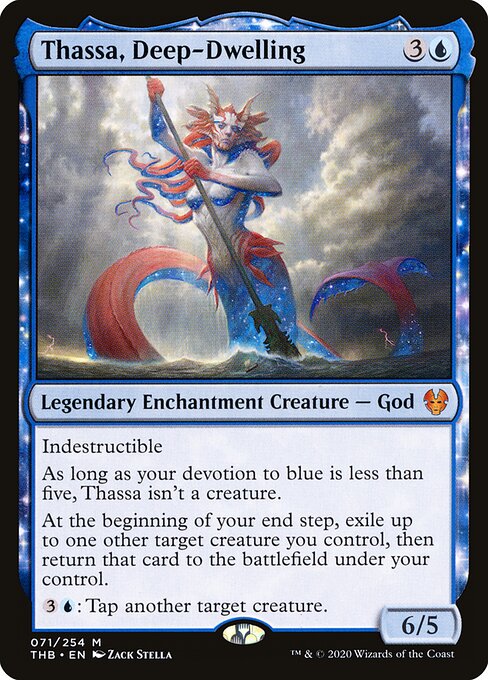
Cards like Teleportation Circle, Thassa, Deep-Dwelling, Conjurer's Closet, and Soulherder can blink creatures repeatedly.
Some work at the beginning of your end step.
Others have their own restrictions or additional benefits.
The advantage is that you don't need to draw a new Blink spell every turn.
You can keep reusing the same creature and generating value.
I like having several repeatable engines, especially in decks that aren't completely dependent on the commander.
But there's a balance.
If you draw several Blink engines and have no useful creatures to blink, those engines aren't accomplishing very much.
Blinking Several Creatures at Once
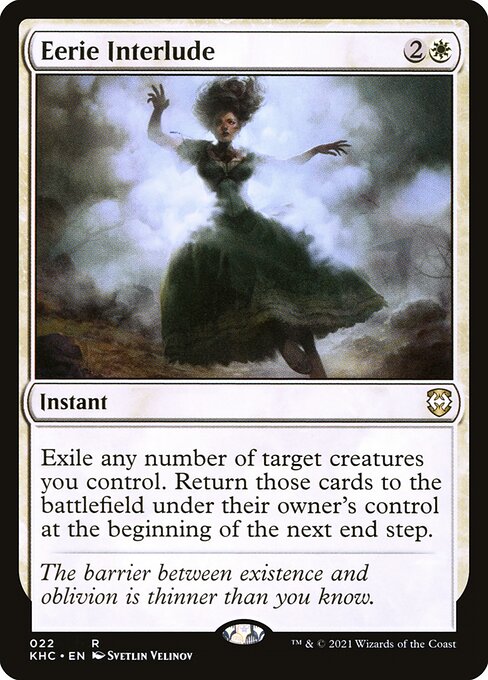
Cards like Eerie Interlude and Ghostway offer a different approach.
They can temporarily exile several creatures and return them at the beginning of the next end step.
These effects are particularly useful against many board wipes.
Your creatures leave the battlefield, the board wipe resolves, and your creatures return later.
And when they return, you get their ETB abilities again.
That can completely change the result of a board wipe.
Instead of losing your board, you might rebuild it immediately with additional cards, lands, and other effects.
Just remember that these spells have restrictions, and tokens won't return after being exiled.
I wouldn't fill the deck with mass Blink spells, but having a few can be extremely valuable.
Panharmonicon and Other ETB Multipliers
There's another way to get more value from your creatures without necessarily blinking them more often.
You can make their ETB abilities trigger additional times.
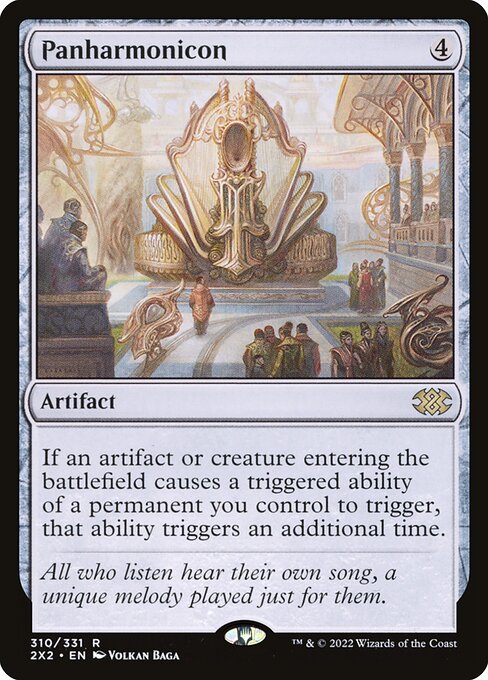
Panharmonicon is one of the most recognizable cards for this.
If an artifact or creature entering the battlefield causes a triggered ability of a permanent you control to trigger, Panharmonicon makes that ability trigger an additional time.
Imagine blinking Mulldrifter while controlling Panharmonicon.
Instead of drawing two cards from Mulldrifter's ETB ability, you draw four.
And if you repeat the process, the advantage grows quickly.
Elesh Norn, Mother of Machines can provide a similar additional-trigger effect for permanents entering under your control, while also interfering with opposing ETB triggers.
These effects can make a Blink deck extremely powerful.
But they're also cards that tend to attract attention.
Once your opponents see you drawing four cards every time a creature enters, they'll probably start looking for ways to remove your engine.
Can't really blame them.
Blink as Protection: A Useful Trick, but Not Invincibility
One thing I like about Blink is that it isn't only an offensive strategy.
You can also use it to protect your creatures.
If an opponent targets an important creature with removal, an instant-speed Blink effect can often make the removal lose its target.
You can also remove a creature from combat by blinking it, although that means it won't continue dealing combat damage in that combat.
And some delayed-return Blink spells can protect several creatures from board wipes.
But there are some rules worth understanding.
A creature that returns from exile is a new object.
That means it generally loses counters, Auras, Equipment attachments, and temporary effects it previously had.
Equipment remains on the battlefield, but becomes unattached.
Auras usually go to the graveyard unless another effect says otherwise.
The returned creature also has summoning sickness unless it has haste or you've controlled that new object continuously since your turn began.
And one more important detail: if you blink a token, it won't return.
Tokens that leave the battlefield can't come back.
That's an easy mistake to make, especially if your deck creates token copies of creatures.
Also pay attention to whether a Blink effect returns the creature under its owner's control or your control.
If you've temporarily stolen an opponent's creature, those words can make a big difference.
Don't Forget Card Draw, Ramp, and Interaction
It's tempting to fill every available slot with creatures that have ETB abilities and cards that blink them.
There's always another interesting interaction to discover.
But you still need a functioning Commander deck.
That means lands, ramp, card advantage, interaction, and ways to recover when things go wrong.
The good news is that many ETB creatures can perform those jobs.
You can use creatures that draw cards.
Creatures that find lands.
Creatures that destroy problematic permanents.
And creatures that return useful cards from your graveyard.
That's one of the reasons I enjoy Blink.
Your support cards can also become part of your main engine.
But I wouldn't rely exclusively on those synergies.
If you have a removal spell in your hand, you can use it without needing a specific creature on the battlefield.
Sometimes you just need an answer.
And if your deck takes six turns to assemble an engine before it can interact with anything, you're probably going to have some difficult games.
How Many Blink Effects and ETB Creatures?
I wouldn't use the same numbers for every deck.
A commander like Brago provides repeatable Blink directly from the command zone.
Another commander might need more Blink effects in the 99.
And some decks want to blink one creature repeatedly, while others focus on blinking several permanents at once.
But as a starting point, I'd look at something like 8–12 reliable Blink effects or engines, adjusting for what the commander already provides.
I'd also want a solid selection of useful ETB creatures, perhaps 15–22 depending on how many roles they cover.
Those aren't strict rules.
A creature that draws cards and provides interaction can be worth more than two cards that each perform only one job.
And a Blink engine that repeatedly reuses several different permanents can be more valuable than several one-time effects.
The important thing is making sure you don't draw only one half of the strategy.
A hand full of Blink spells with nothing useful to blink isn't particularly exciting.
Neither is a battlefield full of ETB creatures when you can't reuse their abilities.
You need both parts to work together.
How Does a Blink Deck Actually Win?
This is probably the biggest trap with Blink.
You can generate an incredible amount of value.
Draw cards, find lands, remove threats, recover resources, and repeat everything several times.
And after fifteen minutes of doing all that...
You're still not winning.
I've seen value engines that look almost unstoppable but don't put any real pressure on the table.
So before finishing the deck, I'd decide how you want to convert that advantage into a victory.
Win Through Combat
This is probably the most straightforward approach.
You generate creatures, draw cards, and develop a stronger board than your opponents.
Eventually, you attack with enough creatures to finish the game.
Cards that create tokens when they enter the battlefield can be particularly useful.
And because your Blink engine lets you reuse those abilities, you can build an army without needing to cast a new creature every turn.
Win Through Repeated ETB Effects
Some creatures deal damage, make opponents lose life, or provide other effects that help close games when they enter the battlefield.
If you can repeat those abilities often enough, you might not need combat at all.
This is particularly interesting in decks that combine Blink with other ETB synergies.
But I'd make sure the deck has enough actual finishing power.
Gaining two life repeatedly is nice.
Making your opponents lose significant amounts of life is considerably more useful when you're trying to win.
Win With Combos
Blink has access to some very powerful combos.
For example, Deadeye Navigator and Peregrine Drake can generate unlimited mana when you have enough appropriate lands.
Deadeye Navigator lets you repeatedly blink the paired Drake, and Drake untaps up to five lands whenever it enters the battlefield.
If those lands produce more mana than the Blink activation costs, you can repeat the process and generate additional mana each time.
The activation costs 
 , so your lands must provide blue mana. You need to pair Drake again after each return before repeating the process.
There are other combinations involving Ghostly Flicker, Archaeomancer, and various mana-generating permanents.
Some can produce infinite mana, repeated ETB triggers, or other loops.
But I wouldn't automatically include every combo available.
If you're building a high-power deck, those interactions might be exactly what you want.
If you're aiming for casual Commander, repeatedly generating value and winning through combat can be just as enjoyable.
The important thing is knowing what kind of games you want to play.
Common Mistakes When Building Blink
There are a few things I'd watch out for.
Too many Blink effects, not enough useful creatures. Blinking something repeatedly is only valuable if the creature actually does something worthwhile when it enters.
Too many expensive creatures. You still need to develop during the early turns. A hand full of five- and six-mana creatures can be painfully slow.
No way to finish the game. Drawing twenty cards and generating ten extra lands is impressive, but eventually you need to win.
Relying entirely on the commander. If your commander gets removed repeatedly, the rest of your deck should still be able to function.
Ignoring interaction. Blink can provide removal through ETB creatures, but sometimes you need a direct answer.
Trying to blink tokens. They won't come back.
And one more thing: don't assume every creature with an ETB ability is automatically good.
Sometimes a simple instant or sorcery accomplishes the same thing more efficiently.
Choose creatures whose abilities genuinely benefit from being repeated.
Test Your Blink Deck Before Buying Everything
Blink is one of those strategies where the individual cards can look quite modest.
A creature that draws one card.
Another that finds a land.
An enchantment that blinks something once per turn.
Nothing particularly spectacular on its own.
But when everything works together, those small advantages can turn into a very powerful engine.
The problem is that sometimes the pieces don't come together as often as you'd like.
You might draw several ETB creatures but no Blink effects.
Or you might have plenty of ways to blink creatures but nothing useful on the battlefield.
That's why I'd test the deck before buying all the cards.
In MTG Master Deck Builder, you can build your Blink Commander deck, explore possible synergies, and use the Deck Analyzer to review consistency, mana curve, interaction, resilience, and other aspects of the deck.
I'd pay particular attention to the balance between ETB creatures, Blink effects, and card advantage.
The opening-hand simulator can also help you identify awkward starts.
And the combo detection tools are worth reviewing if your deck includes repeatable Blink effects, mana generation, or recursion engines.
Sometimes two cards that look completely harmless turn out to create an infinite loop when combined with a third.
That can be a nice surprise.
Or something you decide to remove, depending on your playgroup.
No analyzer replaces playing real games, but it can help identify problems before you spend money on a deck that doesn't quite work the way you imagined.
Is Blink the Right Archetype for You?
I think Blink is a fantastic choice if you enjoy finding synergies, generating value, and getting more use out of the creatures you already play.
It's also an interesting strategy if you like having several options during a game.
Sometimes you'll blink a creature to draw cards.
Other times you'll remove a dangerous artifact, find more lands, or protect an important permanent.
And sometimes you'll blink several creatures at once and suddenly have so many triggers that your opponents start wondering whether you're ever going to finish your turn.
That's part of the appeal.
But Blink isn't for everyone.
If you prefer straightforward combat and quick turns, repeatedly managing ETB abilities might become a little tiring.
And if you don't enjoy keeping track of triggers, some Blink decks can be surprisingly complicated.
Personally, I think the most satisfying Blink decks are those where every creature contributes something useful and the entire battlefield works together.
You don't need the biggest creatures.
You don't necessarily need expensive cards.
You just need good interactions and enough ways to reuse them.
Because sometimes the most dangerous creature on the battlefield isn't a massive Dragon or an Eldrazi.
It's that little creature that draws a card when it enters.
For the eighth time.
Build a Blink deck with a purpose
Balance useful ETB creatures, Blink effects, protection and a clear way to win in Deck Builder.