
How to Build a Control Commander Deck: Answers, Card Advantage, and Knowing When to Say No
By MTG Master EditorialPublished Updated 23 min read
There's something particularly satisfying about watching an opponent spend several turns preparing an enormous threat, only to deal with it using a two-mana spell.
They tap seven lands, proudly announce their big creature, and look around the table.
You look at your hand.
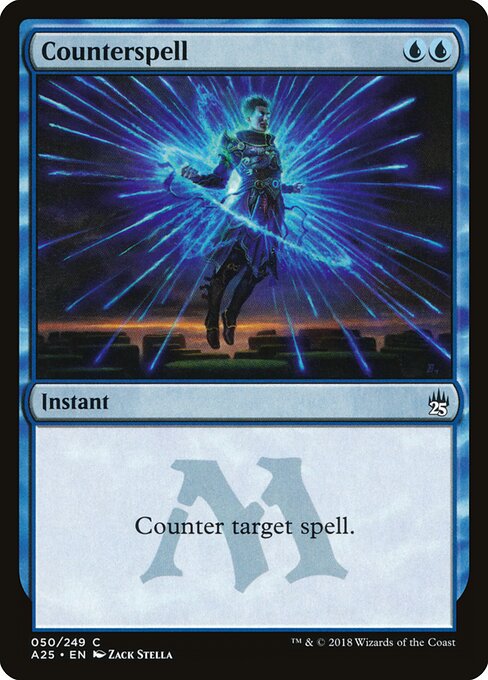
"Counterspell."
Of course, that's usually the moment when they decide you're their new favorite target.
Welcome to Control.
Unlike Aggro decks that try to win quickly or Combo decks that focus on assembling specific interactions, Control is about managing the game, answering important threats, and surviving long enough to take advantage of your resources.
But there's a big difference between playing lots of counterspells and building a good Control deck.
In Commander, you have three opponents. You can't counter everything, remove every creature, or stop every strategy by yourself.
And if you try, you'll probably run out of answers long before your opponents run out of threats.
That's what makes Control interesting to me. It's not just about having answers. It's about knowing which questions are worth answering.
And sometimes the best play is doing absolutely nothing.
Even when you have a Counterspell in your hand.
What Exactly Is Control in Commander?
Control is a strategy built around managing threats, protecting your resources, and gradually gaining an advantage until you can take over the game.
Instead of trying to win as quickly as possible, you're usually more interested in preventing opponents from executing their most dangerous plans.
You might counter a spell that would win the game.
Remove a creature that's generating too much value.
Clear the battlefield before another player becomes unstoppable.
Or simply draw more cards and prepare for what comes next.
Imagine an opponent plays a powerful creature.
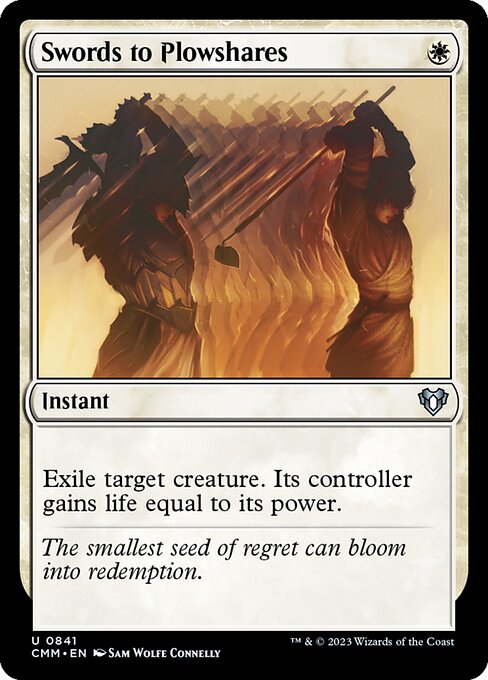
You have Swords to Plowshares in your hand.
You could exile it immediately.
But perhaps that creature isn't actually threatening you. Maybe another opponent has a much more dangerous board, and you know you'll need an answer for it.
So you wait.
Two turns later, somebody tries to assemble a game-winning combo, and you're the only player with interaction available.
That's where Control becomes interesting.
Having an answer doesn't mean you should use it immediately.
Good Control decks need to understand which threats matter, how to manage their resources, and when to let opponents deal with each other.
And in multiplayer Commander, those decisions can be surprisingly complicated.
Choosing Your Control Commander
I think a good Control commander should provide something useful during a long game.
That might be card advantage, access to additional resources, interaction, or a reliable way to finish the game.
Some commanders encourage playing at instant speed.
Others reward you for answering threats or give you ways to generate value without constantly casting spells.
Here are a few I'd consider.
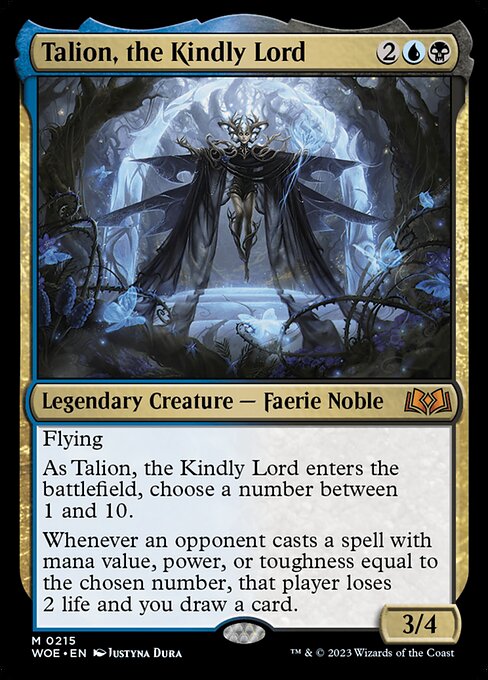
Talion, the Kindly Lord: Let Your Opponents Do the Work
Talion, the Kindly Lord is an interesting Dimir Control commander.
As Talion enters the battlefield, you choose a number between 1 and 10. This is not a triggered ability: players cannot respond between the choice and Talion entering.
Whenever an opponent casts a spell whose mana value, power, or toughness matches that number, that opponent loses 2 life and you draw a card.
I like Talion because it rewards you for something your opponents are already doing.
You don't necessarily need to cast spells to generate card advantage.
And the number you choose can depend on the decks you're facing.
If several opponents are playing lots of cheap spells, choosing a low number might generate plenty of triggers.
But there's no guarantee you'll always choose the perfect number.
That's part of the decision.
Talion also gives you access to blue counterspells and black removal, which is a great combination for Control.
The main challenge is deciding how reactive you want the deck to be.
Drawing cards is useful, but you still need a way to convert that advantage into a win.
Nymris, Oona's Trickster: Play During Other People's Turns
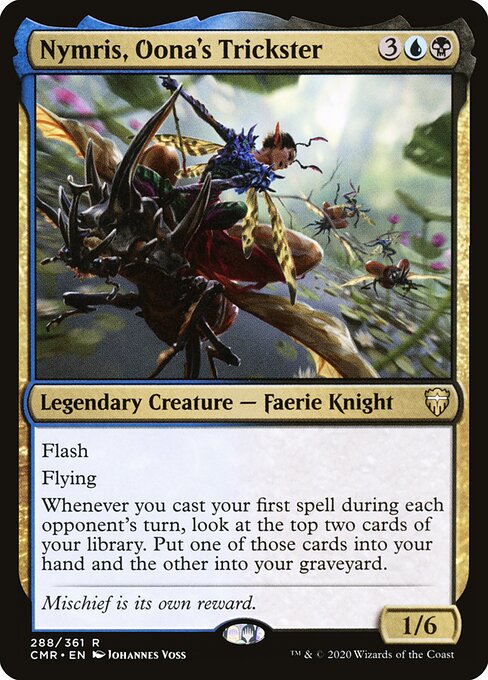
Nymris, Oona's Trickster is another excellent option in Dimir colors.
Whenever you cast your first spell during each opponent's turn, Nymris lets you look at the top two cards of your library, put one into your hand, and the other into your graveyard.
That's a fantastic reward for playing at instant speed.
You can hold up mana for interaction and, if you cast a spell, improve your hand at the same time.
And because Nymris has flash, you can even keep your mana available before deciding when to deploy your commander.
What I like about Nymris is that the deck naturally encourages careful decisions.
You don't need to cast everything during your own turn.
You can wait, see what opponents do, and respond when necessary.
But remember that Nymris only rewards the first spell you cast during each opponent's turn.
Casting four spells during one opponent's turn doesn't give you four triggers.
And you shouldn't waste good removal simply because you want to trigger your commander's ability.
Shorikai, Genesis Engine: Control With Artifacts and Card Draw
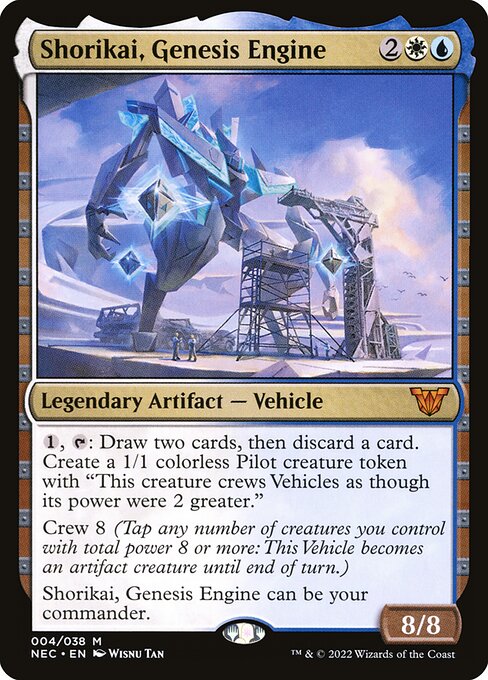
Shorikai, Genesis Engine is an interesting Azorius commander, especially if you enjoy artifacts and Vehicles.
Current rules allow legendary Vehicles with a power/toughness box, such as Shorikai, to be commanders. It does not need to be a creature in the command zone.
Its activated ability lets you pay one mana and tap it to draw two cards, discard a card, and create a Pilot token.
That's a lot of value from a repeatable ability.
You can improve your hand, generate creatures, and gradually develop your board without needing to cast several spells every turn.
I like this in Control because you can hold mana for interaction and use Shorikai when you don't need to respond to anything dangerous.
And because Shorikai is normally a noncreature Vehicle until crewed, it avoids some creature-only removal.
Of course, artifact removal still works.
And there are plenty of ways to build Shorikai, from Vehicle-focused decks to much more traditional Control strategies.
I'd choose one clear direction rather than adding every artifact synergy available.
Queen Marchesa: Control With Politics
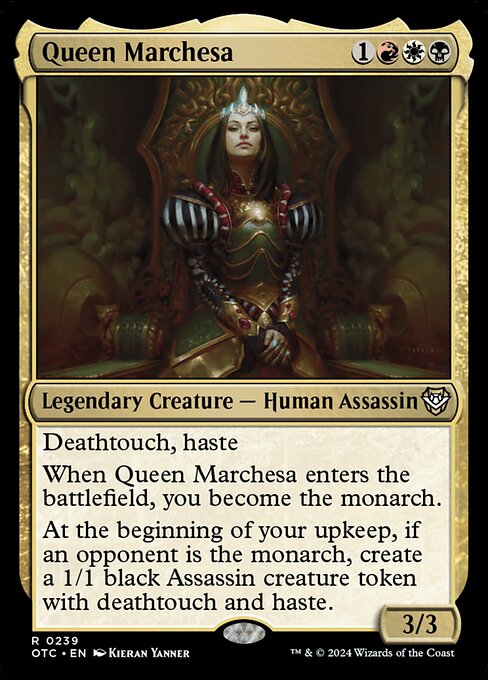
Queen Marchesa offers a different approach in Mardu colors.
When she enters the battlefield, you become the monarch.
As long as you're the monarch, you draw an extra card at the beginning of your end step.
At the beginning of your upkeep, if an opponent is the monarch, Marchesa creates a 1/1 black Assassin token with deathtouch and haste. That condition is checked both when the ability triggers and when it resolves.
I like the monarchy because it changes the combat decisions around the table.
Players have a reason to attack each other, and the extra card draw can become a valuable resource.
Mardu also gives you excellent removal and board wipes.
You don't have blue counterspells, but you can still play a very effective Control strategy.
It's a good reminder that Control doesn't have to mean sitting behind seven Islands with your hand full of counters.
Sometimes controlling the table means removing threats, managing combat, and making sure the other players have reasons to attack somebody else.
Tasigur, the Golden Fang: Recursion and Politics
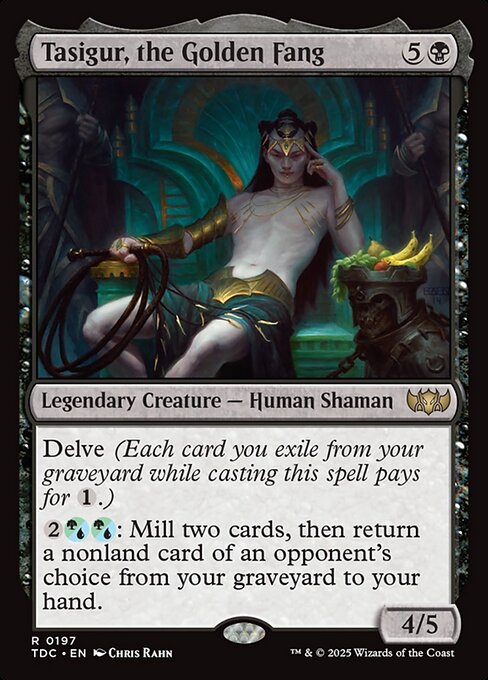
Tasigur, the Golden Fang is another interesting choice if you enjoy resource management.
His delve ability can make him inexpensive to cast, and his activated ability mills cards before letting an opponent choose a nonland card from your graveyard to return to your hand.
That creates some interesting political decisions.
You can ask another player to help you recover an answer to a common threat.
Or perhaps they decide to give you something less useful.
I like commanders that reward understanding the current game rather than simply following the same sequence every time.
Tasigur also gives you access to Sultai colors, combining blue interaction, black removal, and green ramp.
But his ability isn't a tutor.
Your opponents make the final choice about what you get back.
So I'd avoid building the deck around the assumption that Tasigur will always return exactly the card you need.
The Biggest Challenge: You Have Three Opponents
This is where multiplayer Control becomes very different from traditional one-on-one Magic.
In a duel, answering your opponent's threat often puts you ahead.
In Commander, removing one opponent's creature might actually help the other two players more than it helps you.
Think about it.
You spend one card removing a dangerous creature.
The player who controlled it loses a resource.
But the other two opponents also benefit because that creature is gone.
And they didn't have to spend anything.
That's why trying to answer every threat yourself is usually a terrible plan.
You need to let opponents interact with each other.
Sometimes the green player has a removal spell.
Sometimes the white player is preparing a board wipe.
And sometimes a threatening creature is actually keeping another opponent under control.
I wouldn't automatically remove something simply because it's powerful.
I'd ask whether it's stopping my strategy, threatening to win, or creating a problem the table can't realistically ignore.
And I'd also consider what happens after I remove it.
If eliminating one creature allows another opponent to win immediately, perhaps that wasn't the best target.
This is one of the things I enjoy about Control in Commander.
You're not just evaluating cards.
You're evaluating the entire table.
Counterspells: You Can't Counter Everything
Counterspells are probably the first thing most players associate with Control.
And they're certainly useful.
Counterspell, Arcane Denial, Swan Song, Negate, and Dovin's Veto are all examples of interaction worth considering, depending on your colors.
But I wouldn't fill the deck with counterspells and assume that's enough.
A counterspell normally trades one of your cards for one spell.
That can be excellent when the spell you're countering would win the game.
It's less impressive when you're countering a harmless creature that wasn't going to affect you anyway.
What Should You Actually Counter?
I normally think about three types of threats.
First, spells that can win the game immediately or enable a dangerous combo.
Second, spells that prevent my deck from functioning or remove something I absolutely need.
And third, cards that will generate so much value that they're likely to take over the game if nobody answers them.
But even then, timing matters.
Sometimes it's better to counter the spell that enables a combo rather than the final piece.
Other times, holding your counterspell until the opponent actually commits to winning is the safer option.
It depends on the interaction.
And remember that not every dangerous permanent needs to be countered.
If you have a reliable removal spell available, you might prefer to let it resolve and answer it afterward.
But that doesn't always work.
Some creatures have powerful abilities when they enter the battlefield. Removing them afterward won't undo those abilities.
That's why counterspells and removal complement each other.
Don't Counter Something Just Because You Can
This is probably the most common mistake.
You have two untapped Islands.
An opponent plays something mildly annoying.
You counter it.
Next turn, another opponent tries to win.
And now you have no answer.
Of course, sometimes countering the first spell was correct.
But the point is that every answer you use has an opportunity cost.
In multiplayer Commander, you have to think about what you might need that card for later.
And if someone else can deal with a threat, letting them spend their removal might be much better for you.
Removal: Sometimes You Need Something Gone
Counterspells are useful, but they don't solve everything.
Sometimes a dangerous permanent has already resolved.
Sometimes you don't have blue mana available.
And sometimes you need to remove something during an opponent's turn before it becomes a bigger problem.
That's where removal comes in.
Swords to Plowshares, Path to Exile, Anguished Unmaking, Generous Gift, Beast Within, and Chaos Warp are useful examples across different colors.
I like having removal that can answer different types of permanents.
Creature removal is important, but Commander has plenty of dangerous artifacts, enchantments, and planeswalkers too.
A deck with fifteen ways to destroy creatures but no answer to a problematic enchantment can run into serious trouble.
Flexible Answers Are Particularly Valuable
One thing I appreciate in Control is flexibility.
Generous Gift can destroy any permanent, although its controller gets a 3/3 Elephant.
Beast Within offers similar flexibility in green.
Anguished Unmaking can exile a nonland permanent at instant speed, at the cost of some life.
Those drawbacks can be perfectly reasonable when you're answering something that would otherwise take over the game.
I don't think every removal spell needs to be the most efficient option available.
Sometimes being able to answer several different types of threats is worth paying a little more.
Especially in Commander, where you never know exactly what the other three decks are going to do.
Board Wipes: Knowing When to Reset the Table
Board wipes are another important part of many Control decks.
But I'd be careful about playing too many.
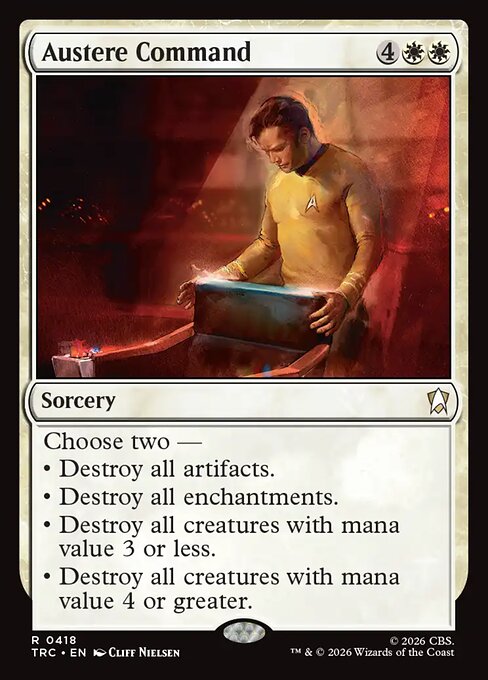
Cards like Supreme Verdict, Austere Command, Farewell, Toxic Deluge, and Blasphemous Act provide different ways to deal with large battlefields.
They can be extremely effective because a single spell may answer several opponents' threats at once.
That's one of the few ways Control can recover some of the card disadvantage of playing against three people.
But the timing matters enormously.
Imagine one opponent has six creatures.
Another has four.
And you have almost nothing.
A board wipe might be fantastic.
But if you have your own important creatures or engines on the battlefield, the same wipe might set you back just as much.
I particularly like flexible board wipes.
Austere Command, for example, lets you choose which categories of permanents to destroy.
That can allow you to remove the things causing problems while preserving part of your own board.
And Farewell can deal with several permanent types and graveyards, but remember that exiling your own resources can also hurt.
One more thing: don't wipe the board just because it's getting crowded.
If the creatures on the battlefield are keeping each other in check, perhaps you can afford to wait.
Sometimes the best board wipe is the one you never needed to cast.
Card Draw: Control Needs More Resources Than Its Opponents
If there's one thing I wouldn't neglect in Control, it's card advantage.
You're playing against three opponents.
They're all drawing cards, casting threats, and developing their strategies.
If you're only drawing one card per turn and using that card to answer one opponent's spell, you're eventually going to fall behind.
You need ways to keep finding answers.
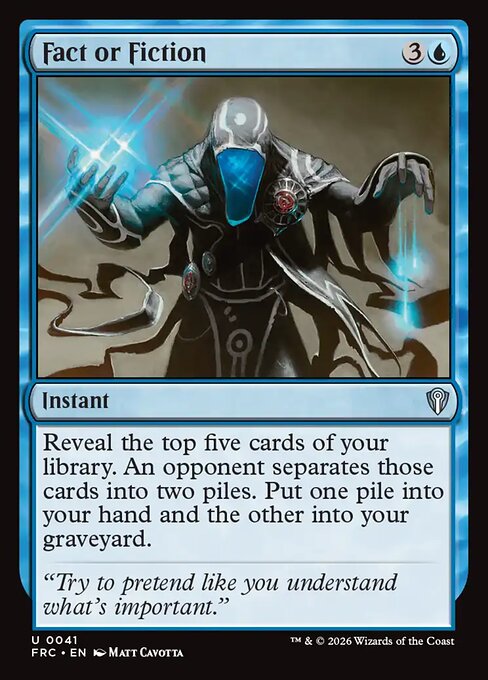
Cards like Fact or Fiction, Dig Through Time, Mystic Remora, and Rhystic Study can provide card advantage in suitable decks.
But I also like repeatable engines attached to commanders or permanents.
A commander that draws cards, creates resources, or helps recover interaction can be extremely valuable over a long game.
And don't underestimate instant-speed card draw.
Imagine you pass with four mana available.
If an opponent attempts something dangerous, you have a counterspell ready.
If nobody does anything worth answering, you can use that mana to draw cards at the end of the last opponent's turn.
That's exactly the kind of flexibility I enjoy.
You're not wasting your mana simply because nobody gave you something to counter.
Card Selection Matters Too
Not every card-advantage effect needs to draw five cards.
Sometimes looking at several cards and choosing the most useful one is exactly what you need.
Control often cares about finding the right answer more than simply having the largest hand.
Maybe you need removal for an enchantment.
Perhaps you need a board wipe.
Or maybe you already have enough interaction and need to find a win condition.
Good card selection helps you adapt to the current game.
And that's one reason I prefer varied draw and selection effects rather than relying on a single enormous draw spell.
Playing at Instant Speed: Keep Your Options Open
This is one of my favorite parts of Control.
You don't always have to commit to a play during your own turn.
Instead, you can leave mana available and see what happens.
If an opponent tries something dangerous, you respond.
If nobody does, you spend your mana on card draw or another useful effect.
Cards like Fact or Fiction, Memory Deluge, and various instant-speed interaction spells support this approach.
Commanders such as Nymris reward it directly.
But I wouldn't assume every Control deck needs to operate exclusively at instant speed.
Sometimes casting a powerful permanent during your own turn is exactly the right play.
And sometimes developing your mana or placing a useful engine onto the battlefield matters more than holding up a counterspell.
The interesting part is knowing when to change gears.
If you spend every turn passing with mana open, opponents may simply develop their boards while you fall behind.
Control isn't about refusing to play cards.
It's about choosing the moments when your cards have the greatest impact.
Graveyard Interaction: Don't Forget the Other Resource Zone
One thing that's easy to overlook is graveyard hate.
You can have excellent creature removal and plenty of counterspells, but still struggle against a deck that repeatedly brings threats back from the graveyard.
If an opponent can reanimate the same creature every turn, your removal spells might not accomplish very much.
Cards like Soul-Guide Lantern, Bojuka Bog, Rest in Peace, and Nihil Spellbomb can help, depending on your colors and strategy.
And some of these cards are inexpensive enough to fit into many different decks.
I like having at least a few ways to interact with graveyards, especially in Commander.
But pay attention to your own strategy.
Rest in Peace can be excellent against graveyard decks, but it's not particularly friendly if your own deck depends on recursion.
As usual, choose interaction that addresses your opponents without unnecessarily shutting down your own plan.
Threat Assessment: The Most Important Control Skill
This is probably the part of Control that matters more than any specific card.
You need to understand what the biggest threat actually is.
And the biggest creature isn't always the biggest threat.
Imagine one player controls a 12/12 creature.
Another has a modest-looking enchantment that lets them draw several extra cards each turn.
And a third is assembling a combo that could win on their next turn.
Which one should you answer?
It depends on the current game.
The 12/12 might be dangerous if it's attacking you for lethal damage.
The enchantment could be a serious long-term problem.
But if the combo player is about to win, that's probably the most urgent issue.
I try to think about both immediate danger and long-term value.
Some threats need an answer right now.
Others can wait a turn or two.
And some are better handled by another player.
This is also where understanding different Commander archetypes becomes useful.
If you know how Aristocrats, Reanimator, Spellslinger, or Combo decks usually win, it's much easier to recognize the cards that actually matter.
Instead of removing whatever looks frightening, you can focus on the pieces that enable the strategy.
And that makes your interaction much more effective.
Don't Make Yourself the Enemy of the Entire Table
There's another side to Control that isn't really about cards.
Politics.
If you counter every spell one particular opponent casts, they're probably going to start attacking you whenever possible.
And if you spend the entire game telling everybody what they should or shouldn't play, you may find yourself facing three opponents who suddenly have a common objective.
Eliminating you.
I think Control works better when you use interaction for clear reasons.
Stop the player who's about to win.
Remove the permanent that's preventing the table from playing.
Answer a threat that's genuinely dangerous.
And sometimes let the other players deal with each other.
You don't need to control every decision at the table.
In fact, trying to do that is usually a good way to run out of resources.
Also, if you're the only player with counterspells, don't let everybody assume it's automatically your job to stop every dangerous spell.
Other players have removal too.
They can help.
Commander is multiplayer, after all.
How Many Counterspells, Removal Spells, and Board Wipes?
I wouldn't follow a fixed formula.
A dedicated Azorius Control deck has different needs from a Mardu deck that relies more heavily on removal and board wipes.
A commander that provides repeatable interaction may also change how many individual answers you need.
But as a starting point, I'd look at a fairly substantial interaction package.
Perhaps around 12–18 targeted answers, combining counterspells and removal according to your colors, plus a few board wipes.
Some dedicated Control decks will want more.
Others may need fewer if they have repeatable removal or strong defensive engines.
What I wouldn't do is automatically include twenty counterspells simply because the deck is called Control.
You still need mana, card draw, protection, and a way to win.
And remember that interaction has to be appropriate for the games you're playing.
If your group plays lots of creature decks, board wipes and creature removal might be especially valuable.
If you're facing fast combos, efficient stack interaction becomes more important.
A good Control deck adapts to the threats it expects to face.
How Does a Control Commander Deck Actually Win?
This is where I think some Control decks have problems.
They're excellent at preventing opponents from winning.
But they don't have a clear way to win themselves.
You counter spells, remove creatures, wipe the board, and draw cards.
Everything looks under control.
And then your opponents ask how you're planning to finish the game.
That's a fair question.
I like Control decks with a small number of reliable win conditions that work naturally with the rest of the strategy.
Win With a Few Powerful Threats
One of the most traditional approaches is to control the game until you can safely deploy a powerful creature or other threat.
Hullbreaker Horror, The Scarab God, and Shark Typhoon are interesting examples in suitable decks.
They can generate value, create pressure, or help turn your existing spells into a winning position.
The important thing is choosing threats that don't require your entire deck to revolve around them.
You want something that can finish the game after you've spent several turns managing the table.
And ideally, something that isn't completely useless if your opponents still have interaction.
Win Through Repeated Value
Some Control decks gradually build a stronger battlefield through tokens, recurring creatures, or other permanent-based engines.
For example, Shorikai can keep generating Pilot tokens while helping you find additional cards.
Those tokens aren't necessarily your entire win condition, but they can contribute to a board that eventually becomes dangerous.
Other commanders may create larger threats or repeatedly recover useful permanents.
I like this approach because your win condition develops while you're already playing Control.
You're not waiting for one specific card to appear before your deck can do anything proactive.
But I'd make sure the engine generates enough pressure.
Creating one small token every turn isn't necessarily going to finish a four-player Commander game.
Win With an Alternative Win Condition
Approach of the Second Sun is an interesting option in white-based Control decks.
The usual plan is to cast it from your hand, gain seven life, and put it back into your library seventh from the top.
Then you draw through your deck and cast it from your hand again, satisfying its winning condition.
That gives your deck a clear objective.
You're surviving, drawing cards, and preparing to resolve an important spell.
But your opponents will know what's coming.
Once they've seen the first Approach, they'll probably start saving their interaction.
And remember that the second Approach still needs to resolve for you to win.
The earlier one only needs to have been cast, not resolved, and can have been cast from any zone. Copying a spell directly on the stack does not count as casting another one.
Win With Combos
Some Control decks use their interaction to protect a compact combo.
You prevent opponents from winning, find the necessary pieces, and eventually assemble your own win condition.
That's a perfectly valid strategy, especially in higher-power Commander.
But I wouldn't automatically turn every Control deck into a dedicated Combo deck.
If you enjoy winning through combat or gradual value, you can absolutely build Control that way.
The important thing is having a realistic finishing plan.
Because preventing everybody else from winning for an hour doesn't count as a victory.
Even if your opponents eventually look like they want to concede.
Common Mistakes When Building Control
There are several things I'd watch out for.
Trying to answer everything. You have three opponents. If you use all your interaction on ordinary threats, you'll have nothing left when something truly dangerous happens.
Not enough card draw. Control needs reliable ways to keep finding answers.
Too many counterspells and not enough removal. A counterspell won't help against a permanent that's already on the battlefield.
Using board wipes unnecessarily. Sometimes letting the table develop is better than spending a valuable reset.
No clear win condition. Stopping everyone else is only half the plan.
Not developing your own mana. Holding counterspells is great, but you still need enough resources to cast your important spells.
Ignoring graveyard strategies. Some threats don't stay answered simply because you've destroyed them once.
And one more thing: don't confuse playing Control with being responsible for every threat at the table.
You're one of four players.
You don't have to solve everybody else's problems.
Test Your Control Deck Before Buying Everything
Control is one of those strategies that can look very powerful when you're browsing cards.
You find excellent counterspells, efficient removal, powerful board wipes, and lots of ways to draw cards.
And suddenly your list looks like it has an answer to everything.
But during real games, things may be different.
Maybe you have too much reactive interaction and no way to develop your own board.
Perhaps your deck struggles to produce the right colors at the right time.
Or you might find that you're excellent at surviving but have trouble actually ending games.
That's why I'd test the deck before buying all the cards.
In MTG Master Deck Builder, you can build your Control Commander deck, explore possible card synergies, and use the Deck Analyzer to review consistency, mana curve, interaction, resilience, and other aspects of the deck.
I'd pay particular attention to the balance between targeted removal, counterspells, board wipes, and card advantage.
The opening-hand simulator is useful too.
Try several hands and see whether you can develop your mana while keeping enough interaction available.
A hand with four counterspells and no useful mana development might look very controlling.
But it probably won't be particularly comfortable after a few turns.
And if your deck includes compact combos or repeatable engines, the combo detection tools can help identify interactions you may have missed.
Of course, no analyzer can fully evaluate threat assessment or Commander politics.
Those are things you'll learn by actually playing.
But it can help identify weaknesses before you spend money on a deck that doesn't work quite the way you expected.
Is Control the Right Archetype for You?
I think Control is a fantastic choice if you enjoy making decisions, managing resources, and understanding what your opponents are trying to accomplish.
It's particularly satisfying when you recognize a dangerous interaction before it happens and have exactly the right answer available.
And I like that Control rewards patience.
You don't always need to be the player doing the most things.
Sometimes you're simply watching the game develop, preparing your resources, and waiting for the moment when your cards will matter most.
But Control isn't for everyone.
If you prefer playing enormous creatures and attacking every turn, constantly keeping mana available might feel a little restrictive.
And if you don't enjoy making difficult decisions about which threats to answer, playing Control against three opponents can become exhausting.
Personally, I think the most enjoyable Control decks are those that balance interaction with their own proactive strategy.
You answer the important threats.
Let opponents deal with each other.
Build your resources.
And eventually finish the game.
Because having the perfect answer to every spell is impressive.
But there's something even better.
Having the right answer when it actually matters.
And then winning before somebody draws another problem.
Build Control with answers and a winning plan
Balance interaction, card advantage, mana and reliable finishers in Deck Builder.