
Rakdos Commander Guide: Chaos, Sacrifice and Making Things Die
By MTG Master EditorialPublished Updated 7 min read
Rakdos is black and red, and if there’s one thing these colors are good at, it’s making sure things don’t stay on the battlefield for very long.
Your creatures, your opponents’ creatures, sometimes everyone’s creatures… Rakdos usually doesn’t care too much.
But Rakdos isn’t just about destroying things. Depending on your commander, you can play sacrifice, aristocrats, reanimator, discard, demons, treasures, group slug, aggro or some pretty nasty combo decks.
The common theme is that Rakdos tends to be proactive. You want things happening, you want resources being spent, creatures dying and life totals moving.
How Does Rakdos Play?
Rakdos combines two colors that are very comfortable trading resources for an advantage.
Black gives you great removal, tutors, card draw, graveyard recursion and the ability to use your life total as another resource.
Red gives you damage, aggressive creatures, treasures, temporary mana, impulse draw and a lot of ways to create explosive turns.
Put them together and you get a color combination that can generate a surprising amount of value from things that would normally be bad.
Sacrifice a creature? Good.
Discard a card? Maybe we wanted it in the graveyard anyway.
Lose some life? Who cares if we’re drawing three cards?
Everyone’s creatures died? Even better if ours trigger something when they die.
That’s very Rakdos.
What Is Rakdos Good At?
Sacrifice and Aristocrats
Probably the most recognizable Rakdos strategy.
You create creatures or tokens, sacrifice them for value and trigger effects whenever something dies.
The important part is that your creatures become resources. A small token isn’t just a 1/1 anymore. It can become mana, damage, card draw or another trigger.
Once you have several of these effects working together, a board that looks harmless can suddenly kill the table.
Rakdos, the Muscle is a good example of this kind of deck, turning sacrifice into card advantage while letting you play cards from your opponents’ libraries.
Judith, the Scourge Diva takes a more traditional aristocrats approach, rewarding you every time one of your nontoken creatures dies.
Reanimator
Black is already excellent at putting creatures into the graveyard and bringing them back, and red gives you even more ways to discard cards.
Instead of paying eight mana for some ridiculous creature, why not discard it and bring it back for much less?
Rakdos reanimator can be fast, explosive and very fun if you like cheating big threats into play.
Chainer, Nightmare Adept fits this perfectly. You can discard the creatures you actually want in your graveyard and then cast them from there.
Olivia, Crimson Bride takes another approach: attack with Olivia and start bringing your best creatures back with you.
Group Slug
This is where Rakdos can become… slightly annoying.
Group slug decks slowly damage everyone for doing normal Commander things: drawing cards, casting spells, playing lands, keeping creatures around…
You’re not necessarily attacking one player. You’re making the entire table hurt.
The nice thing is that games rarely stay passive when one of these decks is around.
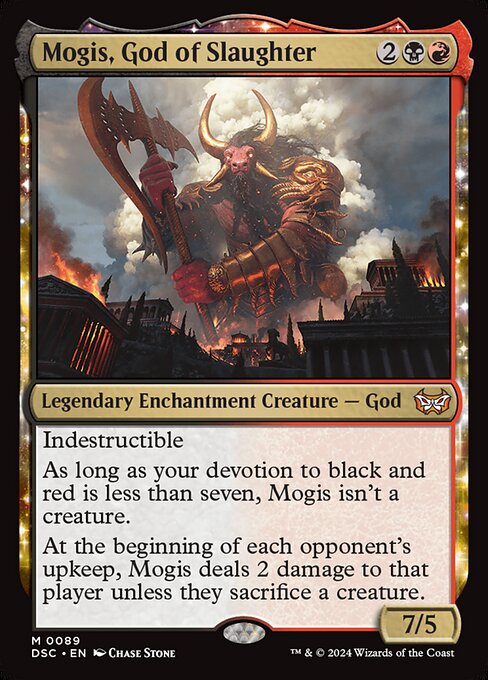
Mogis, God of Slaughter is probably one of the clearest examples. At the beginning of each opponent’s upkeep, Mogis deals 2 damage to that player unless they sacrifice a creature.
Ob Nixilis, Captive Kingpin can also turn those losses of exactly one life into card advantage and a very real threat.
Discard
Rakdos can also attack players’ hands.
Personally, I think this is one of those strategies where you need to know your table. Some discard is useful interaction. Making everyone play the entire game with zero cards in hand is a very different experience.
But mechanically, Rakdos is very good at it, especially when you can turn discarded cards into damage or other advantages.
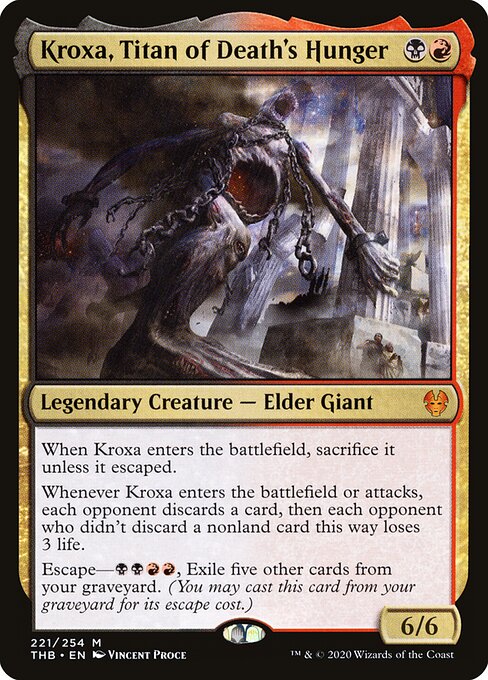
Kroxa, Titan of Death’s Hunger is the obvious commander here. It attacks hands, life totals and works naturally with the graveyard at the same time.
Treasures
Rakdos has access to a lot of Treasure generation, and Treasures solve one of the traditional problems of playing black/red: ramp.
And of course, because we’re playing Rakdos, sacrificing those Treasures can also trigger other things.
So they aren’t always just mana.
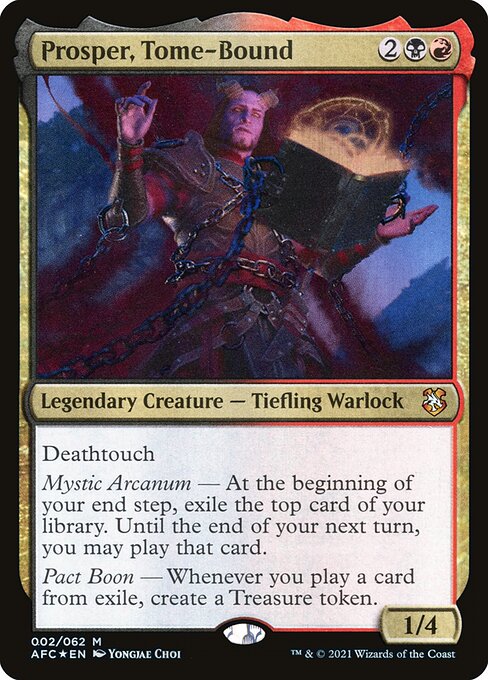
Prosper, Tome-Bound is probably the best-known Rakdos commander for this style. You play cards from exile, make Treasures and use those Treasures to keep the engine going.
It’s one of those commanders where a simple value engine can get out of control surprisingly quickly.
Demons, Devils and Big Threats
Sometimes you don’t need a complicated engine.
You just want Demons.
Rakdos has access to some fantastic large creatures and commanders that reward you for playing them. These decks can feel more like traditional battlecruiser Commander: generate mana, play horrible things and start attacking people.
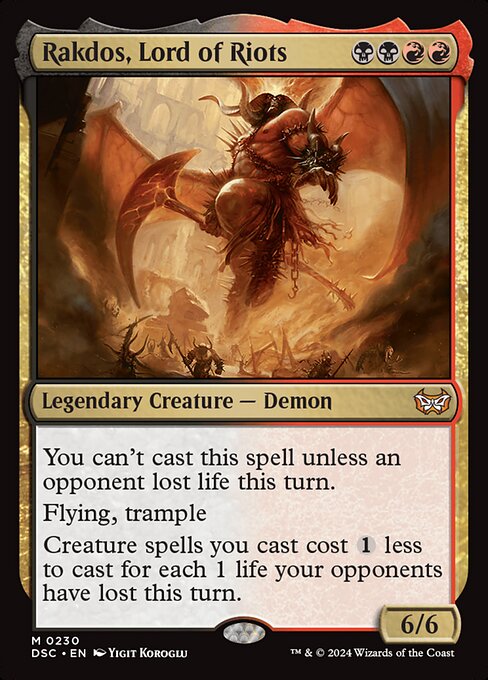
Rakdos, Lord of Riots is one of the classics. Make your opponents lose life first and suddenly the generic part of your creature spells’ costs becomes much cheaper.
And if you want Rakdos in its most literal form, there are several different versions of Rakdos himself that can lead very different decks.
Nothing wrong with that.
What Is Rakdos Bad At?
The biggest weakness is probably enchantments.
Black and red have improved a little here over the years, but neither color naturally deals with enchantments as well as white or green.
You need to think about this when building the deck instead of discovering halfway through a game that one enchantment completely shuts you down.
Rakdos can also be very good at spending resources and then suddenly realize it has spent all of them.
If your deck sacrifices creatures, discards cards and pays life constantly, make sure you’re actually getting enough value back.
Otherwise, you’re just destroying your own board very efficiently.
How Does Rakdos Usually Win?
There’s no single Rakdos win condition.
An aristocrats deck might drain everyone whenever creatures die.
A reanimator deck might put a massive threat into play much earlier than it should.
A Demon deck can simply kill people through combat.
A group slug deck gradually burns the whole table.
And more optimized Rakdos decks can assemble compact combos surprisingly quickly.
One thing I like about Rakdos is that even its value engines often contribute directly toward winning the game. You’re not always building a huge board just to have a huge board. Things are dying, damage is happening and life totals are usually going down.
What Does a Rakdos Deck Need?
Don’t fall into the trap of thinking that because your commander sacrifices creatures, every card in the deck needs to say “sacrifice.”
You still need the normal things that make a Commander deck work.
You need mana.
You need card advantage.
You need interaction.
You need ways to protect or recover your important pieces.
And you need actual ways to win.
Rakdos gives you excellent creature removal, so that part is normally easy. Card draw is also very good, although black will often ask you to pay life for it and red sometimes gives you cards that you need to use immediately.
For ramp, mana rocks and Treasures are usually going to do a lot of the work.
Is Rakdos for You?
I’d look at Rakdos if you enjoy decks where something is always happening.
It’s especially good if you like:
- Sacrificing creatures for value
- Using the graveyard
- Playing aggressively
- Controlling creatures through removal
- Paying life to get stronger effects
- Creating explosive turns
- Draining the whole table
- Turning apparently useless resources into value
If your favorite games involve sitting behind a wall of counterspells waiting for everyone else to do something, Rakdos probably isn’t the first color combination I’d recommend.
Rakdos normally wants to participate in the mess.
And quite often, it wants to be the reason the mess started.
Building Your First Rakdos Commander Deck
Start with the commander, not with a list of Rakdos staples.
Look at what your commander actually wants you to do.
If it cares about creatures dying, you probably need creatures you’re happy to sacrifice, sacrifice outlets and cards that reward those deaths.
If you’re playing reanimator, you need ways to fill your graveyard and enough worthwhile targets to bring back.
If you’re playing Demons, your mana curve and ramp become much more important.
The colors give you the tools, but your commander should tell you which Rakdos deck you’re actually building.
That’s also why two Rakdos decks can feel completely different even though they’re using exactly the same colors.
And that’s probably my favorite thing about the color combination.
Rakdos has a reputation for chaos and destruction, and yes, there’s plenty of that.
But underneath it, there’s usually a very simple idea:
If we’re going to lose something, let’s make sure we get something better in return.
Ready to test your Rakdos deck?
Analyze your list to see whether your mana, card advantage and win plan support the strategy you chose.