
How to Build a Tokens Commander Deck: Build an Army, Multiply It, and Win
By MTG Master EditorialPublished Updated 20 min read
There's something particularly satisfying about looking at your battlefield and realizing you have more creatures than everyone else combined.
You started with a couple of harmless 1/1 tokens.
Then you created a few more. Doubled them. Played another card that generated even more.
And suddenly you have thirty creatures, your opponents are trying to count them, and you're looking for enough dice to represent everything.
Welcome to Tokens.
It's one of the most popular strategies in Commander, and I can understand why. Creating creatures is fun, having an enormous battlefield is fun, and attacking with an army that didn't exist two turns ago can be even more fun.
But there's a difference between a deck that creates lots of tokens and a good Tokens deck.
I've seen token decks generate ridiculous numbers of creatures and then accomplish absolutely nothing with them.
I've also seen someone spend several turns building an enormous army, only for another player to cast a board wipe and remove everything with one card.
That's the challenge with Tokens.
You need to create creatures consistently, find ways to make them useful, protect your battlefield, and eventually turn all those little tokens into a victory.
And preferably before you run out of space on the table.
What Exactly Is a Tokens Commander Deck?
A Tokens deck is built around creating and taking advantage of tokens, usually creature tokens.
Unlike regular cards, tokens are created by spells or abilities. They represent permanents on the battlefield, but they aren't physical cards from your deck.
You might create Soldiers, Goblins, Elves, Zombies, Spirits, Saprolings, or just about any other creature type.
And those creatures can do practically everything ordinary creatures do.
They can attack, block, have abilities, receive counters, be sacrificed, and interact with other cards.
The difference is that you can create large numbers of them without needing to cast a separate creature card for each one.
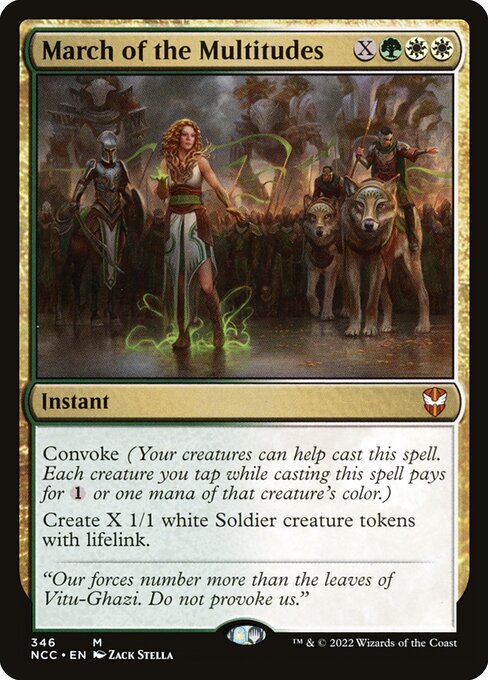
Imagine casting March of the Multitudes with X equal to five.
You create five 1/1 Soldier creature tokens with lifelink.
That's already a decent battlefield.
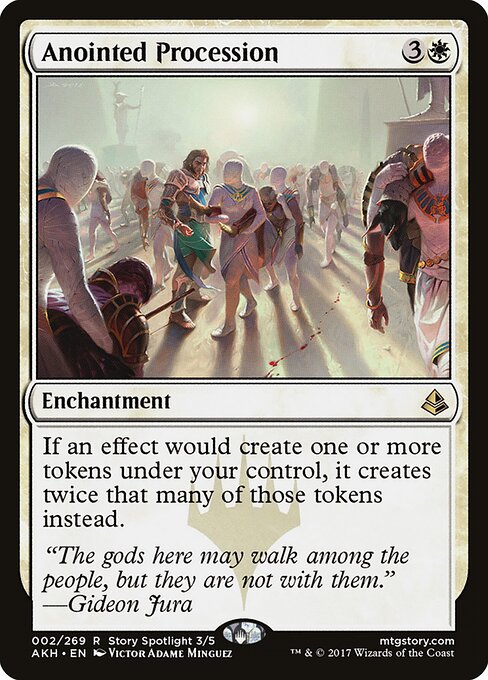
Now imagine controlling Anointed Procession, which doubles the number of tokens you create.
Instead of five Soldiers, you get ten.
And if you have a card that rewards creatures entering the battlefield, those ten creatures can trigger even more abilities.
That's when things get interesting.
But Tokens doesn't always mean creating the largest possible army.
Some decks focus on making a few powerful tokens. Others sacrifice tokens for value, use them to generate mana, or build engines around creatures entering and dying.
And many combine several of those approaches.
Choosing Your Tokens Commander
The commander you choose determines what kind of token deck you're going to build.
Some commanders generate tokens themselves.
Others double them, reward you for having lots of creatures, or turn tokens into additional resources.
I prefer commanders that provide something the deck really needs, rather than simply being another expensive card that creates a few creatures.
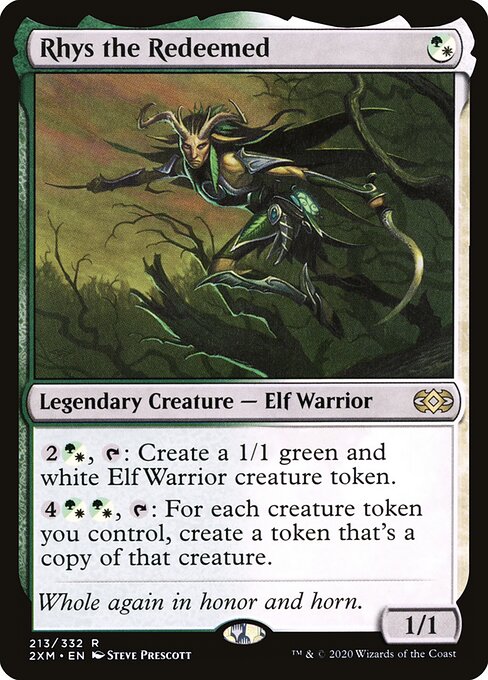
Rhys the Redeemed: Start Small, Finish Huge
Rhys the Redeemed is one of the classic token commanders.
For just one hybrid green-white mana, you get a commander that can create Elf tokens and, more importantly, copy every creature token you control with his second activated ability.
Imagine you already control eight creature tokens.
Activate Rhys's second ability and you create eight more, assuming nothing else changes the result.
Now you've got sixteen.
Do it again later, and the numbers can get ridiculous.
I like Rhys because he provides a clear plan without forcing you to use one specific creature type.
You can create different kinds of creature tokens and copy them all.
His main weakness is that the doubling ability costs a fair amount of mana and requires tapping Rhys.
You'll need enough mana generation, and you'll want to keep your commander alive.
Adrix and Nev, Twincasters: Everything Comes in Pairs
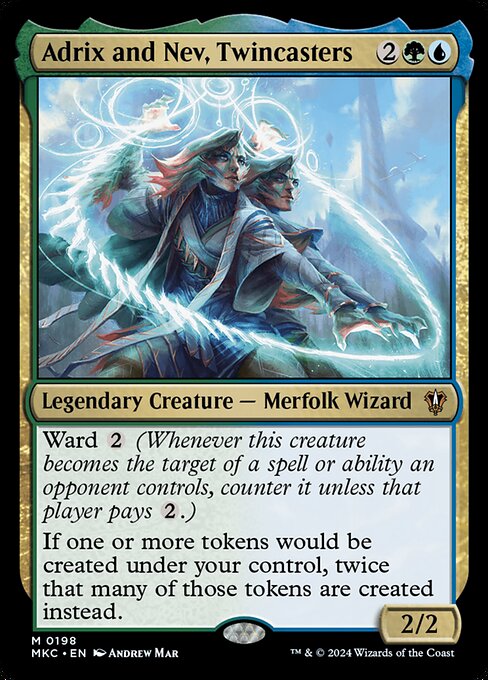
Adrix and Nev, Twincasters is another excellent choice if you enjoy multiplying tokens.
Their ability doubles the number of tokens you create, and they have ward 2, making them a little more difficult for opponents to target.
What I particularly like about Adrix and Nev is that they don't care only about creature tokens.
Treasure, Clue, Food, and other tokens can also benefit.
That opens up some interesting possibilities beyond simply building an enormous army.
And because you're playing Simic colors, you have access to excellent ramp, card draw, and token synergies.
The downside is that your commander doesn't generate tokens by itself.
You still need the rest of the deck to provide them.
Jetmir, Nexus of Revels: Your Army Becomes Dangerous
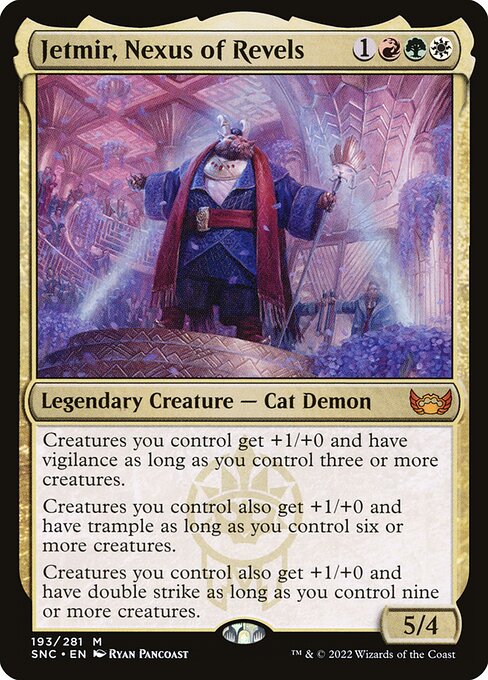
Jetmir, Nexus of Revels takes the strategy in a more aggressive direction.
He doesn't create tokens.
Instead, he rewards you for controlling enough creatures.
With three or more creatures, your creatures get +1/+0 and vigilance.
At six or more, they also gain another +1/+0 and trample.
And at nine or more, they gain an additional +1/+0 and double strike.
That's when a battlefield full of small tokens suddenly becomes terrifying.
I like Jetmir because he provides something many token decks lack: a way to actually finish the game.
You don't need to draw a separate overrun effect if your commander already turns a large army into a lethal threat.
Of course, everybody knows what Jetmir is going to do.
Once you have eight creatures on the battlefield, don't be surprised if your opponents start getting nervous.
Chatterfang, Squirrel General: Tokens and Sacrifice
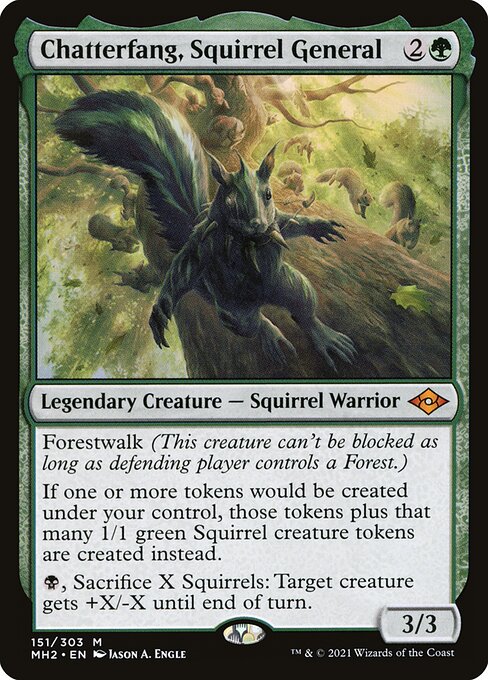
Chatterfang, Squirrel General is a particularly interesting option if you enjoy mixing Tokens with Aristocrats.
Chatterfang changes each event that creates tokens under your control so it also creates that many 1/1 green Squirrel tokens. This is a replacement effect, not a triggered ability.
And that applies to more than just creature tokens.
Create three Treasures? You also get three Squirrels.
Create five Zombies? You also get five Squirrels.
You can then sacrifice Squirrels using Chatterfang's activated ability to weaken or remove opposing creatures.
I like this approach because the tokens aren't just there to attack.
They're also resources you can spend.
And having access to black and green gives you excellent sacrifice effects, recursion, ramp, and card advantage.
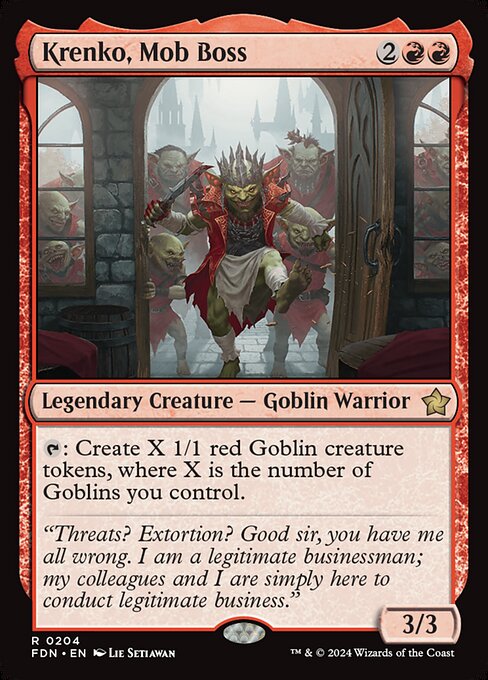
Krenko, Mob Boss: More Goblins, Please
Sometimes you don't need a complicated plan.
Krenko, Mob Boss is a perfect example.
You tap Krenko and create a number of Goblin tokens equal to the number of Goblins you already control.
With three Goblins on the battlefield, you create three more.
With six, you create six.
You can probably see where this is going.
Krenko is particularly explosive because every activation makes the next one potentially much stronger.
The drawback is that he needs to survive and tap to activate his ability.
And because the deck is mono-red and focused on Goblins, it plays quite differently from a Selesnya or Simic token deck.
If you enjoy aggressive creature strategies, Krenko is definitely worth considering.
Creating Tokens: Consistency Matters More Than One Huge Spell
This is one of the first things I'd look at when building a Tokens deck.
How reliably can you create creatures?
It's easy to find spectacular spells that generate ten, twenty, or even more tokens.
But if your deck does nothing for the first five turns, those spells might arrive too late.
I like combining smaller, repeatable token generators with a few powerful effects that create large numbers of creatures.
Repeatable Token Generators
Cards like Bitterblossom, Jadar, Ghoulcaller of Nephalia, and Adeline, Resplendent Cathar can help you build your battlefield without constantly spending new cards.
They work in different ways, but they have something in common: they can keep producing creatures.
That's extremely valuable in Commander.
You don't have to spend your entire hand creating tokens.
Instead, you can develop your mana, interact with opponents, and let your token engines gradually build a board.
I particularly like token generators that start working early.
A small creature every turn might not sound impressive, but after four or five turns, it can represent a significant amount of value.
And if those tokens trigger other abilities, even better.
Big Token-Producing Spells
Sometimes you need a more explosive effect.
Secure the Wastes, March of the Multitudes, and Avenger of Zendikar are good examples of cards that can create a large number of creatures.
These are especially interesting when you already have cards that reward creatures entering the battlefield.
For example, imagine controlling Impact Tremors and casting a spell that creates ten creature tokens.
Those ten tokens entering cause Impact Tremors to trigger ten times, dealing a total of 10 damage to each opponent.
That's already meaningful damage, even before those creatures attack.
And if you have a token-doubling effect, the result becomes much more dangerous.
But I'd be careful about relying entirely on big token spells.
Having several expensive token generators in your opening hand can make the deck painfully slow.
Doubling Tokens: Great, but Don't Fill Your Deck With Multipliers
One of the most exciting things about token decks is doubling your creatures.
Parallel Lives, Anointed Procession, Doubling Season, and Mondrak, Glory Dominus are all recognizable examples.
These cards can turn a reasonable token-producing effect into something much more powerful.
Create five tokens? Now you create ten.
Have another doubling effect? You might create twenty instead.
That's fantastic.
But here's something I'd watch out for.
Token doublers don't usually create anything by themselves.
If your battlefield contains two token doublers and you have no way to generate tokens, those cards aren't doing very much.
And if your opening hand has three expensive token multipliers but no token generators, you might struggle to accomplish anything.
I like these effects, but I wouldn't automatically include every available one.
Sometimes adding another reliable token generator is more useful than adding another doubling enchantment.
Also, remember that some doublers work with all kinds of tokens, not just creatures.
That can make them particularly interesting with Treasure-based strategies or decks that create different token types.
Making Your Tokens Actually Dangerous
Creating twenty 1/1 creatures feels impressive.
But twenty small creatures aren't necessarily enough to win a multiplayer Commander game.
Your opponents might have larger blockers, flying creatures, or simply enough life to survive.
That's why you need cards that turn your army into a real threat.
Anthem Effects and Combat Finishers
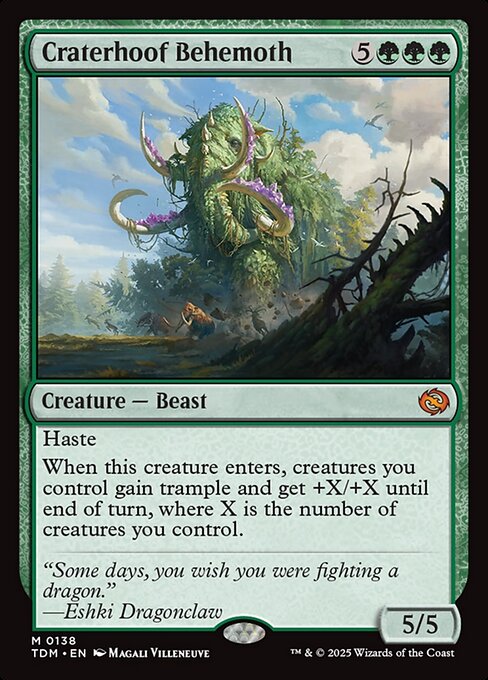
Cards like Beastmaster Ascension, Overwhelming Stampede, and Craterhoof Behemoth can make a token army considerably more dangerous.
They're particularly effective because they reward you for having lots of creatures.
Instead of improving just one creature, you're making your entire battlefield stronger.
And in a deck that can create ten or fifteen creatures, even a relatively small power boost can represent an enormous amount of additional damage.
Personally, I like having several ways to close a game through combat.
You don't necessarily need the most expensive finisher available.
Sometimes a simpler effect that gives your creatures a useful bonus is enough.
Evasion Matters Too
There's another problem with token armies.
They can get blocked.
If your opponent has a few large creatures, your little tokens might not accomplish much in combat.
That's why effects like trample, flying, or making creatures difficult to block can be very valuable.
I particularly like trample when your deck can also increase your creatures' power.
A huge army with trample is much harder to defend against than the same army without it.
And if your commander already provides combat abilities, like Jetmir, you can focus more deck slots on creating creatures and keeping them alive.
Tokens Don't Have to Win Through Combat
This is something I think makes the archetype much more interesting.
Not every Tokens deck needs to attack with fifty creatures.
Some turn creatures entering the battlefield into damage.
Others sacrifice their tokens for value.
And some use tokens as resources to produce mana, draw cards, or control the battlefield.
Damage From Creatures Entering
Impact Tremors and Purphoros, God of the Forge are excellent examples.
They reward you when creatures enter the battlefield under your control.
That means your token generators can damage opponents without ever attacking.
Imagine creating eight tokens while controlling Purphoros.
That's 16 damage to each opponent from the triggered abilities.
And if you repeat the process, you might win without ever declaring an attack.
I like this approach because it gives the deck another way to finish games.
It also makes small token generators surprisingly dangerous.
Sacrificing Tokens for Value
Tokens work extremely well with Aristocrats.
You create creatures, sacrifice them, and benefit when they die.
Cards like Ashnod's Altar, Goblin Bombardment, Blood Artist, and Zulaport Cutthroat can turn disposable creatures into resources or damage.
This also gives your deck something useful to do when attacking isn't a good option.
Maybe the battlefield is too dangerous.
Maybe an opponent has a huge defensive army.
Or perhaps someone is about to cast a board wipe.
If you can sacrifice your creatures for value, losing them doesn't necessarily mean getting nothing in return.
And that's one of the reasons I like combining these strategies.
Card Draw: The Part Many Token Decks Forget
It's very easy to get distracted by all the interesting ways to create creatures.
But you still need cards in your hand.
If you spend several turns creating an army and then someone destroys everything, you need a way to rebuild.
And that's difficult if you're topdecking one card per turn.
Fortunately, token decks have access to some excellent card advantage.
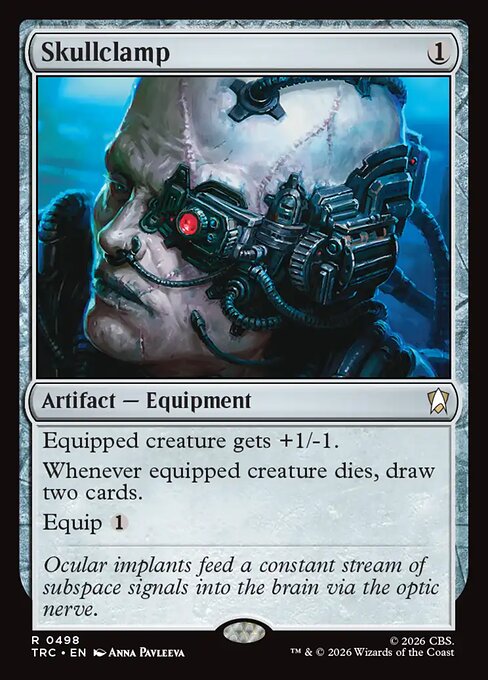
Skullclamp is one of the most recognizable examples.
It gives the equipped creature +1/-1, and when that creature dies, you draw two cards.
If you equip it to an ordinary 1/1 creature token, the token becomes a 2/0 and dies due to having zero toughness.
You draw two cards.
That's a pretty good exchange for a disposable token.
Of course, Skullclamp works differently with larger creatures or tokens that have toughness bonuses.
Cards like Welcoming Vampire, Tocasia's Welcome, and Shamanic Revelation can also provide useful card draw.
But read their restrictions carefully.
Welcoming Vampire and Tocasia's Welcome don't let you draw unlimited cards just because twenty creatures enter at once.
They're limited to triggering once each turn.
I like mixing repeatable card-draw engines with a few spells that can refill my hand after building a large board.
The important thing is not running out of resources.
Ramp: Your Tokens Can Help Generate Mana
Tokens can also become part of your mana engine.
And I don't just mean Treasure tokens.
Cards like Cryptolith Rite can turn your creatures into mana producers.
Suddenly, all those small tokens that weren't doing much in combat can help you cast bigger spells.
Jaheira, Friend of the Forest is another interesting example, allowing tokens you control to tap for green mana.
That's particularly useful in a strategy that can create lots of creatures quickly.
But remember that creatures with tap abilities still have to respect summoning sickness.
A creature token that just entered the battlefield generally can't tap for mana through Cryptolith Rite unless it has haste.
Convoke is different: even a creature that just entered can help pay for March of the Multitudes, because convoke does not activate an ability with the {T} symbol.
I also like conventional ramp in token decks.
You don't want your mana development to depend entirely on having a large battlefield.
Because somebody will eventually remove it.
And when that happens, losing your creatures and your mana engine at the same time can be painful.
Board Wipes: The Biggest Problem With Going Wide
Let's talk about the obvious weakness.
Board wipes.
You spend five turns building an enormous army.
You've got thirty tokens, a couple of important payoff creatures, and enough power on the battlefield to threaten everyone.
Then somebody casts Wrath of God.
And that's it.
All gone.
It's one of the most frustrating experiences when playing Tokens.
But it's also something you should expect.
In a four-player Commander game, someone is probably going to have a board wipe sooner or later.
So instead of hoping nobody plays one, I'd prepare for it.
Protection Against Destruction
Cards like Heroic Intervention, Rootborn Defenses, and Grand Crescendo can help protect your creatures from many destruction-based board wipes.
Rootborn Defenses is particularly interesting because it also lets you populate, creating a copy of a creature token you control.
That's a nice combination of protection and token synergy.
But remember that indestructible doesn't stop everything.
Exile-based board wipes, sacrifice effects, and effects that reduce toughness to zero can still deal with your creatures.
And not every protection spell solves the same problem.
Don't Commit Everything Immediately
This is probably the most important practical advice I'd give.
You don't always need to put every possible creature onto the battlefield immediately.
If you already have enough tokens to threaten an opponent, maybe it's better to hold back another token-producing spell.
That way, if somebody destroys your board, you still have resources to rebuild.
I think token decks reward knowing when to develop and when to wait.
Sometimes creating ten more creatures is correct.
Other times, keeping that spell in your hand is the better decision.
Rebuilding After a Wipe
A good Tokens deck should be able to recover.
Repeatable generators help enormously here.
So do card-draw engines and spells that can create several creatures at once.
I like having a few ways to rebuild quickly without depending completely on my commander.
Because having an army is great.
Being able to make another army after someone destroys the first one is even better.
How Many Token Generators and Payoffs Do You Need?
I wouldn't use an exact formula for every token deck.
A commander like Krenko already generates creatures repeatedly.
Jetmir doesn't create any tokens himself.
Those decks need different support packages.
But for a typical Tokens deck, I'd initially look at something like 10–15 reliable token-producing cards or effects, including repeatable engines and larger token spells.
Then I'd add a reasonable selection of payoffs, perhaps 8–12 cards that make those tokens useful through combat, damage, sacrifice, mana generation, or card advantage.
Those are starting points, not requirements.
Some cards can fill several roles.
Skullclamp turns tokens into cards.
Goblin Bombardment turns them into damage.
Cryptolith Rite turns them into mana.
And a commander like Jetmir turns your creature count into a finishing threat.
I'd rather have a deck where the pieces naturally support each other than one that simply meets a collection of numbers.
And don't forget that token decks still need lands, ramp, interaction, protection, and ways to recover.
A Few Token Rules Worth Knowing
There are some rules interactions that come up quite often.
Tokens can die. If a creature token goes from the battlefield to the graveyard, it dies and can trigger abilities like Blood Artist. It then ceases to exist.
Tokens don't return from the graveyard. Once they leave the battlefield, they can't come back through normal reanimation or Blink effects.
Creating a token isn't casting a creature spell. Abilities that trigger when a creature enters the battlefield can trigger, but abilities that specifically require casting a creature spell won't trigger just because a token was created.
Not every token is a creature. Treasures, Clues, and Food are tokens too, but they don't automatically count toward effects that care about how many creatures you control.
Token copies can copy useful abilities. If an effect creates a token copy of a creature, that token normally has the copied creature's relevant characteristics, including its abilities, subject to the copying effect's instructions.
These details might seem small, but they matter when your deck starts generating lots of tokens and triggering several effects at once.
How Does a Tokens Deck Actually Win?
I think this is the question you should answer before finishing the deck.
Because creating an enormous number of creatures isn't automatically a win condition.
You need to decide how you're going to turn those creatures into a victory.
For a combat-focused Tokens deck, the answer might be making your army large enough to eliminate opponents through one or two attacks.
For a Jetmir deck, having enough creatures on the battlefield can turn your commander into a devastating finisher.
For an Aristocrats-style token deck, you might sacrifice your creatures and drain the table through death triggers.
Or you might use repeated token creation alongside Impact Tremors or Purphoros to deal damage without attacking.
I particularly like having at least two realistic routes to victory.
For example, a token deck that normally wins through combat might also include a couple of effects that deal damage when creatures enter.
That doesn't mean you need to turn every deck into a combo deck.
It simply means you're not completely helpless if your opponents prevent you from attacking.
And I'd make sure those win conditions actually fit the rest of the deck.
Adding an expensive combo that doesn't interact with your main strategy isn't necessarily an improvement.
Common Mistakes When Building Tokens
There are several things I'd watch out for.
Creating tokens without a purpose. Having forty creatures is impressive, but what are you actually doing with them?
Too many token doublers. They're powerful, but they don't accomplish much without token generators.
Not enough card draw. If somebody destroys your army and you're left with an empty hand, rebuilding can be difficult.
Ignoring board wipes. They're going to happen. Include protection and recovery options.
Depending entirely on combat. Sometimes opponents have too many blockers or other ways to stop attacks.
Too many expensive token spells. You still need to develop during the early game.
Not enough interaction. A large army doesn't automatically solve everything your opponents are doing.
And one more thing: don't assume every card that mentions tokens belongs in your deck.
A card can be fantastic in one token strategy and completely unnecessary in another.
Choose cards that contribute to the way you actually want to win.
Test Your Tokens Deck Before Buying Everything
Tokens is one of those archetypes that can look fantastic on paper.
You find all the token doublers, add a few spells that create enormous numbers of creatures, include your favorite finishers, and imagine having a hundred creatures on the battlefield.
But during real games, things might be quite different.
Maybe your deck takes too long to start creating tokens.
Maybe you have plenty of creatures but no way to make them dangerous.
Or perhaps you run out of cards every time an opponent clears the battlefield.
That's why I'd test the deck before buying everything.
In MTG Master Deck Builder, you can build your Tokens Commander deck, explore card synergies, and use the Deck Analyzer to review consistency, mana curve, interaction, resilience, and other aspects of the deck.
I'd pay particular attention to the balance between token generators and cards that reward you for creating or using those tokens.
The opening-hand simulator can help you see whether your deck has reasonable early plays.
And if your strategy includes sacrifice engines, repeatable token generation, or mana loops, the combo detection tools can reveal interactions you might not have noticed.
Of course, no analyzer can tell you exactly how much fun you'll have playing a deck.
But it can help you avoid spending money on a collection of powerful-looking cards that don't actually work well together.
Is Tokens the Right Archetype for You?
I think Tokens is a fantastic choice if you enjoy building large battlefields, finding synergies, and turning small creatures into something much more dangerous.
It's also a surprisingly flexible strategy.
You can play aggressively, create value over several turns, sacrifice creatures for resources, or build a huge army and finish with one massive attack.
And you don't necessarily need expensive creatures.
Sometimes a handful of 1/1 tokens supported by the right cards can be far more dangerous than a single enormous monster.
But Tokens isn't for everyone.
If you dislike managing large battlefields, keeping track of counters, or calculating complicated attacks, some token decks can become a little exhausting.
And if your playgroup uses lots of board wipes, you'll need to be comfortable rebuilding.
Personally, I think the most enjoyable token decks are those where every creature has a purpose.
Maybe it attacks.
Maybe it generates mana.
Maybe it draws cards when it dies.
Or maybe it's simply there to make the next token generator even more powerful.
And when your opponent asks how many creatures you control, and you need a moment to count them all...
Well, that's usually a good sign that your Tokens deck is doing something right.
Build a Tokens deck with a winning plan
Balance token generators, payoffs, card draw and protection around your commander in Deck Builder.