
How to Build a Typal (Tribal) Commander Deck: Angels, Dragons, Elves, and More
By MTG Master EditorialPublished Updated 23 min read
Sometimes you choose a Commander deck because you like a particular strategy.
Maybe you want to sacrifice creatures, cast lots of spells, or build complicated engines that generate ridiculous amounts of mana.
And sometimes you just want to play Angels.
Or Dragons. Elves. Vampires. Zombies. Goblins.
Honestly, I think that's one of the best reasons to build a Commander deck.
There's something special about having a battlefield full of creatures that belong together. Your cards share a theme, support each other, and gradually become much more powerful than they would be individually.
That's the idea behind Typal, the strategy traditionally known as Tribal.
But building a good Typal deck isn't simply about finding every creature of a particular type and putting them into the same deck.
I've seen Dragon decks with twenty enormous creatures that couldn't do much before turn six. And I've seen Elf decks with thirty creatures that generated tons of mana but had absolutely nothing useful to spend it on.
The creature type gives your deck its identity.
You still need to make it work.
Let's look at how I'd build a Typal Commander deck, which commanders are worth considering, and why sometimes a card that isn't even part of your chosen creature type can be one of the most important cards in the deck.
What Exactly Is a Typal Commander Deck?
A Typal deck focuses on one or more creature types and uses cards that reward you for playing them.
The older name, Tribal, is still widely used among Magic players. You'll see both terms in decklists, guides, and discussions.
The idea is the same.
You choose a creature type and build around the abilities, synergies, and support cards available to it.
Some types naturally generate mana. Others create tokens, recover creatures from the graveyard, reward you for attacking, or make your creatures stronger.
For example, an Elf deck often produces large amounts of mana through creatures.
A Zombie deck might repeatedly bring creatures back from the graveyard.
A Vampire deck can focus on aggression, tokens, lifegain, or sacrifice.
And an Angel deck might build a powerful flying army, gain life, and gradually turn its creatures into enormous threats.
What makes Typal interesting is that the creature type isn't necessarily the strategy by itself.
It's the starting point.
You still need to decide what those creatures are supposed to accomplish.
A Dragon deck focused on combat plays differently from one built around Dragons entering the battlefield and triggering abilities.
The same applies to practically every creature type.
Choosing the Right Typal Commander
This is probably the first important decision.
Some Typal commanders reduce the cost of creatures from your chosen type. Others create tokens, provide card advantage, or make your creatures stronger.
Personally, I prefer commanders that solve an actual problem for the deck.
If your creatures are expensive, having a commander that helps cast them is fantastic.
If your deck creates lots of small creatures, a commander that turns them into a win condition can be even better.
Here are some of my favorite examples.
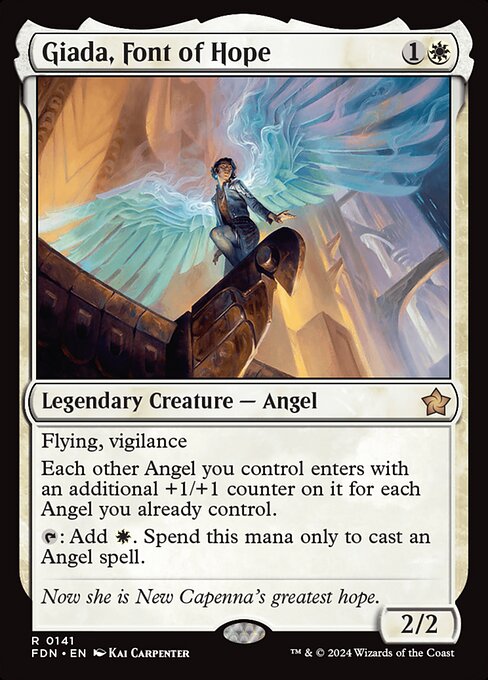
Giada, Font of Hope: An Army of Angels
Giada, Font of Hope is a fantastic example of a commander that does exactly what its creature type needs.
Angels are some of the most beautiful and powerful creatures in Magic, but they have a problem.
Many of them are expensive.
And if you spend your first four turns doing almost nothing while waiting to cast your first Angel, your opponents may already have developed dangerous boards.
Giada helps solve that.
She costs only two mana, has flying and vigilance, and can tap to generate one white mana that can only be spent to cast an Angel spell.
That gives you some acceleration for your Angels.
But her other ability is what makes her especially interesting.
Each other Angel you control enters the battlefield with an additional +1/+1 counter for each Angel you already control.
Imagine Giada is the only Angel you have on the battlefield.
You cast another Angel, and it enters with one additional +1/+1 counter because you control Giada.
Now you control two Angels.
The next Angel enters with two additional counters.
And the next one can enter with three.
Suddenly, you're not simply playing large flying creatures. You're playing creatures that become progressively bigger as your army grows.
That's exactly the kind of synergy I enjoy in Typal decks.
You don't need a complicated combo. Your creatures naturally support each other.
And because Giada is mono-white, your mana base is relatively simple.
But I'd still pay close attention to card draw and protection. White has good options, but you don't want to spend your entire hand casting Angels and then have nothing left after a board wipe.
The Ur-Dragon: Dragons, Obviously
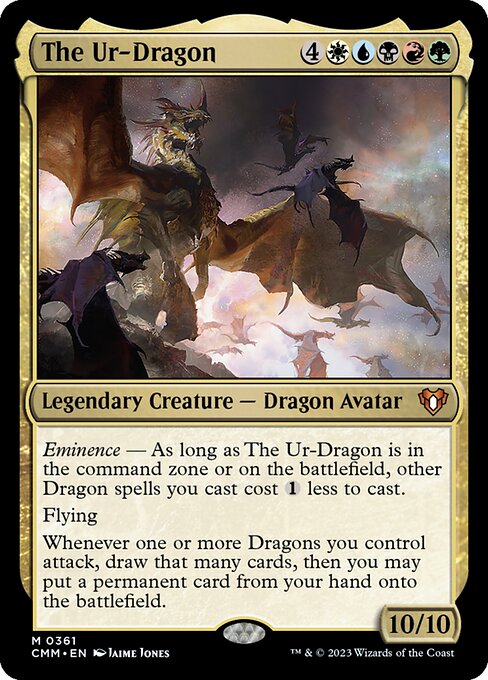
If you want to play Dragons, The Ur-Dragon is one of the most recognizable commanders.
Its eminence ability reduces the cost of your other Dragon spells by one generic mana while The Ur-Dragon is on the battlefield or in the command zone. It does not reduce its own cost.
That's incredibly useful because Dragons tend to be expensive.
While The Ur-Dragon is on the battlefield, whenever one or more Dragons you control attack, you draw a card for each of those Dragons, then you may put one permanent card from your hand onto the battlefield. The Ur-Dragon does not need to attack, but this ability does not work from the command zone.
The nice thing is that you have access to all five colors.
You can play almost any Dragon you want.
The problem is that having access to every Dragon in Magic makes choosing just a few of them surprisingly difficult.
And a five-color mana base needs some attention, especially when your deck already contains many expensive creatures.
I'd focus on Dragons that provide immediate value, interact with each other, or help close games rather than simply choosing the biggest ones.
Although I completely understand wanting to include a Dragon just because the artwork is spectacular.
Lathril, Blade of the Elves: Small Creatures, Big Problems
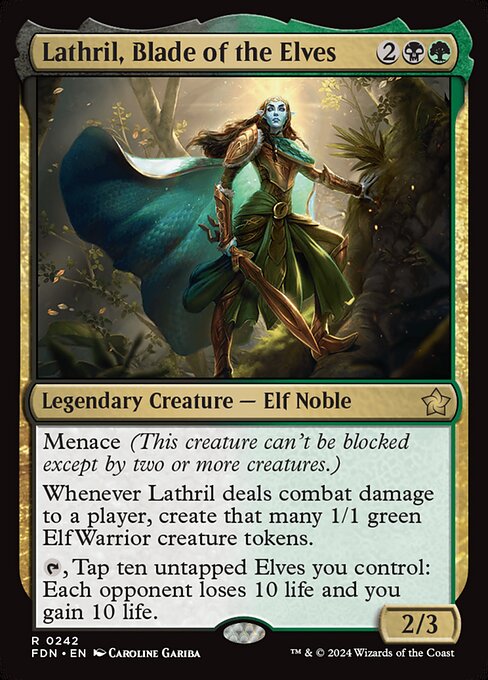
Lathril, Blade of the Elves is an excellent example of an Elf commander.
Whenever Lathril deals combat damage to a player, you create that many 1/1 Elf Warrior tokens.
She can also tap alongside ten other untapped Elves to make each opponent lose 10 life while you gain 10 life.
Lathril must be able to pay her own tap symbol: normally she cannot do this the turn she enters without haste. The other ten Elves can have entered that turn, because you tap them to pay the cost of Lathril’s ability.
That gives the deck a clear plan.
Create Elves, generate resources, and eventually convert your enormous battlefield into a victory.
The interesting thing about Elves is how easily they can generate mana.
A few small creatures can produce enough mana to cast much bigger spells.
And because Lathril is in Golgari colors, you also have access to black removal and recursion.
But I'd be careful not to fill the deck with creatures that only produce mana.
Eventually, you need something useful to do with all of it.
Edgar Markov: Vampires Everywhere
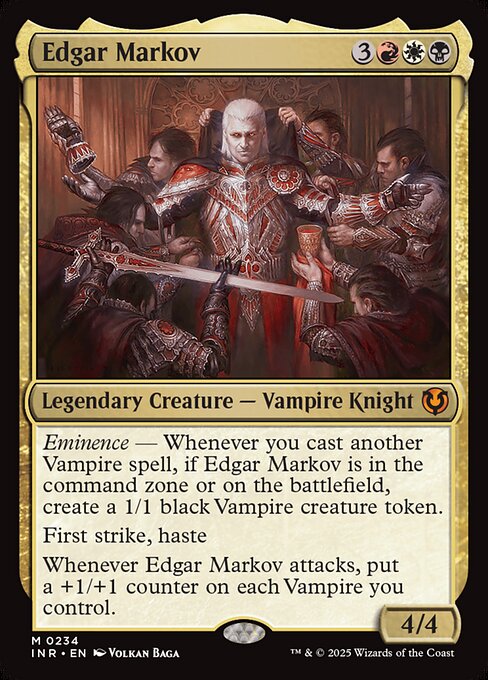
Edgar Markov is one of the classic Vampire commanders.
His eminence ability creates a 1/1 Vampire token whenever you cast another Vampire spell while Edgar is on the battlefield or in the command zone.
That means you can start building your army without even casting your commander.
And when Edgar attacks, he puts a +1/+1 counter on each Vampire you control.
It's a very aggressive approach to Typal.
You play Vampires, create more Vampires, and gradually build a battlefield that becomes increasingly difficult to ignore.
What I like about Edgar is that the creatures support the strategy simply by being Vampires.
But I'd still want a reasonable mana curve and ways to recover from board wipes.
And with three colors, the mana base needs more attention than a mono-white Angel deck.
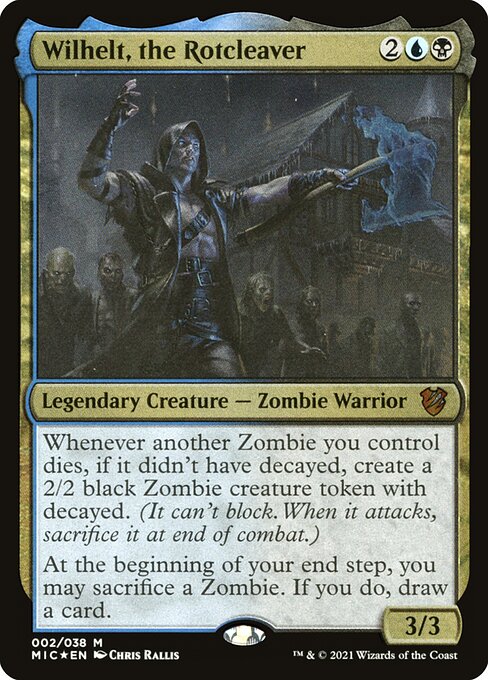
Wilhelt, the Rotcleaver: Zombies That Keep Coming Back
Wilhelt, the Rotcleaver is an interesting option if you like Zombies and graveyard strategies.
Whenever another Zombie you control dies, if it didn't have decayed, Wilhelt creates a 2/2 Zombie token with decayed.
He can also sacrifice a Zombie at the beginning of your end step to draw a card.
That makes him particularly good at generating value from creatures dying.
You can combine Zombies with sacrifice outlets, death triggers, token generation, and graveyard recursion.
And because Zombies are particularly good at returning from the graveyard, the deck can become quite resilient.
I like this approach because losing creatures doesn't necessarily mean losing all your resources.
Sometimes your Zombies dying is simply part of the plan.
Krenko, Mob Boss: More Goblins Than Anyone Needs
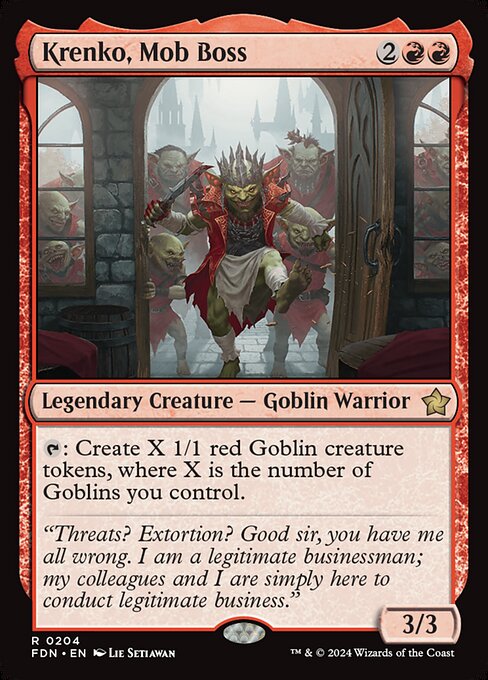
Krenko, Mob Boss is probably one of the simplest examples of how dangerous Typal synergies can become.
You tap Krenko and create a number of 1/1 Goblin tokens equal to the number of Goblins you control.
If you have four Goblins, you create four more.
Now you have eight.
Activate Krenko again later, and the numbers can become ridiculous.
Goblin decks are often aggressive, fast, and capable of creating huge armies.
But there's a weakness.
If Krenko gets removed repeatedly or somebody destroys your board, rebuilding can become difficult.
That's why I'd include enough card advantage and a few ways to protect your important creatures.
And plenty of dice.
Goblin decks tend to need them.
Building Angels With Giada: A Practical Example
I want to spend a little more time on Angels because they're a great example of how to build around a creature type without losing sight of the deck's actual needs.
Angels are usually powerful creatures.
Many have flying, vigilance, lifelink, protection, or abilities that affect the entire battlefield.
Some create more Angels. Others reward lifegain or make your creatures stronger.
But they also tend to cost quite a lot of mana.
That's the first problem I'd try to solve with Giada.
Don't Fill the Deck With Seven-Mana Angels
It's extremely tempting to look through all the Angels in Magic and pick the most spectacular ones.
And there are plenty.
Avacyn, Angel of Hope, Akroma, Angel of Wrath, Platinum Angel, and many others can be impressive additions.
But if your deck contains too many expensive Angels, you're going to have difficult opening hands.
Giada helps accelerate your Angel spells, but she doesn't magically solve every mana problem.
Her mana ability also requires tapping, so normally you can't use it immediately on the turn she enters unless she has haste.
I'd include some cheaper Angels and useful support cards so the deck can develop before the expensive creatures arrive.
Youthful Valkyrie is a good example of an early creature that becomes stronger whenever another Angel enters under your control.
Starnheim Aspirant can reduce the generic mana cost of your Angel spells.
And Herald of War can eventually make Angels and Humans cheaper as it accumulates counters.
These cards help you build toward your larger threats instead of simply waiting to draw enough lands.
Lifegain and Angels Work Naturally Together
This is another reason I like Angel decks.
Many Angels already interact with lifegain.
Righteous Valkyrie lets you gain life when other Angels or Clerics enter under your control, and it provides a powerful bonus to your creatures when your life total is at least seven above your starting total.
In a normal Commander game, that means reaching 47 life.
Resplendent Angel can create additional Angel tokens at the beginning of each end step if you've gained at least five life during that turn.
And Archangel of Thune puts +1/+1 counters on your creatures whenever you gain life.
These effects work particularly well together.
You're not simply gaining life to survive longer.
You're converting that lifegain into more creatures, larger creatures, and additional pressure.
But I wouldn't make lifegain the only thing the deck does.
Having 90 life is nice.
It doesn't automatically mean you're winning.
You still need creatures capable of closing the game.
Giada Makes Every New Angel More Dangerous
This is where the deck starts becoming really satisfying.
Giada doesn't just help you cast Angels.
She makes them enter with additional +1/+1 counters based on the Angels you already control.
That works especially well with cards that create Angel tokens or reward you for having multiple Angels.
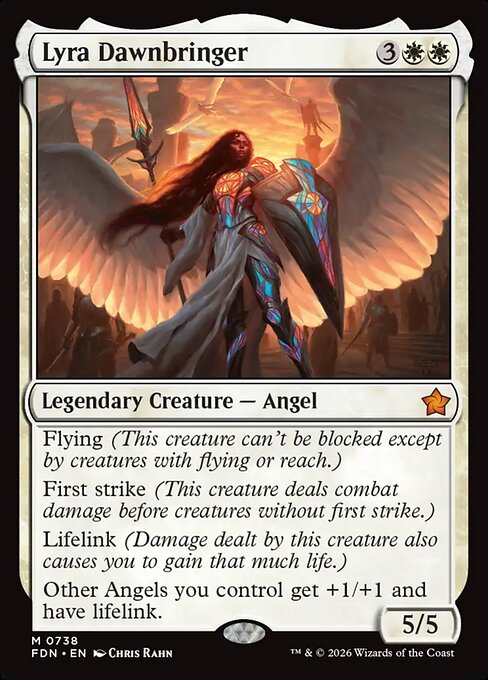
Lyra Dawnbringer is an excellent example of a powerful Angel that supports the rest of your army.
She gives your other Angels +1/+1 and lifelink, making combat more dangerous and helping you gain life.
And if you have lifegain payoffs, those attacks can generate additional advantages.
One detail worth knowing: Giada's counters are placed as the Angel enters the battlefield. This isn't a triggered ability that goes onto the stack afterward.
That matters for some interactions with cards that double triggered abilities.
If several Angels enter together, they do not count each other for Giada: only Angels already on the battlefield count. If Giada enters alongside them, her ability does not add counters to them.
Also, Giada's mana can only be spent on Angel spells, not on every white card in your deck.
So you still need conventional ramp and enough lands to cast your support spells.
Don't Forget the Cards That Aren't Angels
This is probably the most important lesson when building any Typal deck.
Just because you're playing Angels doesn't mean every creature needs to be an Angel.
Bishop of Wings, for example, is a Human Cleric, but it has excellent synergy with Angels.
It gains you life when Angels enter and creates Spirit tokens when Angels you control die.
That's exactly the sort of support card I'd consider.
And the same applies to artifacts, enchantments, and spells that support your creature type.
Herald's Horn can reduce the cost of Angels and help you find more of them.
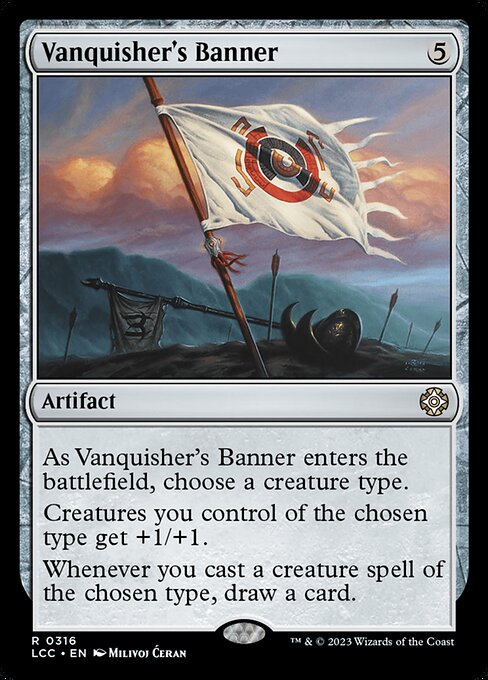
Vanquisher's Banner can strengthen your Angels and draw cards when you cast creature spells of the chosen type.
You can also use cards like Patchwork Banner to support your chosen creature type while helping with mana.
I'd much rather play a useful non-Angel card that makes the whole deck work better than a mediocre Angel included only because it has the right creature type.
That's how you keep a thematic deck consistent without losing its personality.
Typal Support Cards: Not Everything Has to Be a Creature
Every creature type has some cards designed specifically to support it.
But Magic also has cards that work with almost any creature type.
These are especially useful in Typal Commander.
Cards That Make Your Creatures Stronger
Vanquisher's Banner, Door of Destinies, and Coat of Arms can make your army more dangerous in different ways.
But read their effects carefully.
Some reward casting creatures of the chosen type.
Others depend on how many creatures share a type.
And some affect everybody at the table, not just you.
Coat of Arms, for example, can strengthen your opponents' creatures too.
That's not necessarily a problem if you're the only player with a large Typal army.
But if somebody else is playing Elves or Goblins, you might accidentally make their battlefield much more dangerous.
Commander has a way of making those things happen at the worst possible moment.
Cost Reduction and Card Advantage
Herald's Horn and Urza's Incubator can help reduce the cost of creatures from your chosen type.
That's particularly useful for Dragons and Angels, where many creatures are expensive.
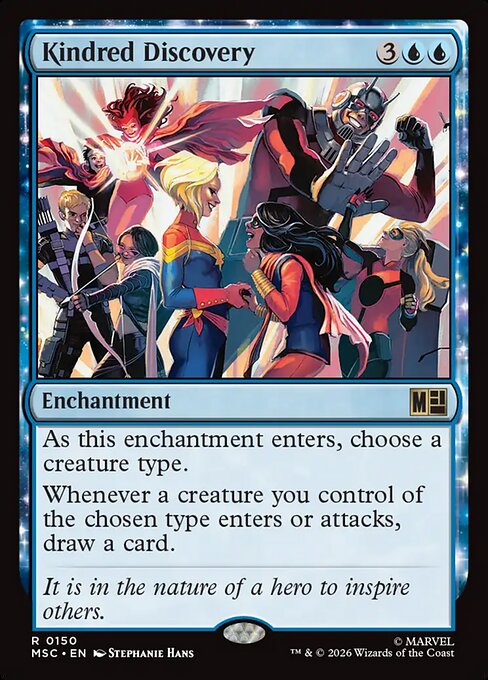
Kindred Discovery can generate enormous card advantage by rewarding creatures of the chosen type entering or attacking.
It needs blue color identity: it can fit The Ur-Dragon or Wilhelt, but not a mono-white Giada deck. For Giada, Vanquisher’s Banner is a colorless alternative.
And Vanquisher's Banner can provide both a power boost and card draw.
I like these cards because they address real problems.
They don't simply reward you for playing the correct creature type.
They help your deck continue functioning.
But I'd be careful about including too many expensive support artifacts and enchantments.
If you spend the first five turns playing cards that support Angels but never actually play an Angel, you're not accomplishing much.
Changelings: The Creatures That Belong Everywhere
Changelings are another interesting tool.
A creature with changeling has every creature type, including while it's in your hand, library, graveyard, or other zones.
That means it counts as an Angel, Dragon, Elf, Zombie, Goblin, or any other creature type.
Cards like Mirror Entity and Universal Automaton can support different Typal strategies.
Maskwood Nexus can also make your creatures and creature cards count as every creature type, opening up some unusual interactions.
But I wouldn't automatically fill every Typal deck with Changelings.
They're useful when they provide something your deck actually needs.
An Elf deck doesn't necessarily need a random Changeling if it already has plenty of good Elves.
And a Giada deck should still focus on the Angel synergies that made you choose Giada in the first place.
How Many Creatures of Your Chosen Type Do You Need?
There isn't one number that works for every Typal deck.
An Elf deck with lots of inexpensive creatures may want a very high creature count.
A Dragon deck with expensive threats might need more ramp and fewer actual Dragons.
An Angel deck with Giada sits somewhere in between, depending on how much support you want.
As a starting point, I'd look at roughly 25–35 creatures of the chosen type in a dedicated Typal deck, then adjust based on your commander and strategy.
Some decks will want more.
Others can work with fewer if they have strong token generation or ways to find the creatures they need.
But I wouldn't chase a number simply because somebody says that's how many you should play.
The important thing is whether your Typal payoffs work consistently.
If half your deck rewards you for playing Angels but you only have twelve Angels, you're probably going to have a problem.
On the other hand, if you have forty Angels but no card draw, ramp, or removal, that's another problem.
I'd rather have a balanced deck than one that includes every creature of the chosen type.
Ramp: Different Creature Types Have Different Needs
This is where Typal decks can feel completely different.
Elves are naturally good at generating mana.
Cards like Llanowar Elves, Elvish Archdruid, and Priest of Titania can turn a small battlefield into a powerful mana engine.
Dragons, on the other hand, often need more conventional ramp because so many of them cost five, six, or seven mana.
Angels have a similar issue, although Giada and cards like Starnheim Aspirant can help.
Goblins usually have a lower mana curve and can put pressure on the table much earlier.
Zombies and Vampires vary considerably depending on their commander.
So I wouldn't apply exactly the same ramp package to every Typal deck.
Look at the actual mana curve.
If your deck is full of expensive Angels, make sure you can cast them consistently.
If you're playing cheap Goblins, you might benefit more from card advantage and ways to turn your army into damage.
And don't forget that mana requirements matter too.
A five-color Dragon deck has a much more complicated mana base than a mono-white Giada deck.
You don't need the most expensive lands available, but you do need to produce the correct colors.
Card Draw: The Problem Even Thematic Decks Need to Solve
It's very easy to get carried away when building Typal.
You find another interesting Dragon.
Another beautiful Angel.
Another Zombie with a useful graveyard ability.
And suddenly you've filled nearly every slot with creatures.
But what happens when somebody destroys your battlefield?
Or when you've played every creature in your hand?
You need card advantage.
Some creature types have excellent built-in draw engines.
Others need more help.
Kindred Discovery can be fantastic in decks that repeatedly create or attack with creatures of the chosen type.
Vanquisher's Banner can reward you for casting those creatures.
And black creature decks can often benefit from cards that reward creatures dying.
For Angels, I'd look for a combination of white card advantage and type-specific support rather than assuming every Angel will replace itself.
I particularly like repeatable draw effects.
You don't want to spend six turns building your army and then be left hoping your next draw is something useful.
A good Typal deck should be able to keep playing after its first wave of creatures disappears.
Don't Forget Removal and Protection
Here's something that applies to every Typal strategy.
Your opponents are not going to ignore your battlefield forever.
If you're playing Elves and suddenly generate twenty mana, somebody will notice.
If you have eight enormous Dragons in play, somebody will notice.
And if Giada has helped you build an army of huge flying Angels, I can guarantee your opponents are going to notice.
That's why you need interaction and protection.
You still need ways to remove dangerous permanents, respond to combos, and protect important creatures.
And because many Typal decks build large creature boards, board wipes are particularly dangerous.
Cards like Heroic Intervention, Flawless Maneuver, and Teferi's Protection can help protect certain decks, depending on their colors.
But not every protection spell works against every kind of removal.
Indestructible doesn't stop exile.
And hexproof doesn't prevent board wipes that don't target.
I also like having ways to recover after losing my board.
Some creature types are naturally good at recursion, like Zombies.
Others may need more card draw or effects that help rebuild their army.
The important thing is not assuming that your creatures will stay alive simply because they support each other.
How Does a Typal Commander Deck Actually Win?
This is where I'd like to challenge the idea that Typal simply means playing lots of creatures.
Having twenty Elves doesn't automatically win the game.
Neither does having six Angels.
You need to decide how those creatures are going to finish your opponents.
Winning Through Combat
This is the most natural approach for many creature types.
Dragons and Angels have access to powerful flying creatures that can put enormous pressure on opponents.
Elves and Goblins can create wide boards and use effects that strengthen the whole army.
Vampires can combine aggression with counters and lifegain.
I like combat-based Typal decks because the win condition usually fits the theme naturally.
You aren't adding some unrelated combo just to make the deck stronger.
You're building an army and making it dangerous enough to win.
Winning Through Sacrifice and Death Triggers
Zombies and Vampires can work particularly well with Aristocrats.
You create creatures, sacrifice them, and generate value from their deaths.
Cards like Blood Artist and Zulaport Cutthroat can help turn those sacrifices into life loss.
This gives the deck another way to win when attacking isn't practical.
And if your commander already supports sacrifice or recursion, the strategy can fit very naturally.
Winning Through Type-Specific Engines
Some creature types have very powerful interactions of their own.
Elves can generate enormous amounts of mana.
Goblins can create huge numbers of tokens.
Slivers can share abilities across the entire battlefield.
And Angels can combine flying, lifegain, and +1/+1 counters to build an increasingly dangerous army.
I find these strategies particularly satisfying because you're winning through the characteristics that make your chosen creature type interesting.
You don't need every Typal deck to become a dedicated combo deck.
But if you enjoy combos, many creature types have plenty of options.
The important thing is choosing a win condition that fits the experience you want.
Common Mistakes When Building Typal
There are a few problems I'd watch out for.
Including every creature of the chosen type. Not every Angel, Dragon, Elf, or Zombie deserves a slot simply because it matches your theme.
Ignoring the mana curve. A deck full of expensive Dragons or Angels can struggle badly during the early game.
Too many support cards, not enough creatures. Cards that reward a particular creature type are only useful when you actually have creatures of that type.
No card advantage. Eventually you'll run out of creatures to cast.
Not enough interaction. A thematic army doesn't automatically solve everything your opponents are doing.
Depending entirely on your commander. Your deck should still function when your commander gets removed.
No clear way to win. Having a beautiful battlefield is great, but at some point you need to finish the game.
And one more thing.
Don't forget why you chose the creature type in the first place.
If you're building Angels because you love Angels, don't feel obligated to replace every interesting Angel with a more efficient card that has nothing to do with your theme.
There's a balance between making the deck stronger and removing the personality that made you want to build it.
Test Your Typal Deck Before Buying Everything
Typal decks are particularly easy to get carried away with.
You start looking at Angels, discover twenty you want to play, find another ten that support them, and suddenly you've got a decklist with 130 cards.
And cutting the last thirty feels almost impossible.
That's why I'd test the deck before buying everything.
In MTG Master Deck Builder, you can build your Typal Commander deck, explore cards that support your chosen creature type, and analyze how the deck works.
I'd pay particular attention to the mana curve, ramp, card draw, interaction, resilience, and synergy.
For a Giada Angel deck, for example, I'd want to know whether I'm consistently able to cast Angels during the early and middle turns.
If every opening hand contains three expensive Angels and no acceleration, that's something worth reviewing.
The opening-hand simulator can help identify those problems.
And the Deck Analyzer can help you see whether you've sacrificed too much consistency or interaction in order to fit more creatures into the deck.
The combo detection tools can also be useful, particularly for creature types with strong recursion, sacrifice, or mana engines.
No analyzer can tell you whether you'll enjoy playing Angels more than Dragons.
That's a personal choice.
But it can help make sure the deck you've imagined actually functions when you sit down to play.
Is Typal the Right Archetype for You?
I think Typal is one of the most enjoyable ways to build Commander decks.
Especially if you care about the theme and personality of your deck.
You can build an army of Dragons that overwhelms the table.
A collection of Zombies that refuses to stay dead.
An Elf deck that generates ridiculous amounts of mana.
A Vampire army that grows more dangerous every turn.
Or an Angel deck with Giada, where every new Angel makes the next one even more impressive.
And there's something satisfying about looking at your battlefield and seeing a collection of creatures that genuinely belong together.
But Typal isn't for everyone.
If you prefer complicated spell-based strategies or don't enjoy creature combat, some Typal decks might feel a little straightforward.
And certain creature types can be expensive or require more support than others.
Personally, I think the best Typal decks are the ones that balance synergy, consistency, and flavor.
You don't need to play every creature of your chosen type.
You don't need to use the most expensive staples.
And you certainly don't need to abandon your favorite creatures just because somebody online says there's a more efficient option.
Build around the creatures you enjoy.
Give them enough support to work properly.
And make sure you have a plan to win.
Because sometimes you don't need a complicated strategy to enjoy Commander.
Sometimes you just want to play Angels.
And I think that's a pretty good plan.
Build a Typal deck around the creatures you love
Balance your chosen creature type with ramp, card advantage, interaction and a clear winning plan in Deck Builder.