
Azorius Commander Guide: Control, Blink and Having an Answer
By MTG Master EditorialPublished Updated 8 min read
Azorius is white and blue, and it has a reputation in Commander.
Usually something along the lines of:
“No.”
You cast your big spell.
Counterspell.
You build a huge board.
Board wipe.
You finally resolve something dangerous.
Exile it.
That’s the stereotype, anyway.
Azorius is certainly one of the best color combinations for control, but there’s much more to it than sitting behind seven untapped lands waiting to ruin somebody’s evening.
You can play blink, flyers, artifacts, Spirits, tokens, Voltron, historic permanents, card draw engines and plenty of other strategies.
The common theme is usually control and efficiency.
Azorius is very good at deciding what is allowed to stay on the battlefield.
And sometimes what is allowed to reach it in the first place.
How Does Azorius Play?
Blue and white have access to some of the best interaction in Commander.
Blue gives you counterspells, card draw, bounce, card selection, cloning and stack interaction.
White gives you exile removal, board wipes, protection, tokens and answers to almost every type of permanent.
Together, you have answers for almost anything.
The problem is knowing what actually needs answering.
You can’t counter every spell.
You can’t remove every creature.
And if you spend all your resources stopping player number two, player number three is probably going to be very happy about it.
Good Azorius isn’t just about having answers.
It’s about knowing when not to use them.
What Is Azorius Good At?
Control
Let’s start with the obvious one.
Azorius is extremely good at control.
Counterspells stop problems before they happen.
White removal deals with the things that get through.
Board wipes reset the table when everything gets out of hand.
And blue gives you the card advantage to keep finding more answers.
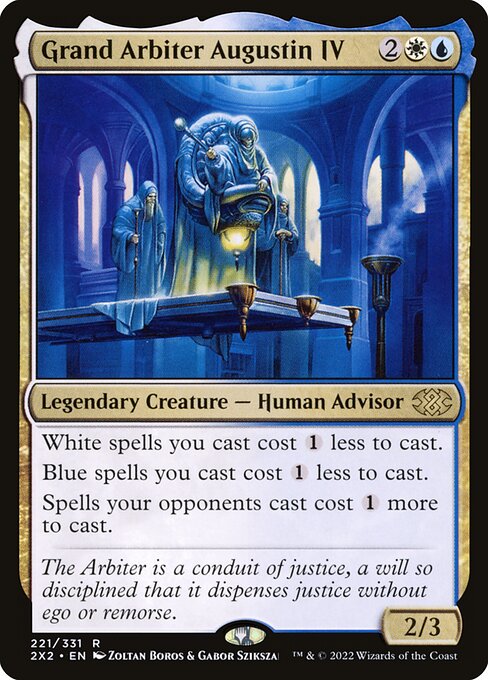
Grand Arbiter Augustin IV is one of the classic examples of a controlling Azorius commander.
Your white spells cost one generic mana less, and your blue spells do too. A spell that is both white and blue costs two less; these reductions do not remove colored mana requirements.
Your opponents’ spells cost one generic mana more.
As you can probably imagine, your opponents will absolutely love this.
Control can be very powerful in Commander, but there’s an important difference compared with one-versus-one Magic.
You have three opponents.
Trying to answer everything yourself is usually impossible.
Choose your battles.
Blink
This is probably my favorite Azorius strategy.
Blink means temporarily exiling your own permanents and bringing them back to the battlefield.
Why would you do that?
Because creatures with enter-the-battlefield abilities get to do everything again.
Draw a card.
Exile something.
Create tokens.
Search for something.
Gain life.
Whatever the creature does when it enters, blink lets you reuse it.
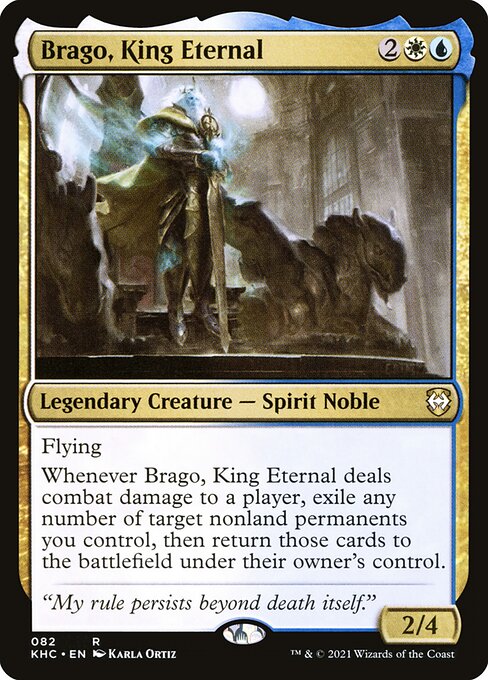
Brago, King Eternal is one of the classic blink commanders.
When he deals combat damage to a player, he can exile any number of target nonland permanents you control, then return them under their owners’ control.
Once you have several good ETB creatures on the battlefield, one Brago connection can generate a ridiculous amount of value.
Abdel Adrian, Gorion’s Ward with a blue Background can also build around similar blink interactions, although that’s a slightly different way of getting into Azorius.
Blink decks are basically saying:
“This creature was good the first time. Let’s use it again.”
Flyers
Blue and white have some of the best flying creatures in Magic.
So naturally, flyers are a very real Azorius strategy.
The idea is pretty straightforward.
Play evasive creatures.
Make them better.
Attack over everyone else’s board.
Inniaz, the Gale Force is a particularly strange example. When three or more creatures you control with flying attack, each player gains control of a nonland permanent you choose that is controlled by the player to their right.
Errant and Giada takes a cleaner approach: you can look at the top card of your library and cast spells with flying or flash from there, following their normal timing rules.
Flyers are nice because you don’t necessarily need enormous creatures.
If nobody can block them, a bunch of 3/3s can become a serious problem surprisingly quickly.
Artifacts
Blue already has excellent artifact support, and white has gained a lot of artifact synergy over the years.
Together, Azorius can build some very powerful artifact decks.
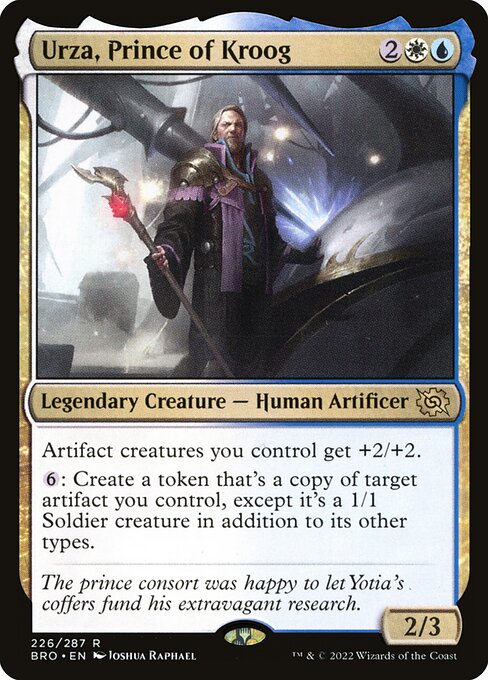
Urza, Prince of Kroog gives your artifact creatures +2/+2. For six mana, he can create a copy of an artifact you control that is also a 1/1 Soldier creature.
You can go wide with artifact creatures, build value engines or start copying the most useful thing you have on the battlefield.
Artifact decks can also generate a lot of mana and card advantage, so don’t assume an Azorius artifact deck is going to play slowly just because it’s blue/white.
Some of them can become explosive very quickly.
Tokens
White is excellent at making tokens, and blue gives those strategies some interesting options.
You can create Soldiers, Spirits, Thopters, flying tokens or whatever else your commander happens to care about.
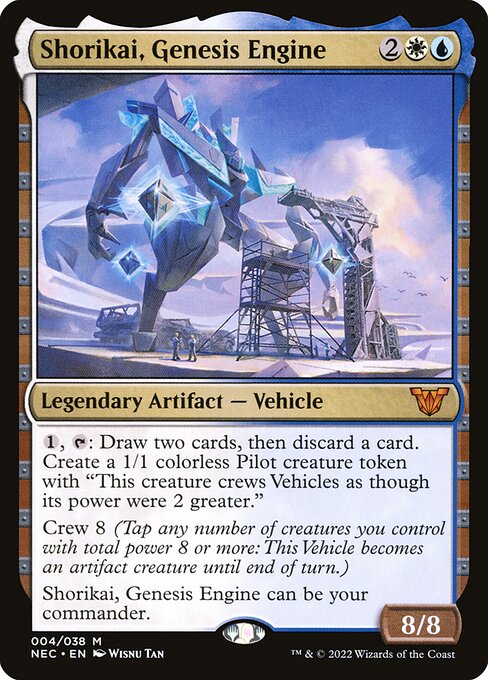
Shorikai, Genesis Engine is an interesting example.
For one mana and tapping it, you draw two cards, then discard a card and create a 1/1 Pilot token. You can activate this ability without crewing Shorikai while it is not a creature.
On paper that sounds fairly innocent.
In reality, Shorikai can become a ridiculous card advantage engine and support everything from Vehicles to control and combo.
That’s something you’ll see quite often with Azorius.
The commander looks reasonable.
Then three turns later you’re wondering how they have fourteen cards in hand.
Voltron
Azorius can also build around one creature and make it increasingly difficult to deal with.
Blue offers evasion and counterspell protection.
White offers equipment, Auras and protection spells.
Together, that can make a commander extremely annoying to remove.
Geist of Saint Traft is a classic example.
It has hexproof and, whenever it attacks, creates a tapped and attacking 4/4 white Angel token with flying that is exiled at end of combat. The Angel’s damage is not commander damage.
Voltron isn’t necessarily the first thing people associate with Azorius, but the colors are actually very well equipped for it.
What Is Azorius Bad At?
The traditional weakness of blue/white is ramp.
Green can simply put more lands onto the battlefield.
Azorius usually has to rely more heavily on mana rocks, catch-up ramp, cost reduction and Treasure-style effects.
White has improved a lot in this area, but you still need to think about your mana carefully.
Another problem is actually caused by one of Azorius’ strengths.
You have so much interaction that it’s very easy to build a deck that is fantastic at stopping everyone else…
…and terrible at winning.
Eventually you need to do something.
If your entire deck is counterspells, removal and board wipes, congratulations.
Nobody else is winning.
Neither are you.
How Does Azorius Usually Win?
That depends heavily on the deck.
Flyer decks win through combat.
Voltron wins through commander damage.
Token decks build an army.
Artifact decks can overwhelm the table or assemble combos.
Blink decks repeatedly generate value until their board becomes impossible to keep up with.
Control decks often spend the early and middle game preventing somebody else from winning, then eventually establish a threat they can protect.
Azorius also has access to plenty of combos.
Blue is very good at finding combo pieces and protecting them, while white provides some surprisingly powerful pieces of its own.
The important thing is having an actual plan to finish the game.
“Eventually my opponents will run out of cards” is technically a plan.
It’s just not always a particularly enjoyable one.
What Does an Azorius Deck Need?
The first thing I’d look at is your interaction package.
You want counterspells.
You want targeted removal.
You probably want some board wipes.
But you don’t need thirty-five answers.
Your deck still needs to advance its own plan.
Card advantage is also extremely important.
Luckily, blue handles that pretty well.
You also need to think carefully about ramp.
Mana rocks like the usual Commander staples are especially useful here because you don’t have green to fix every mana problem for you.
And most importantly, include win conditions.
Real ones.
Not just another counterspell.
Is Azorius for You?
I’d look at Azorius if you enjoy controlling the pace of the game and having answers available when something dangerous happens.
It’s especially good if you like:
- Counterspells
- Exile removal
- Board wipes
- Blink and ETB effects
- Flyers
- Artifacts
- Tokens
- Card draw
- Playing reactively
- Protecting your own board
- Making decisions on other players’ turns
If you like tapping out every turn and hoping everything works out, Azorius probably isn’t the first combination I’d choose.
Sometimes the correct Azorius play is doing absolutely nothing.
Leave your mana open.
Pass the turn.
And watch everyone else try to work out whether you actually have the counterspell.
Maybe you do.
Maybe you don’t.
They don’t need to know that.
Building Your First Azorius Commander Deck
Start by deciding whether your deck is actually a control deck or whether control is simply supporting another strategy.
That’s an important difference.
A Brago blink deck might use counterspells and removal, but the actual strategy is generating repeated ETB value.
A flyers deck uses interaction to protect its creatures while attacking.
An artifact deck may use control pieces simply to buy enough time for its engine to take over.
Don’t put twenty counterspells into every Azorius deck just because you can.
Build the interaction around what your commander is trying to accomplish.
And think about your win condition from the beginning.
Azorius is very good at stopping people.
The interesting part is what you do once you’ve stopped them.
Because eventually someone has to win the game.
You might as well make sure it’s you.
Ready to test your Azorius deck?
Analyze your list to check whether your mana, card draw and interaction support your strategy and give you a clear way to finish the game.