
Esper Commander Guide: Artifacts, Control and Having All the Answers
By MTG Master EditorialPublished Updated 9 min read
Esper is white, blue and black.
Which, if you look at what those three colors are good at, already tells you quite a lot.
White gives you excellent removal, protection and board wipes.
Blue gives you card draw, counterspells and card selection.
Black gives you tutors, creature removal, graveyard recursion and the ability to trade life for basically anything useful.
Put them together and you get a color combination with very few situations where the answer is simply:
“I can’t deal with that.”
Esper can remove creatures.
Destroy or exile artifacts and enchantments.
Counter spells.
Wipe the board.
Attack graveyards.
Draw cards.
Tutor for specific answers.
And then bring its own things back from the graveyard when somebody finally manages to destroy them.
Very reasonable.
How Does Esper Play?
There’s no single way to play Esper.
That’s going to be increasingly important with three-color identities.
Three colors give you access to a huge card pool, and Esper can support everything from slow control decks to aggressive artifact strategies.
But if there’s one thing many Esper decks have in common, it’s options.
Esper is very good at making sure you have something useful to do.
An opponent plays a dangerous creature?
Remove it.
Someone tries to combo?
Counter the important piece.
Your best permanent gets destroyed?
Bring it back.
Nothing particularly dangerous is happening?
Draw some cards.
Esper rewards players who like flexibility.
Of course, having an answer doesn’t necessarily mean you should use it.
Sometimes letting somebody else solve the problem is the best Esper play of all.
What Is Esper Good At?
Artifacts
Esper and artifacts have a very long history together.
All three colors contribute something useful.
White can recur small artifacts and support Equipment.
Blue has enormous amounts of artifact synergy, copying and card advantage.
Black can sacrifice artifacts, recur them and turn them into additional resources.
This creates everything from artifact creature decks to combo engines and value piles.
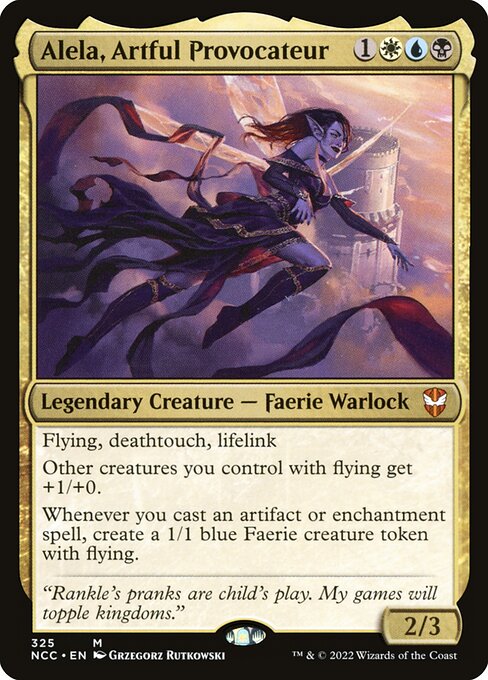
Alela, Artful Provocateur is a good example of how Esper can turn artifacts and enchantments into a battlefield.
Whenever you cast one, you create a Faerie.
So now your mana rocks, Equipment and utility enchantments are also quietly building an army.
That’s a very Esper way of doing things.
One card doing one thing is fine.
One card doing three things is better.
Control
Esper has almost everything a control deck could want.
Counterspells from blue.
Creature removal from black and white.
Artifact and enchantment removal from white.
Board wipes.
Graveyard hate.
Card draw.
Tutors.
It’s very difficult to find a type of permanent that Esper can’t interact with somehow.
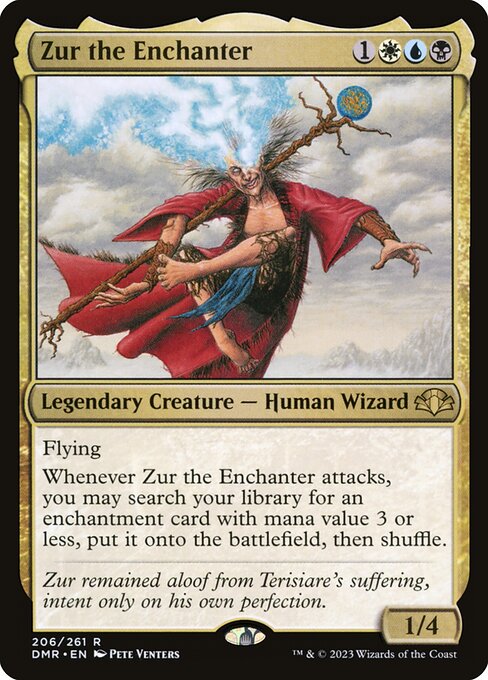
Zur the Enchanter is one of the classic Esper commanders and demonstrates another advantage of the colors: consistency.
When Zur attacks, he can search your library for an enchantment card with mana value 3 or less and put it directly onto the battlefield, then shuffle.
That can mean finding protection.
Removal.
A value engine.
Or a combo piece.
The exact card depends on what you need.
And that’s very much the point.
Reanimator
Black already gives you some of the best reanimation in Magic.
Adding blue gives you excellent ways to fill the graveyard and filter your hand.
White adds its own recursion and several powerful creatures worth bringing back.
The result is a very strong home for reanimator.
Discard something enormous.
Mill it.
Sacrifice it.
It doesn’t really matter how it got into the graveyard.
That’s where you wanted it.
Then bring it back for considerably less mana than you’re supposed to pay for it.
Esper reanimator can also be more controlling than versions in other colors.
You don’t necessarily need to reanimate the biggest creature possible.
Sometimes bringing back exactly the right creature is much more useful.
Blink
White and blue already make Azorius excellent at blink.
Black adds another layer by giving you powerful ETB creatures, sacrifice effects and death triggers.
Blink a creature.
Get its ETB again.
Sacrifice it later.
Bring it back.
Get the ETB again.
Apparently once wasn’t enough.
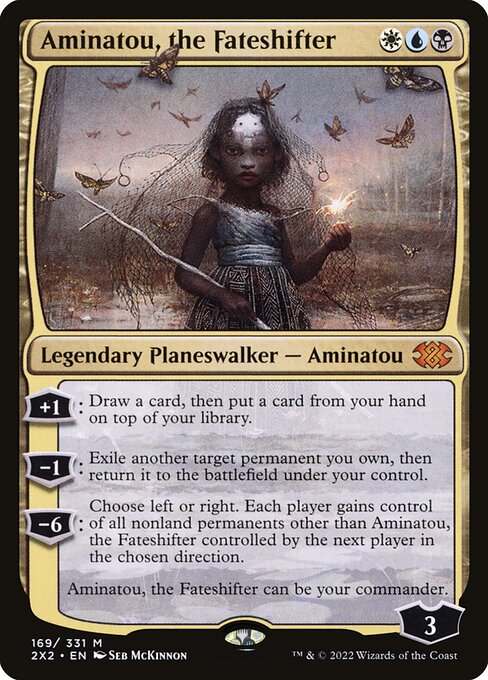
Aminatou, the Fateshifter is one of the most recognizable Esper commanders for this kind of strategy.
Her −1 can blink another permanent you own, and her +1 helps manipulate the top of your library.
That opens the door to value engines, planeswalker interactions and, naturally, combos.
Because eventually somebody always finds a way to make blinking things infinite.
Graveyards
Esper doesn’t use the graveyard quite like Golgari or Sultai, but it can still make excellent use of it.
Black provides reanimation.
White provides recursion.
Blue helps fill and manipulate the graveyard.
Artifacts make this even more interesting because Esper has many ways to bring them back.
Your graveyard can effectively become another pile of resources.
And because you’re playing blue and black, putting specific cards into that pile isn’t particularly difficult.
Lifegain and Life Drain
White and black already form Orzhov, so Esper inherits many of the same lifegain and drain strategies.
Gain life.
Drain opponents.
Trigger something whenever you gain life.
Pay that life to draw cards.
Gain it back.
Repeat.
Blue then adds card draw, protection and interaction to keep the engine working.
Life in Esper often isn’t simply a measure of how close you are to losing.
It’s another resource.
Starting at 40 gives you quite a lot of it.
Might as well use some.
Tokens
Esper has access to excellent token strategies.
White produces creature tokens extremely well.
Black can sacrifice them for value.
Blue can copy things and create artifact tokens.
Treasures, Clues, Thopters, Servos, Zombies, Spirits, Faeries…
There’s plenty to work with.
And those tokens don’t necessarily need to attack.
They can be sacrificed.
Used as mana.
Turned into cards.
Used to trigger other permanents.
Or simply sit there making everyone wonder whether attacking you is worth the trouble.
Combo
Esper is very good at combo.
Probably unsurprisingly.
Blue gives you stack interaction and card selection.
Black gives you tutors.
White gives you protection and several important combo pieces.
Together, they make finding, assembling and protecting combos relatively easy.
Esper also has access to many artifact-based combos.
This doesn’t mean every Esper deck needs to be a combo deck.
Not even close.
But if you want to build one, the colors certainly aren’t going to stop you.
What Is Esper Bad At?
Ramp is probably the most obvious weakness.
You don’t have green.
That means no traditional land ramp and fewer creatures that simply produce mana.
Esper usually relies more heavily on mana rocks, Treasures and other artifact-based acceleration.
Fortunately, being good with artifacts makes that slightly less painful.
Esper can also become too reactive.
This is the same trap some Azorius and Dimir decks fall into.
Removal.
Counterspell.
Board wipe.
Another removal spell.
Another counterspell.
Great.
Now what?
Stopping everyone else from winning isn’t actually the same thing as winning yourself.
Your deck still needs a plan.
Esper is so good at answering problems that it’s very easy to spend too many deck slots preparing for every possible situation.
You don’t need an answer to absolutely everything.
Especially when there are three other players at the table.
How Does Esper Usually Win?
Honestly, almost however you want.
Artifact combos.
Reanimator.
Token armies.
Commander damage.
Life drain.
Alternate win conditions.
Planeswalkers.
Control followed by a finisher.
Infinite combos.
Esper’s card pool is broad enough that the color identity itself doesn’t really dictate the win condition.
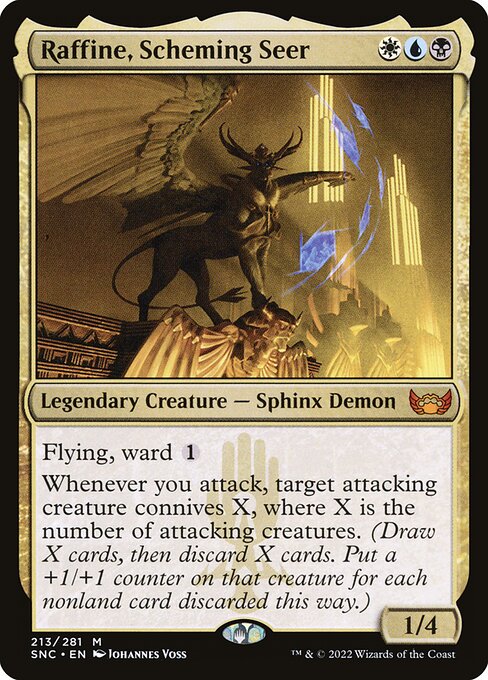
Raffine, Scheming Seer, for example, can take Esper in a much more aggressive direction.
Attack with creatures and choose one attacking creature to connive X, where X is the number of attacking creatures. Draw and discard that many cards, then put a +1/+1 counter on that creature for each nonland card discarded this way.
That’s very different from sitting behind counterspells with a traditional control deck.
Same colors.
Completely different game.
That’s one of the things I like about three-color identities.
What Does an Esper Deck Need?
First, decide what your deck is actually trying to do.
This sounds obvious, but Esper makes it dangerously easy to build a pile of individually excellent cards.
Good removal.
Good counterspells.
Good tutors.
Good card draw.
Good creatures.
Good artifacts.
All excellent cards.
But what is the deck?
Your commander should give you a direction.
Once you have that, use Esper’s interaction to protect and support the strategy rather than letting interaction become the entire strategy.
You also need to think carefully about ramp.
Mana rocks will often do a lot of the work.
And because you’re playing three colors, fixing matters too.
You want access to white, blue and black when you actually need them.
A hand full of fantastic spells isn’t particularly impressive if you can’t produce the correct colors to cast them.
Is Esper for You?
I’d look at Esper if you like having options.
Especially if you enjoy:
- Artifacts
- Control
- Counterspells
- Removal
- Reanimator
- Blink
- Graveyard recursion
- Tokens
- Lifegain
- Life drain
- Tutors
- Combos
- Planeswalkers
- Having the right answer at the right time
- Quietly looking at your seven untapped lands while somebody asks if their spell resolves
Esper can be built casually.
It can be built competitively.
It can be creature-heavy, artifact-heavy, controlling, combo-focused or somewhere in between.
That’s one of its biggest strengths.
You get access to three colors that are extremely good at interacting with the game.
The challenge is deciding what you actually want to do with them.
Building Your First Esper Commander Deck
Start with the commander.
More than with the two-color combinations we’ve covered, I think this matters here.
Three colors give you so many possibilities that simply saying “I’m building Esper” doesn’t really tell you what the deck is supposed to do.
“I’m building Esper artifacts.”
That’s better.
“Esper reanimator.”
Now we have a plan.
“Esper blink.”
Good.
“Esper control.”
Fine, but how are you winning?
Once you’ve decided that, build the engine first.
Then add interaction around it.
Esper has access to so many excellent answers that filling the deck with them is easy.
Don’t.
You still need cards that actually advance your own plan.
Because having an answer for everything feels fantastic.
Until you realize you’ve spent the entire game stopping three other people from winning and none of your cards actually finish the game.
Have the answers. Just make sure you eventually ask a question your opponents can’t answer.
Ready to test your Esper deck?
Analyze your list to check whether your mana, interaction and engines support a clear plan to win.