
Orzhov Commander Guide: Lifegain, Sacrifice and Draining the Table
By MTG Master EditorialPublished Updated 9 min read
Orzhov is white and black, which gives you two colors that are surprisingly good at agreeing on one thing:
Everything has a price.
Creatures can be sacrificed.
Life can be spent.
Tokens can die.
Cards can go to the graveyard.
As long as you’re getting something useful in return, Orzhov is usually perfectly happy with the deal.
This is one of the best color combinations for aristocrats, lifegain, sacrifice, tokens, recursion and slowly draining the entire table while apparently doing very little.
And that’s one of the dangerous things about Orzhov.
Sometimes nobody is particularly worried about your board.
Then somebody counts all your death triggers and realizes the table is about to lose twenty life.
How Does Orzhov Play?
White gives you tokens, protection, exile removal, board wipes, lifegain and answers to almost every permanent type.
Black gives you sacrifice, creature removal, card draw, tutors, reanimation and ways to turn life into another resource.
Together, they are extremely good at building engines where small actions generate value repeatedly.
A creature enters.
You gain life.
You sacrifice it.
Someone loses life.
You draw a card.
Something else creates a token.
Eventually the creature comes back.
And then you do the whole thing again.
Individually, none of those effects looks particularly terrifying.
Put enough of them together and suddenly the table has a problem.
What Is Orzhov Good At?
Aristocrats
This is probably the most recognizable Orzhov strategy.
Aristocrats decks sacrifice their own creatures for value while triggering effects whenever those creatures die.
You normally need three things:
Creatures you’re happy to sacrifice.
Ways to sacrifice them.
Things that reward you when they die.
Once those pieces start working together, even a useless 1/1 token can become surprisingly valuable.
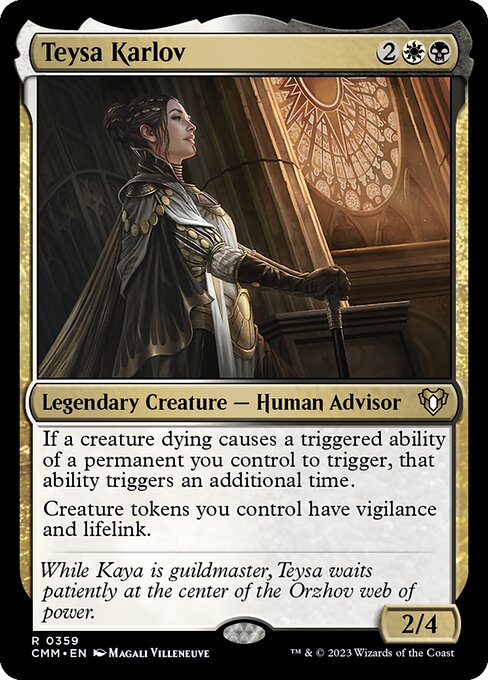
Teysa Karlov is one of the most famous Orzhov commanders for this strategy.
If a creature dying causes one of your permanents to trigger, Teysa makes it trigger an additional time.
So your death triggers become twice as annoying.
Drain one life?
Now drain two.
Create one token?
Create two.
The creature was going to die anyway.
You might as well get paid properly.
Lifegain
White and black both have enormous amounts of lifegain support.
But gaining life alone isn’t really a strategy.
Going from 40 to 100 life is nice.
It doesn’t necessarily win the game.
Orzhov becomes much more interesting when gaining life starts doing other things.
Put counters on creatures.
Draw cards.
Create tokens.
Drain opponents.
Trigger your commander.
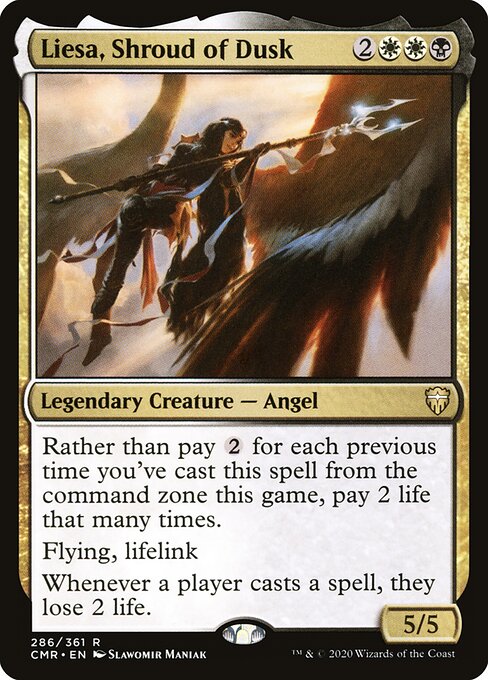
Liesa, Shroud of Dusk takes life in a particularly Orzhov direction.
Players lose two life whenever they cast a spell.
Including you.
Liesa also has lifelink, and replaces the extra mana of commander tax with two life for each previous time you have cast her from the command zone.
So the entire game starts becoming a calculation of how much life everyone can afford to spend.
Orzhov is very comfortable with that calculation.
Life Drain
This is where Orzhov becomes really dangerous.
You don’t necessarily need to attack anyone.
You can simply make everyone lose life through triggers.
A creature dies.
Each opponent loses one life.
You gain one.
Another creature dies.
Do it again.
It doesn’t look dramatic at first.
But Commander has three opponents.
If each opponent loses one life and you gain one, your opponents have lost three life in total and you have gained one. That is different from gaining one life for each opponent, which would gain you three. Check what each card actually says.
Do that ten times and suddenly those little triggers don’t look so little anymore.
Elas il-Kor, Sadistic Pilgrim is a perfect example.
When another creature you control enters, you gain one life.
When another creature you control dies, each opponent loses one life. This ability does not gain you life.
That’s basically the Orzhov business model.
Tokens
White is excellent at creating tokens, and black is very good at finding unpleasant things to do with them.
Orzhov token decks don’t necessarily care about keeping every token alive.
Quite the opposite.
Sometimes the token exists specifically because you need something to sacrifice.
Create three tokens.
Attack with them.
Sacrifice the survivors.
Trigger your death effects.
Maybe bring something else back from the graveyard.
Efficient.
At the beginning of each end step, Thalisse, Reverent Medium creates a 1/1 white Spirit token with flying for each token you created that turn. She counts tokens of any type, including Treasures, and works on opponents’ turns too.
And once you have a giant pile of disposable creatures, Orzhov has plenty of ideas for what to do with them.
Recursion and Reanimator
Black is one of the best graveyard colors in Magic, and white also has plenty of ways to return smaller creatures and permanents.
That makes Orzhov very good at recurring the same pieces again and again.
This is particularly useful in sacrifice decks.
If a creature has a useful enter-the-battlefield or death trigger, why should you only use it once?
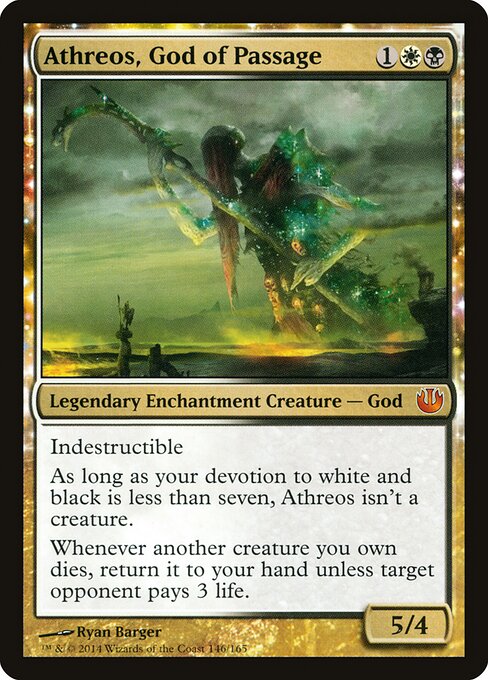
When another creature you own dies, Athreos, God of Passage returns it to your hand unless a target opponent pays three life. The ability triggers for tokens too, but tokens cannot return to your hand after dying.
Neither option is particularly attractive.
And that’s exactly where Orzhov likes to be.
Give your opponents choices where every answer is bad.
Taxes
White likes making rules.
Black likes making people pay.
Naturally, Orzhov can build some very unpleasant tax strategies.
Pay more mana.
Lose life.
Don’t attack me.
Creatures enter tapped.
You can only do this once per turn.
There are many ways to make your opponents’ lives slightly more difficult.
And several small taxes together can become a serious problem.
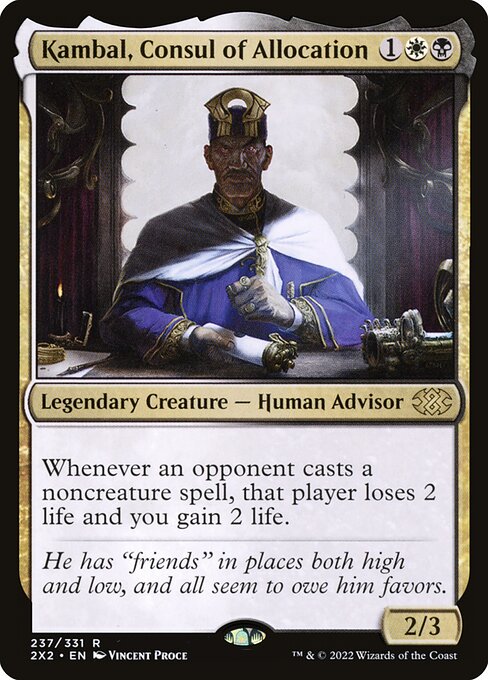
Kambal, Consul of Allocation is one of the cleanest examples.
Whenever an opponent casts a noncreature spell, they lose two life and you gain two.
They’re still allowed to cast the spell.
There will just be a bill afterwards.
Again: very Orzhov.
Removal
Orzhov has some of the best permanent removal in Commander.
White can exile creatures and enchantments and deal with artifacts.
Black is excellent at killing creatures and planeswalkers.
Together, there aren’t many permanents you simply cannot answer.
You also have access to excellent board wipes.
So if somebody builds a terrifying battlefield, Orzhov can usually do something about it.
Sometimes that something is:
“Everything dies.”
Which, conveniently, might trigger half your deck.
What Is Orzhov Bad At?
Ramp can be awkward.
You’re not green.
You have mana rocks, Treasures, white catch-up ramp and some black mana engines, but you don’t naturally accelerate lands in the same way green does.
You need to build your mana package deliberately.
Another issue is that Orzhov decks can become very dependent on having several pieces working together.
A sacrifice outlet without creatures isn’t doing much.
Death triggers without a sacrifice outlet can sit there doing nothing.
Lifegain payoffs don’t help if you’re not gaining life.
This means good Orzhov decks need redundancy.
Don’t rely on one card to make the entire machine work.
And graveyard hate can obviously be painful if recursion is a major part of your plan.
How Does Orzhov Usually Win?
Orzhov often wins without one huge dramatic attack.
Instead, everyone slowly realizes their life total has disappeared.
Aristocrats decks drain opponents through death triggers.
Lifegain decks turn life into counters, tokens or direct damage.
Token decks can simply build a huge army.
Reanimator decks repeatedly bring back powerful threats.
You can also win through combos, and Orzhov has plenty of them.
Sacrifice outlet.
Creature that comes back.
Death trigger.
Repeat.
If those pieces can loop indefinitely, the game ends very quickly.
Orzhov is particularly good at turning seemingly harmless cards into very dangerous engines.
That 1/1 creature might not look threatening.
The problem is what happens when it dies forty times.
What Does an Orzhov Deck Need?
If you’re building around sacrifice, make sure you have enough sacrifice outlets.
Preferably some that don’t cost mana to activate.
You also need enough creatures or tokens that you’re actually happy to lose.
Then you need payoffs.
Drain.
Card draw.
Tokens.
Counters.
Recursion.
The balance between these pieces matters.
Don’t build a deck with fifteen cards that reward creatures dying and only three reliable ways to sacrifice them.
If you’re playing lifegain, ask what gaining life actually accomplishes.
Life should usually be feeding another part of your strategy.
And don’t forget card advantage.
Black can draw extremely well if you’re willing to spend life.
You’re playing Orzhov.
Spending life is basically part of the paperwork.
Is Orzhov for You?
I’d look at Orzhov if you enjoy building engines where lots of small effects work together.
It’s especially good if you like:
- Sacrificing creatures
- Aristocrats
- Lifegain
- Draining the table
- Tokens
- Death triggers
- Graveyard recursion
- Reanimator
- Taxes
- Excellent removal
- Board wipes
- Slowly accumulating value
- Making opponents choose between two bad options
If you want every win to involve attacking with a gigantic creature, there are probably better colors.
Orzhov often kills people without attacking them at all.
Your creatures enter.
They die.
You gain life.
Everyone else loses life.
And eventually someone asks:
“Wait, how much life are we losing?”
Usually more than they expected.
Building Your First Orzhov Commander Deck
Start by identifying the actual engine.
If you’re playing aristocrats, write down the three parts:
Fodder. Sacrifice outlets. Payoffs.
You need all of them.
If you’re playing lifegain, decide what your life total is powering.
If you’re playing tokens, decide whether those tokens are supposed to attack or die.
If you’re playing recursion, make sure the cards you’re bringing back are actually worth bringing back.
Orzhov is at its best when the pieces overlap.
A creature enters and gains life.
Then you sacrifice it and drain the table.
Its death creates another creature.
Later you bring the original creature back.
One card has now contributed to four different parts of your strategy.
That’s where Orzhov starts feeling really good.
Nothing is wasted.
Not your creatures.
Not your graveyard.
Not even your life total.
Everything has value. Especially when it dies.
Ready to test your Orzhov deck?
Analyze your list to check whether your mana, card draw and interaction support your sacrifice engine, lifegain payoffs and recovery plan.