
How to Build a Group Hug Commander Deck: Politics, Generosity, and Actually Winning
By MTG Master EditorialPublished Updated 24 min read
Most Commander decks are trying to get ahead of their opponents.
You want more cards, more mana, better creatures, or a battlefield that's difficult to deal with.
Group Hug takes a slightly different approach.
What if you helped everybody?
Give your opponents extra cards. Let them play additional lands. Generate resources for other players. Maybe even help someone survive an attack.
Sounds friendly, right?
Well, sometimes it is.
But this is still Commander, and the person you just helped might use those extra cards to eliminate you.
That's what makes Group Hug such an unusual strategy. You're not simply playing cards. You're influencing how the entire table develops, making deals, and deciding who benefits from your generosity.
And if you've ever played a four-player game where everybody suddenly has ten cards in hand and enough mana to cast almost anything, you know things can get out of control very quickly.
Personally, I think Group Hug can be one of the most entertaining archetypes in Commander.
But there's a big difference between building an interesting political deck and simply helping somebody else win.
Because giving everyone free resources is easy.
Making sure those resources benefit you more than your opponents is the difficult part.
What Exactly Is Group Hug in Commander?
Group Hug is a strategy built around playing cards that benefit multiple players, sometimes the entire table.
Instead of keeping all your resources for yourself, you're sharing some of them.
That might mean allowing everyone to draw additional cards, giving opponents extra mana, helping them play lands, or offering other advantages.
For example, imagine you control these two cards:
Howling Mine
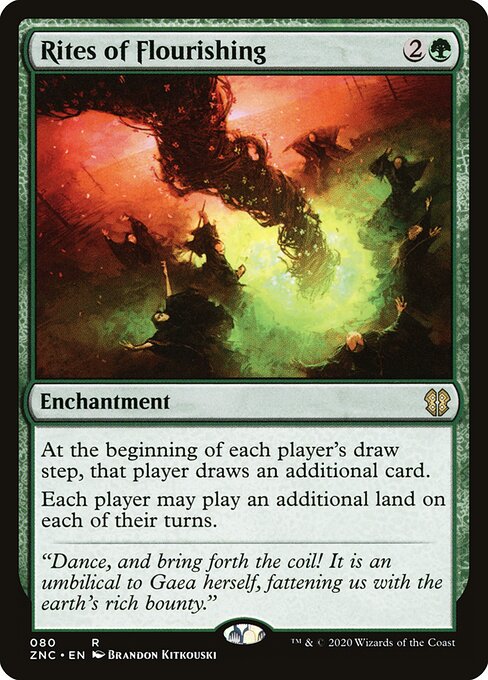
Rites of Flourishing
As long as Howling Mine is untapped, each player draws an additional card during their draw step.
Rites of Flourishing also gives each player an extra card during their draw step and allows each player to play an additional land during their own turn.
Suddenly, everybody is developing much faster.
Players have more cards, more opportunities to find lands, and more resources to cast spells.
And because this is a multiplayer game, you've potentially helped three opponents at the same time.
That's a lot of generosity.
But what do you get in return?
That's the important question.
A good Group Hug deck needs a way to benefit from those additional resources, influence how opponents use them, or turn the faster game into something that favors your strategy.
Otherwise, you might just be accelerating the person with the most dangerous deck.
Group Hug Isn't the Same as Group Slug
Before going further, I think it's worth explaining an important distinction.
Group Hug generally helps other players.
Group Slug makes life more difficult for everyone, usually through repeated damage, life loss, or other punishing effects.
Cards like Howling Mine are classic Group Hug.
Cards like Havoc Festival belong much more naturally in Group Slug.
Havoc Festival has black-red color identity: it illustrates the contrast with Group Slug here, rather than being a recommendation for the five featured commanders.
But the two approaches can overlap.
You might use Group Hug effects to make everybody draw cards, then play something that punishes opponents for having too many cards or drawing too many.
Or you might provide extra mana while using political deals to influence what players do with it.
That's where Group Hug starts becoming more strategic.
You don't have to be completely harmless.
And personally, I think a good Group Hug deck becomes much more interesting when the generosity has a purpose.
Choosing Your Group Hug Commander
Your commander changes the experience quite a lot.
Some commanders give everyone resources automatically.
Others let you choose who receives the benefits.
And some reward you directly whenever opponents draw cards or accept your help.
I particularly like commanders that give you meaningful decisions rather than forcing you to help everybody equally.
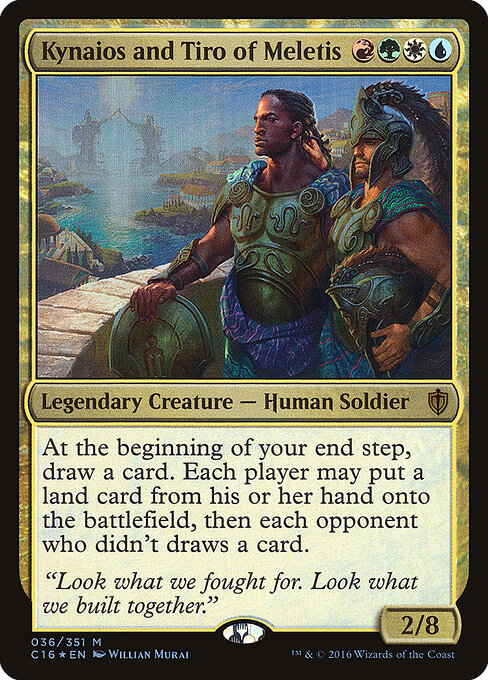
Kynaios and Tiro of Meletis: Everybody Gets Something
Kynaios and Tiro of Meletis are one of the classic Group Hug commanders.
At the beginning of your end step, you draw a card.
Then each player may put a land card from their hand onto the battlefield. Each opponent who chooses not to do so draws a card instead.
Putting that land onto the battlefield does not use a land play for the turn. You draw the initial card even if you put a land onto the battlefield; only opponents who do not put a land receive the later draw.
That's a pretty friendly ability.
You get reliable card advantage, while everybody gets an opportunity to develop their mana or find another card.
And because Kynaios and Tiro have four colors, you can combine card draw, land-based strategies, protection, and several different ways to win.
What I like about them is that the effect naturally encourages the game to progress.
Players get more resources and can develop their strategies more easily.
But there's an obvious problem.
Sometimes your opponents will use those resources much better than you.
If you're helping a fast combo deck find more cards and play additional lands, you might be making your own life considerably more difficult.
I'd build Kynaios and Tiro with enough interaction and a clear win condition, rather than assuming that being generous will keep everybody friendly.
Gluntch, the Bestower: Choose Your Friends Carefully
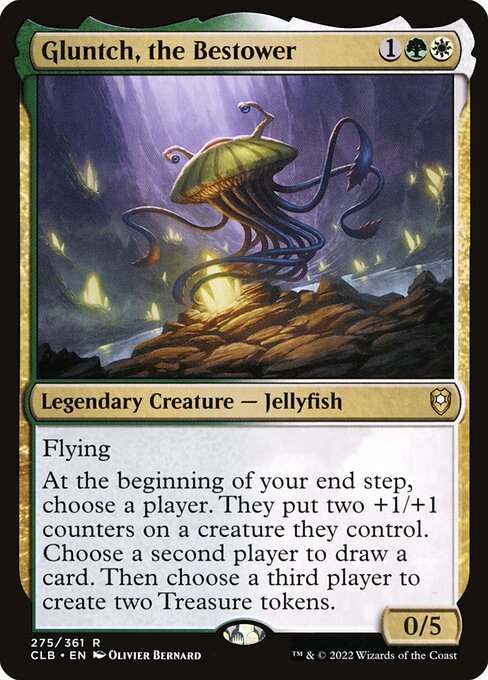
Gluntch, the Bestower is one of my favorite examples of a genuinely political commander.
At the beginning of your end step, you choose three different players.
One puts two +1/+1 counters on a creature they control.
Another draws a card.
And the third creates two Treasure tokens.
You can choose yourself for one of those benefits, but each benefit must go to a different player.
These choices are made as the ability resolves and do not target. The first player chooses which creature receives the counters; you can choose them even if they control no creatures, but then they put no counters anywhere.
That's where the interesting decisions start.
Who needs the extra card?
Who benefits most from two Treasures?
And is giving +1/+1 counters to that enormous creature really a good idea?
I like Gluntch because the gifts aren't all equally valuable.
Sometimes the player with the largest battlefield would love more mana, while another player would prefer to draw a card.
You can use those differences to negotiate.
And because Gluntch is only green and white, the mana base can be fairly straightforward.
But remember that Gluntch becomes less flexible as players are eliminated. With only two players left, you can't choose a third player to receive the Treasure tokens.
Group Hug commanders don't always become stronger in a one-on-one game.
Phelddagrif: The Original Friendly Hippo
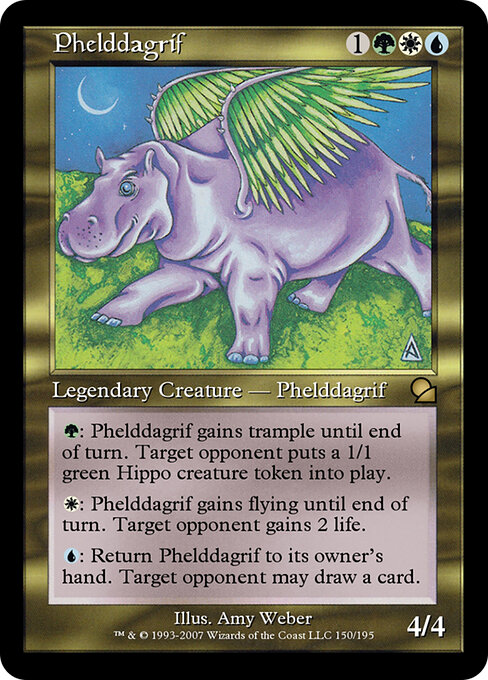
Phelddagrif is one of the most recognizable Group Hug commanders.
And yes, it's a purple hippo that can fly.
That alone makes it worth discussing.
Its abilities can give Phelddagrif trample or flying, or return it to your hand, while providing benefits to an opponent.
You might give someone a 1/1 Hippo token, let them gain two life, or allow them to draw a card.
What makes Phelddagrif interesting is that you choose who receives those benefits.
You're not automatically helping the entire table.
You can make deals, reward certain players, or give a small benefit to someone who isn't currently threatening you.
Personally, I think Phelddagrif represents the political side of Group Hug particularly well.
The cards aren't necessarily doing something spectacular.
You're trying to influence the decisions people make.
And occasionally, you're attacking someone with a flying hippo.
Commander has room for that.
Kwain, Itinerant Meddler: Free Cards for Everyone
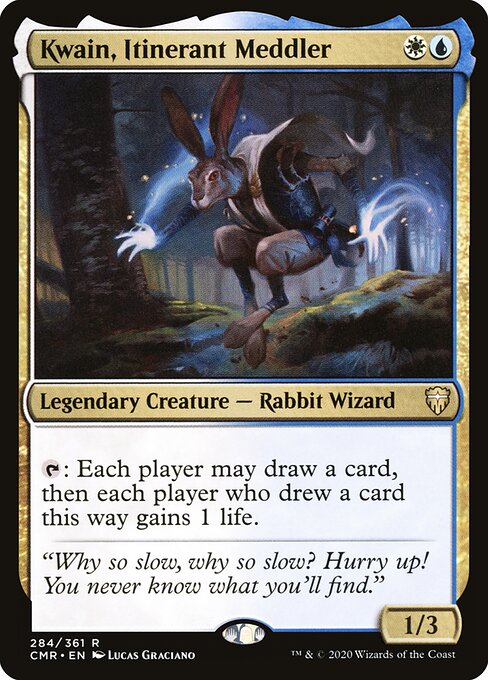
Kwain, Itinerant Meddler is a simple but interesting Azorius commander.
You tap Kwain, and each player may draw a card.
Everyone who draws a card this way also gains one life.
It's easy to understand, inexpensive to cast, and very clearly Group Hug.
You're giving everybody the opportunity to get additional resources.
But the interesting part is building your deck to benefit more from those draws.
You can include effects that reward you for drawing cards, punish excessive card draw, or let you turn those resources into a win.
And because you're playing white and blue, you have access to excellent control and protection.
I like Kwain because you can choose when to activate him.
You don't have to give opponents cards at the beginning of every turn.
Sometimes waiting is much better.
Especially when the player before you is about to attempt a combo.
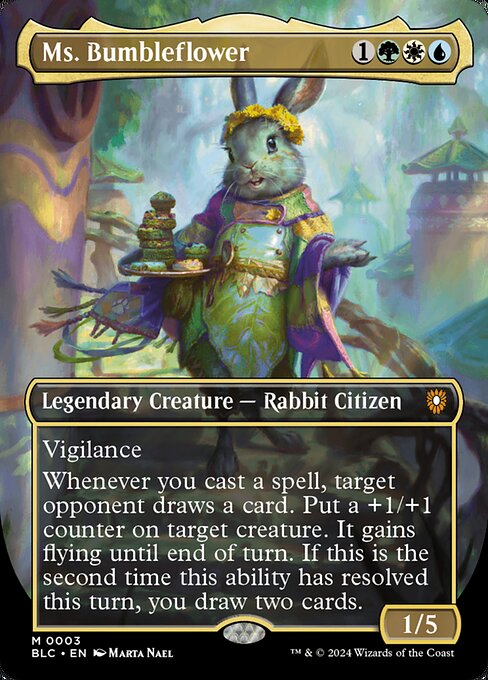
Ms. Bumbleflower: Help Others, Grow Your Own Board
Ms. Bumbleflower is another interesting Group Hug commander, especially if you want a more active strategy.
Whenever you cast a spell, a target opponent draws a card.
You also put a +1/+1 counter on a target creature and give it flying until end of turn.
And when her ability resolves for the second time during a turn, you draw two cards.
This happens on exactly the second resolution each turn, not every second resolution. The ability resolves before the spell that triggered it and can resolve even if that spell is later countered.
That creates an interesting balance.
You're helping an opponent draw cards, but you're also developing your own creatures and potentially generating extra card advantage.
I like this because the deck doesn't have to rely entirely on political promises.
Your own battlefield is getting stronger.
You can build around casting spells, counters, combat, and card draw while still maintaining that Group Hug feeling.
The disadvantage is that you're giving opponents real cards.
If you cast several spells while a combo player is looking for their final piece, you might accidentally help them find it.
Which is not exactly what you wanted.
The First Rule: Don't Help Everybody Equally
This is probably the most important lesson I'd give when building Group Hug.
Generosity doesn't have to be random.
In fact, I think the strategy becomes much better when you consider who you're helping and why.
Imagine you're playing a four-player game.
One opponent is struggling with three lands and very little in hand.
Another has a reasonable battlefield.
And the third is clearly preparing a powerful combo.
Now imagine you can give one player two Treasure tokens.
Who should get them?
There's no universally correct answer.
But giving the Treasures to the combo player simply because they're next in turn order might be a terrible decision.
Maybe helping the player who's behind will make the game more balanced.
Maybe you want to reward someone who's willing to deal with the biggest threat.
Or perhaps you should keep the most valuable benefit for yourself.
That's what makes Group Hug interesting.
You're constantly evaluating how your decisions affect the table.
And because players remember who helped them, those decisions can influence future attacks, removal spells, and negotiations.
Just don't assume a favor creates a permanent alliance.
This is Commander.
Friendships have a tendency to end when somebody draws their win condition.
Mana and Extra Lands: Be Careful What You Accelerate
Group Hug doesn't only mean card draw.
You can also help opponents develop their mana.
Cards like Rites of Flourishing, Heartbeat of Spring, and Tempt with Discovery can accelerate the game in different ways.
Heartbeat of Spring adds one mana of a type the land produced when a player taps it for mana. It does not double the entire output of a land that already produces several mana.
And this can be particularly interesting in Commander.
A player who's been stuck on three lands might finally be able to cast their commander.
Another might suddenly have enough mana for that expensive creature they've been holding.
But there's a big difference between helping someone recover and giving the strongest player enough mana to win immediately.
I particularly like effects that give players choices.
Tempt with Discovery is an interesting example because you search for a land and each opponent may choose to search for one too. You get an additional land for each opponent who accepts.
That creates a little negotiation.
Do your opponents take the land knowing that they're also giving you another one?
And are you actually benefiting more than they are?
That's the kind of Group Hug interaction I enjoy.
But I'd avoid filling the deck with symmetrical mana doublers without a plan.
If everybody can produce twice as much mana and your deck isn't ready to capitalize on it, you might simply make the game end sooner.
And not necessarily in your favor.
Political Deals: Useful, but Don't Build Everything Around Promises
Group Hug is probably the archetype most closely associated with Commander politics.
You can help someone draw cards in exchange for an attack elsewhere.
You might give a player extra mana because they've promised to remove a dangerous permanent.
Or perhaps you use a defensive spell to save someone who's about to be eliminated.
Those moments can be really entertaining.
But I'd be careful about relying too much on agreements.
Players can change their plans.
They might draw a card that completely changes the situation.
And a deal that made sense two turns ago might no longer be good for either player.
Personally, I prefer political cards that are still useful even when nobody wants to cooperate.
For example, a commander that gives you resources while helping opponents is more reliable than a card that only works well if another player behaves exactly as promised.
Politics should make your deck more interesting.
It shouldn't be the only thing keeping your strategy alive.
And I'd avoid making deals that require everyone else to ignore an obvious winning threat.
If someone is about to win, the table should be able to respond.
Including you.
Don't Accidentally Become a Kingmaker
This is probably the biggest risk of Group Hug.
A kingmaker is a player whose decisions effectively determine which opponent wins, even when that player isn't going to win themselves.
Group Hug can create those situations very easily.
Imagine two opponents are still competing for the game.
One is about to win next turn.
You can't realistically win anymore, but you can give one of them several cards or extra mana.
If that gift decides the game, you've effectively chosen the winner.
Sometimes political decisions inevitably influence the outcome.
That's part of multiplayer Magic.
But I think there's a difference between making strategic choices that support your own chances and handing someone a victory for no particular reason.
I'd always try to keep my own win condition relevant.
Even when playing a friendly deck.
The goal isn't to make sure everybody enjoys your generosity until somebody else wins.
The goal is to create an interesting multiplayer game where your decisions matter and you still have a chance to finish first.
How Do You Benefit More Than Your Opponents?
This is where Group Hug stops being just a collection of friendly cards and becomes a real strategy.
If everybody is receiving extra resources, you need something that turns those resources into an advantage for you.
There are several ways to do it.
Reward Opponents for Drawing Cards
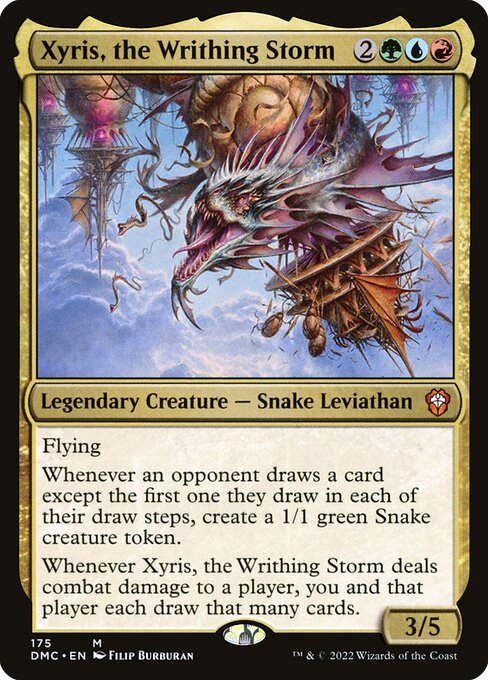
Xyris, the Writhing Storm is a great example.
Whenever an opponent draws a card except the first one they draw in each of their draw steps, you create a 1/1 Snake token. Draws outside that opponent’s draw step also count, including their first draw that turn.
Xyris has Temur color identity: it needs green, blue and red. It can fit Kynaios and Tiro or lead its own deck, but is not legal under Gluntch, Phelddagrif, Kwain or Ms. Bumbleflower.
So if an opponent draws several additional cards, you're also building an army.
And because Xyris can make both you and a player draw cards through combat damage, it can help generate even more resources and tokens.
I like this approach because your generosity has an immediate payoff.
You're helping opponents draw, but you're also getting creatures.
And those creatures can eventually become your win condition.
Turn Your Own Card Draw Into Life Loss
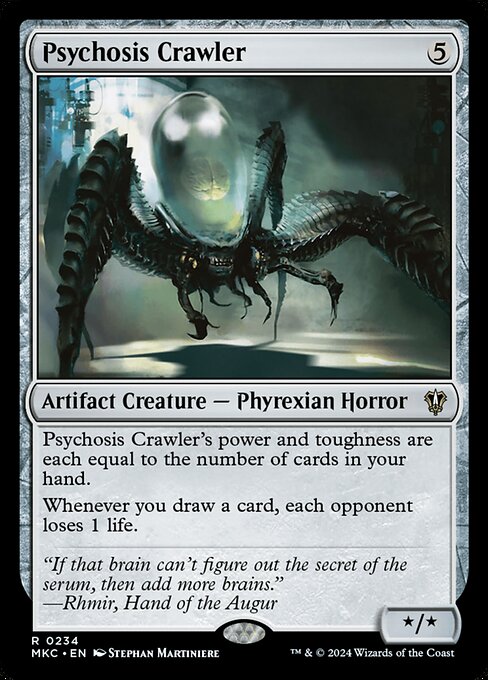
Psychosis Crawler provides another interesting option.
Whenever you draw a card, each opponent loses one life.
Now imagine you're playing a Group Hug deck where everybody draws additional cards, including you.
Those extra cards are helping your opponents.
But they're also allowing you to make opponents lose life. This is life loss, not damage: damage prevention does not stop it.
You still need to draw the cards yourself for Psychosis Crawler to trigger, so it doesn't punish opponents simply for drawing.
That's an important distinction.
And the same kind of idea applies to other effects that reward you for drawing cards or accumulating resources.
You want cards that make your shared benefits disproportionately useful to you.
Use Extra Resources Better Than Everyone Else
Sometimes the advantage is less obvious.
Maybe your deck is built around expensive spells and can take better advantage of additional mana.
Maybe you're playing Landfall and extra land drops trigger several useful abilities.
Or perhaps your commander gives you additional cards while opponents receive something less valuable.
This is particularly interesting with Kynaios and Tiro.
If your deck contains several Landfall payoffs, the additional lands can generate much more value for you than for the other players.
That's how I like building Group Hug.
The shared resources support a plan you've already prepared.
You're not just hoping to benefit from them.
Protection: Being Friendly Doesn't Make You Safe
One mistake I'd avoid is assuming opponents won't attack you because you're helping them.
That might work for a while.
But eventually, somebody will realize that your extra cards and mana are helping you too.
Or perhaps they just need to attack someone.
And you're the player without blockers.
That's why I'd include a reasonable amount of protection.
Ghostly Prison, Propaganda, and Windborn Muse can make attacking you more expensive.
They're particularly useful in Group Hug because you don't necessarily want to spend every turn building an army of creatures.
You might be investing resources in card draw, mana effects, and political tools instead.
But I wouldn't go overboard.
A few defensive effects can buy you time.
Turning the deck into a full Pillowfort strategy is a different choice, and it changes how the game feels.
I also like keeping removal and counterspells available.
Cards like Swords to Plowshares, Beast Within, Generous Gift, and Counterspell can be useful depending on your colors.
Just because you're playing Group Hug doesn't mean you have to allow somebody to win.
Sometimes the friendliest thing you can do for the table is counter the spell that's about to end the game.
How Much Group Hug Is Too Much?
I wouldn't try to fill half the deck with cards that help everybody.
That can create a very strange experience.
You play extra card-draw effects.
Everybody gets more mana.
You help everyone find lands.
And then you discover your own deck doesn't have enough interaction, protection, or ways to win.
I'd rather use a smaller selection of meaningful Group Hug cards and build a coherent strategy around them.
As a rough starting point, perhaps 8–12 dedicated group-benefit effects could be enough for a deck where the commander already supports the strategy.
Some builds will want more, especially if the goal is a very political and generous playstyle.
Others can use fewer, with the rest of the deck focused on card-draw payoffs, tokens, Landfall, or control.
But I wouldn't treat the number as a rule.
The important question is whether those effects support your deck or simply make your opponents stronger.
A card like Howling Mine might be excellent in one Group Hug deck and a terrible idea in another.
It depends on what you're trying to accomplish.
How Does a Group Hug Deck Actually Win?
This is where I think a lot of Group Hug decks struggle.
It's easy to build a deck that makes everybody happy.
But eventually, somebody needs to win.
And I'd prefer that my deck at least has a realistic chance of doing it.
There are several interesting approaches.
Win Through Tokens and Combat
If your commander or supporting cards generate creature tokens, you can gradually build an army while helping the table.
Xyris, the Writhing Storm is particularly interesting here because extra card draw for your opponents can create Snakes for you.
Those Snakes can eventually become dangerous through combat buffs or other token synergies.
I like this approach because the win condition develops naturally.
You're not suddenly switching to an unrelated strategy.
The same effects you've been using to help opponents have also been building your battlefield.
Win Through Card-Draw Payoffs
Cards like Psychosis Crawler can turn your own repeated card draw into life loss for your opponents.
And if your deck contains enough card-draw effects, you might gradually reduce everybody's life total without needing to attack.
This can work especially well when your commander naturally provides card advantage.
But I'd be careful not to rely on only one payoff.
If somebody removes it, you still need a way to keep playing and eventually win.
Win With an Alternative Win Condition
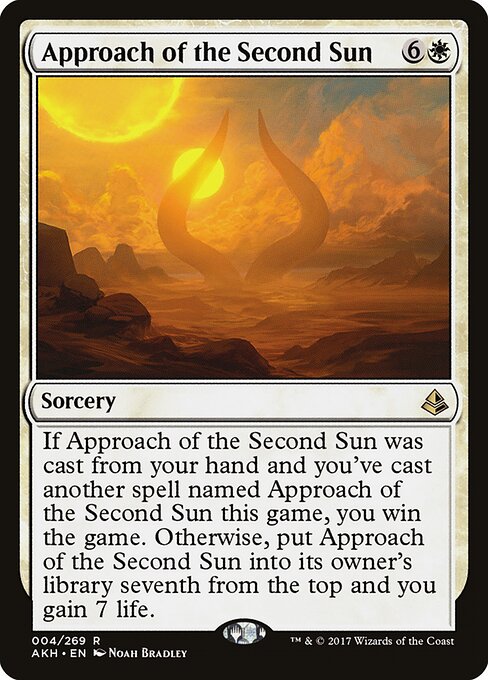
Approach of the Second Sun is an interesting option for certain Group Hug decks.
When your first Approach resolves without meeting its win condition, you normally put it into its owner’s library seventh from the top, with six cards above it, and gain seven life.
If an Approach you cast from your hand later resolves and you have already cast another spell named Approach of the Second Sun this game, you win. The earlier one can have been cast from any zone and can even have been countered; the winning one must resolve.
A deck that draws lots of cards can potentially find it again relatively quickly.
I like this kind of win condition because it gives a card-draw-focused deck a clear objective.
But remember that your opponents will know what's coming after the first Approach resolves.
They may have some opinions about it.
And probably a counterspell.
Win Through Your Own Resource Advantage
Sometimes you don't need a special combo or alternative win condition.
Maybe you've been playing extra lands, drawing cards, and building a stronger board than your opponents.
At some point, you can use those resources to cast powerful creatures, generate tokens, or take control of the game.
This is particularly interesting in Group Hug decks that overlap with Landfall, Control, or other strategies.
Personally, I think those combinations are often more reliable than a pure Group Hug deck that has no independent plan.
You're still helping the table.
But you have something meaningful to do with the resources you're generating.
What Happens When Only Two Players Remain?
This is something worth thinking about before building Group Hug.
The strategy changes quite a lot when the table gets smaller.
During a four-player game, you can offer benefits to different opponents, make deals, and influence who attacks whom.
But when only two players remain, the political side becomes much simpler.
There's nobody else to negotiate with.
And any resource you give your remaining opponent can immediately be used against you.
Some commanders also become less effective.
Gluntch, for example, requires three different players to distribute all three of its gifts. With only two players left, the Treasure part cannot happen, but the first player still gets the counter effect and the second still draws a card.
This is why I'd make sure my Group Hug deck can function in a one-on-one situation.
You need a win condition, enough interaction, and ways to use your own resources effectively.
You can't rely entirely on convincing one opponent to attack somebody else.
Because there's nobody else left.
And suddenly that friendly deck needs to finish the game.
Common Mistakes When Building Group Hug
There are several things I'd watch out for.
Helping opponents without a plan. Giving everyone extra cards and mana isn't automatically beneficial to you.
Not considering who benefits most. A combo deck may use your gifts much more effectively than a creature deck that's already behind.
Relying entirely on politics. Promises can change, and not every opponent will cooperate.
No real win condition. Making the game enjoyable for everyone is great, but you still need a way to win.
Not enough interaction. You need to be able to stop dangerous strategies, even when you're playing a friendly deck.
Ignoring the endgame. Group Hug becomes very different when only two players remain.
Playing too many symmetrical effects. Helping three opponents at the same time can produce more total value for them than for you.
And one more thing.
Don't assume that every player will enjoy Group Hug.
Some people love the political side.
Others don't like receiving resources they didn't ask for, especially when those resources accelerate a much stronger opponent.
Like every Commander archetype, it depends on the table.
Test Your Group Hug Deck Before Buying Everything
Group Hug is one of the more difficult strategies to evaluate just by looking at a decklist.
You can see the card draw, extra mana, and interesting political effects.
But it's harder to predict whether those cards will actually help you win games.
Maybe your deck generates plenty of resources but has no real way to finish.
Perhaps you're helping opponents develop faster than you.
Or maybe you've included so many political cards that your deck struggles whenever someone refuses to cooperate.
That's why I'd test the deck before spending money on everything.
In MTG Master Deck Builder, you can build your Group Hug Commander deck, explore card synergies, and use the Deck Analyzer to review consistency, mana curve, interaction, resilience, and other aspects of the deck.
I'd pay particular attention to your actual win conditions, protection, card advantage, and how much of the deck depends on other players making certain choices.
The opening-hand simulator can help identify hands with lots of friendly effects but very little personal development.
And if your deck includes repeated card draw, mana engines, or alternative win conditions, it's worth checking how those pieces interact.
Of course, no analyzer can fully evaluate Commander politics.
It can't predict whether someone will honor an agreement, whether the table will see you as a threat, or whether an opponent will decide to attack you simply because they don't trust the smiling hippo.
That's something you'll discover during real games.
But it can help you avoid building a deck that gives everyone else resources while accomplishing very little itself.
Is Group Hug the Right Archetype for You?
I think Group Hug is a fantastic choice if you enjoy Commander politics, unusual interactions, and games where you're influencing the whole table rather than simply building the strongest battlefield.
It's also interesting if you enjoy making decisions that aren't always obvious.
Who should receive an extra card?
Who needs more mana?
Should you protect another player?
And is helping somebody right now going to benefit you later?
Those questions make Group Hug very different from many other archetypes.
But it's not for everyone.
If you prefer having complete control over your own strategy, depending on other players' decisions might feel frustrating.
And if you enjoy fast, direct games, Group Hug can sometimes make things more complicated than necessary.
Personally, I think the most enjoyable Group Hug decks are those that remain genuinely helpful while still having a clever plan to win.
You give people cards.
You help them develop.
You make some deals.
And little by little, you turn that generosity into your own advantage.
Because there's nothing wrong with helping your friends.
Just remember that Commander only has one winner.
And after you've spent the entire game giving everybody free cards and mana, it would be a shame if that winner wasn't you.
Build a generous deck with a plan to win
Balance shared resources, card-draw payoffs, protection and interaction in Deck Builder.