
Simic Commander Guide: Ramp, Card Draw and Too Much Value
By MTG Master EditorialPublished Updated 9 min read
Simic is green and blue, which combines two things Commander players generally enjoy quite a lot:
Having lots of mana.
And having lots of cards.
This is already a pretty good start.
Green gives you ramp, efficient creatures, lands and ways to generate ridiculous amounts of mana.
Blue gives you card draw, interaction, card selection, copying and ways to protect whatever nonsense you’re building.
Put them together and you get one of the best color combinations in Commander for generating value.
Play a land.
Draw a card.
Put a counter somewhere.
Draw another card.
Play another land.
Create a token.
That token enters with counters.
Something triggers.
Draw another card.
At some point somebody asks how many cards you have in hand.
“Eleven.”
Of course you do.
How Does Simic Play?
Simic generally wants to build resources.
More lands.
More mana.
More cards.
More creatures.
More counters.
More everything, basically.
Green is excellent at developing the battlefield while blue makes sure you don’t run out of things to do.
This creates decks that can snowball extremely quickly.
A Simic board can look fairly harmless during the first few turns.
Then the engine starts working.
One card creates mana.
Another card rewards you for playing creatures.
Another draws cards whenever counters are placed.
Another lets you play extra lands.
Suddenly you’re taking a very long turn and everyone else is wondering when exactly things went wrong.
Probably three turns ago.
What Is Simic Good At?
Ramp
Let’s start with the obvious one.
Simic is excellent at ramp.
Green already gives you some of the best land ramp and mana creatures in Commander.
Blue doesn’t normally contribute much traditional ramp, but it gives you card selection and draw that help you consistently find your lands and ramp spells.
This means Simic decks can reach large amounts of mana very quickly.
And unlike Gruul, which often uses that mana to immediately hit someone with something enormous, Simic frequently uses it to generate even more resources.
Spend six mana.
Draw three cards.
Play another land.
Untap something.
Generate eight mana.
Perfectly normal.
Card Draw
Blue and green are both excellent at drawing cards.
Blue simply has some of the best card draw in Magic.
Green often draws based on things you already wanted to do anyway.
Play creatures.
Have large creatures.
Put counters on things.
Deal combat damage.
So Simic doesn’t usually have to choose between developing the board and generating card advantage.
It can often do both at the same time.
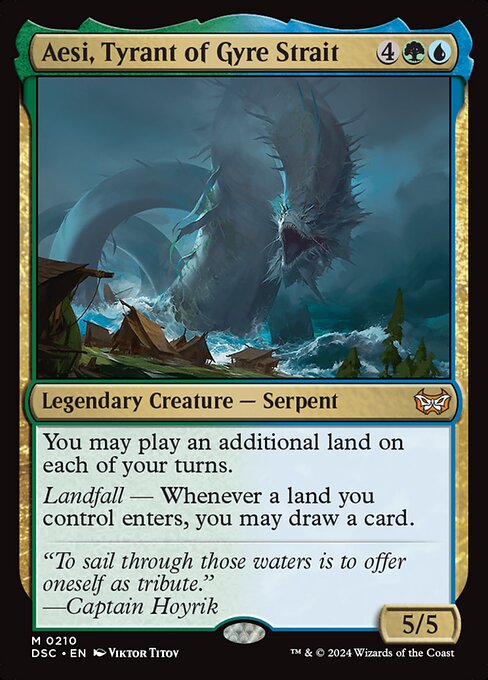
Aesi, Tyrant of Gyre Strait is a perfect example.
You can play an additional land on each of your turns, and whenever a land enters under your control, you may draw a card. The draw is optional.
Play lands.
Draw cards.
Those cards contain more lands and ramp.
Play more lands.
Draw more cards.
You can probably see where this is going.
+1/+1 Counters
Simic is one of the classic homes for +1/+1 counter strategies.
Green has enormous amounts of counter support, while blue adds proliferate, card draw and other ways to manipulate counters.
With Ezuri, Claw of Progress, whenever a creature you control with power 2 or less enters, you get an experience counter. At the beginning of combat on your turn, he puts +1/+1 counters on another target creature you control equal to your experience counters. You do not spend the experience counters, and he cannot target himself.
The deck can start with a few tiny creatures and end with something absolutely enormous.
That’s a fairly common Simic progression.
Start reasonable.
Become ridiculous.
Landfall
Green loves lands.
Blue has enough land support and card draw to make sure you keep finding them.
Together, Simic is one of the strongest combinations for landfall.
Play additional lands.
Return lands to your hand.
Put lands directly onto the battlefield.
Trigger landfall multiple times.
Use those triggers to create creatures, draw cards, add counters or generate more mana.
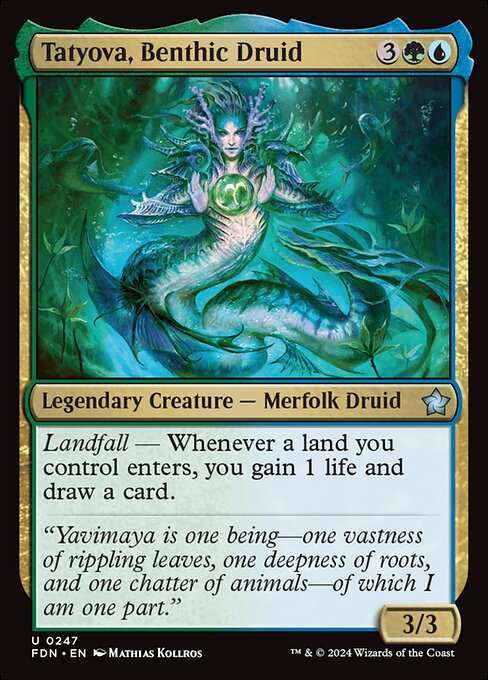
Tatyova, Benthic Druid is one of the clearest examples.
Whenever a land enters under your control, you gain a life and draw a card.
That’s it.
It sounds simple.
Then you play four lands during the same turn and understand why people pay attention to Tatyova.
Tokens
Simic can also create a lot of tokens.
Creature tokens.
Copy tokens.
Clues.
Food.
Sometimes enormous Fractals with a ridiculous number of counters.
Blue’s ability to copy creatures and green’s ability to produce bodies creates plenty of possibilities.
And because this is Simic, those tokens often aren’t just tokens.
They’re entering with counters.
Or drawing cards.
Or creating mana.
Or triggering something else.
Nothing is ever allowed to just be a creature.
That would apparently be inefficient.
Copying Things
Blue likes copying things.
Green tends to have very good things worth copying.
This works out nicely.
Copy your best creature.
Copy an opponent’s best creature.
Copy a creature with an ETB ability.
Create token copies.
Double those tokens.
Copy the thing doubling the tokens.
Things can get stupid fairly quickly.
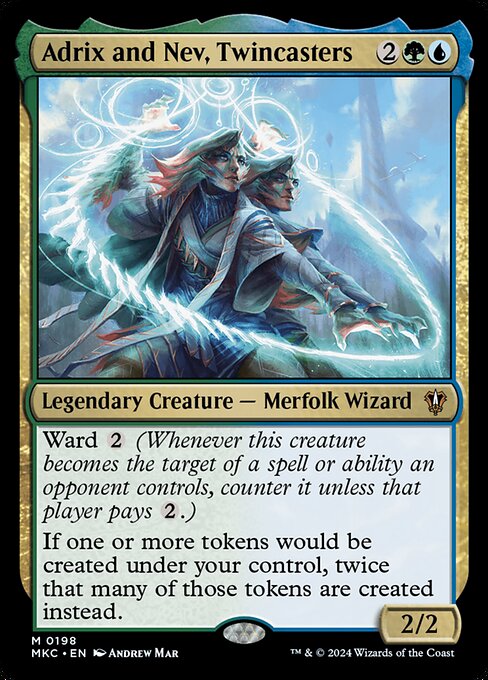
Adrix and Nev, Twincasters are built around this idea.
If one or more tokens would be created under your control, twice that many are created instead.
Create five tokens?
Ten.
Copy Adrix and Nev? To keep multiple copies on the battlefield, you need a nonlegendary copy or a way around the legend rule; an ordinary clone is not enough.
Now we need to start doing maths.
Big Creatures
Simic doesn’t have to be complicated.
You can also just play enormous creatures.
Green is very good at that.
Blue adds sea monsters, card draw and ways to protect them.
Krakens.
Leviathans.
Octopuses.
Serpents.
If you’ve ever looked at a twelve-mana sea monster and thought:
“I want to cast this, but preferably several turns earlier than I’m supposed to,”
Simic can help.
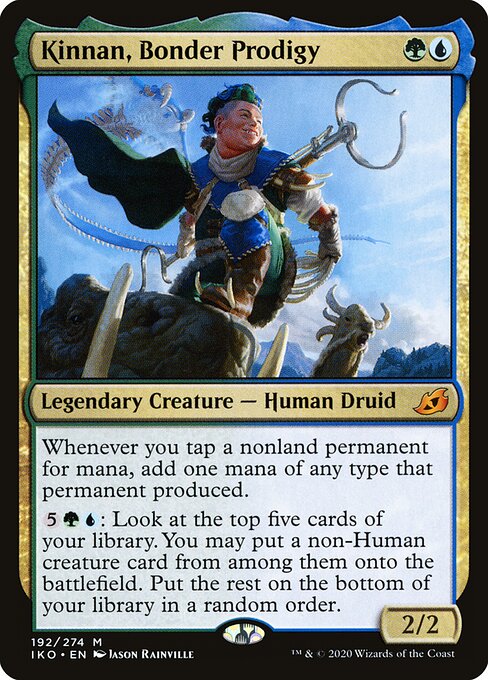
Kinnan, Bonder Prodigy is a particularly explosive example of what happens when Simic decides that normal amounts of mana aren’t enough.
Whenever you tap a nonland permanent for mana, Kinnan adds one mana of a type that permanent produced. He does not automatically double all its mana. For five generic, one green and one blue mana, you look at the top five cards of your library and may put one non-Human creature card from among them onto the battlefield; the rest go to the bottom in a random order.
Fair warning: Kinnan can get very powerful very quickly.
Value Engines
This is probably the most Simic thing of all.
Simic is extremely good at building engines where normal game actions start generating additional resources.
Play a creature.
Draw a card.
Play a land.
Draw another card.
Put a counter on something.
Create a token.
The token entering generates mana.
Spend that mana to play another creature.
Draw another card.
Once several of these effects are working together, the deck can start practically feeding itself.
The danger is spending ten minutes generating enormous amounts of value and then realizing you still haven’t actually won.
Yes, this happens.
What Is Simic Bad At?
Creature removal is one of the obvious weaknesses.
Blue can bounce creatures, counter them or transform them.
Green can use fight effects and remove creatures with flying in some situations.
But neither color has the simple, efficient creature removal that black or white gets.
Simic is much better at dealing with artifacts and enchantments thanks to green.
Permanent removal in general can still be awkward once certain things have resolved.
That’s why counterspells can be important.
Sometimes the easiest solution is making sure the problem never reaches the battlefield.
Another weakness is that Simic decks can become overly focused on generating value.
Ramp.
Draw.
More ramp.
More draw.
Counters.
Tokens.
More cards.
Fantastic.
How are you winning?
Make sure you actually have an answer.
How Does Simic Usually Win?
Simic has plenty of ways.
You can build enormous creatures with +1/+1 counters.
Create huge token armies.
Play giant sea monsters.
Generate absurd amounts of mana.
Win through landfall payoffs.
Use combat.
Use combos.
Or create an engine that generates so many resources that finding and protecting your win condition becomes almost inevitable.
Simic is also excellent at infinite combos.
Infinite mana is particularly common because green produces huge amounts of mana and blue has many ways to untap, copy and manipulate permanents.
Once you have infinite mana, finding something useful to do with it in blue and green normally isn’t very difficult.
Just remember:
“Generate infinite mana” isn’t technically the same thing as “win the game.”
Please put something in the deck that actually uses it.
What Does a Simic Deck Need?
The biggest danger is putting too much ramp and card draw into the deck simply because both are good.
Yes, you need ramp.
Yes, you need cards.
But eventually those resources need to accomplish something.
Think about your payoffs.
If you’re generating fifteen mana, what are you spending it on?
If you’re drawing twenty cards, what are you looking for?
If you’re putting counters everywhere, how are those counters helping you win?
You also need interaction.
Green handles artifacts and enchantments very well.
Blue gives you counterspells and bounce.
Use both.
And because direct creature removal is weaker, think carefully about creatures that could completely shut down your strategy.
Sometimes you need to counter them before they become a problem.
Is Simic for You?
I’d look at Simic if you enjoy building engines and watching your resources grow.
Especially if you like:
- Ramp
- Drawing lots of cards
- +1/+1 counters
- Landfall
- Tokens
- Copying creatures
- Huge creatures
- Sea monsters
- Proliferate
- Infinite mana
- Value engines
- Playing additional lands
- Having more mana than you reasonably need
- Having more cards than you can comfortably hold
If your favorite Magic games involve both players running out of resources and fighting over the last few cards in their hands, Simic might feel slightly different.
Because the Simic player probably still has nine cards.
And seventeen lands.
And somehow they’re complaining they didn’t draw enough ramp.
Building Your First Simic Commander Deck
Start by deciding what all that value is actually supposed to accomplish.
This is especially important in Simic because it’s incredibly easy to build a deck that does lots of impressive things without actually going anywhere.
Ramp isn’t the strategy.
Card draw isn’t the strategy.
They’re what allow your strategy to work.
Are you building around landfall?
Counters?
Tokens?
Huge creatures?
Sea monsters?
A combo?
Once you know that, use Simic’s ridiculous resource generation to support it.
And don’t automatically add every card that says “draw a card.”
At some point you have enough.
Probably.
Simic is one of the easiest color combinations to make feel powerful because so many of its cards naturally replace themselves or generate additional resources.
The trick isn’t generating value.
Simic is already very good at that.
The trick is knowing what you’re going to do with all of it.
Because having twenty lands and fifteen cards in hand is great. But eventually somebody has to win.
Ready to test your Simic deck?
Analyze your list to check whether your mana, card draw and interaction support your engine and give all those resources a clear way to finish the game.