
Abzan Commander Guide: Counters, Graveyards and Refusing to Stay Dead
By MTG Master EditorialPublished Updated 10 min read
Abzan is white, black and green.
Three colors that are extremely good at making permanents matter.
Green gives you ramp, creatures and +1/+1 counters.
White gives you tokens, protection, removal and more counter synergies.
Black gives you sacrifice, tutors, graveyards and recursion.
Put them together and you get a color combination that can build a very strong battlefield without being particularly worried when some of it dies.
Because death in Abzan is often temporary.
Play a creature.
Get some value.
Put counters on it.
Sacrifice it.
Get another trigger.
Bring it back.
Apparently we’re using that creature again.
How Does Abzan Play?
Abzan usually plays a permanent-heavy game.
Creatures.
Tokens.
Counters.
Enchantments.
Graveyard engines.
It tends to build a board where the individual pieces support each other.
A creature dies and triggers something.
Another permanent gets a counter.
Something comes back from the graveyard.
You gain life.
An opponent loses life.
Maybe you create a token too.
One action can start producing several small advantages.
And those advantages add up.
Abzan can be aggressive, but it’s also very comfortable playing long games.
Destroying its battlefield doesn’t always solve the problem.
Sometimes you’ve just filled the graveyard.
Which was probably part of the plan anyway.
What Is Abzan Good At?
+1/+1 Counters
Abzan is one of the best three-color combinations for +1/+1 counters.
Green and white already provide excellent counter support.
Black adds additional payoffs for creatures dying, losing counters or becoming larger.
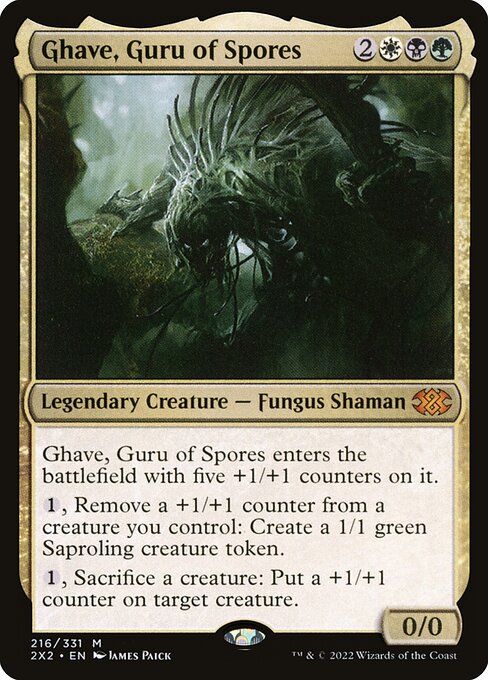
Ghave, Guru of Spores is probably the classic example.
Ghave can pay one mana and remove a +1/+1 counter from a creature you control to create a Saproling.
Or pay one mana and sacrifice a creature to put a +1/+1 counter on a target creature, including Ghave himself.
Counters become creatures.
Creatures become counters.
Those creatures can trigger death abilities.
The counters can trigger other abilities.
And suddenly moving one counter around has started a small accounting problem.
Ghave is also famous for accidentally going infinite with approximately everything.
You add a perfectly innocent synergy.
Then you look at the board.
Then you count again.
Ah.
Apparently that’s infinite.
Graveyards
Black and green already make Golgari excellent at using the graveyard.
White adds even more recursion, especially for creatures and smaller permanents.
That makes the graveyard one of Abzan’s most useful resources.
Creatures can return to your hand.
Or directly to the battlefield.
Permanents can be reanimated.
Cards can generate value when they die.
Sometimes you actively want things in the graveyard because that’s where the engine starts working.
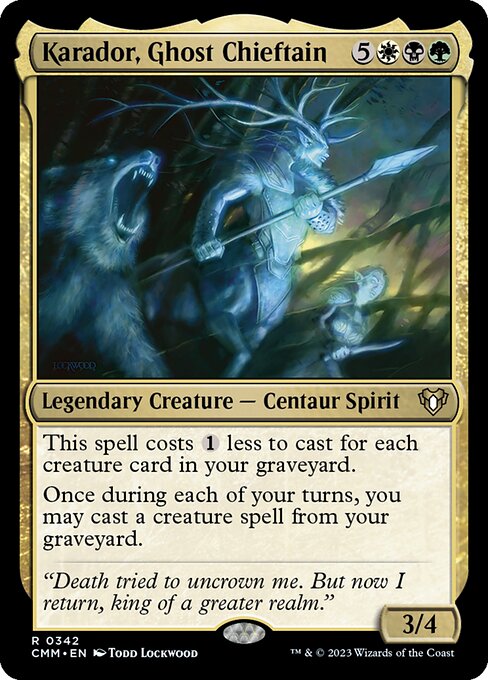
Karador, Ghost Chieftain is a perfect example.
Karador costs one less generic mana for each creature card in your graveyard; his white, black and green mana still have to be paid. Once during each of your turns, you may cast a creature spell from your graveyard, paying its costs and following normal timing rules.
At that point your graveyard isn’t really a graveyard.
It’s another hand.
Just one that your opponents keep helping you fill.
Very considerate.
Sacrifice
Abzan is also excellent at sacrifice strategies.
Black provides sacrifice outlets and death payoffs.
Green and white provide plenty of creatures and tokens to sacrifice.
And all three colors have ways to recover what you’ve lost.
Sacrifice a creature.
Get the death trigger.
Maybe create a token.
Maybe gain life.
Maybe drain somebody.
Then return the creature.
Do it again later.
Unlike some Rakdos sacrifice decks, Abzan often feels less explosive and more inevitable.
You don’t necessarily need to sacrifice everything in one huge turn.
You can simply keep recycling resources until your opponents run out of ways to stop you.
Aristocrats
Naturally, that makes Abzan a very good home for Aristocrats.
You have creatures.
You have sacrifice outlets.
You have death triggers.
You have recursion.
You have token production.
That’s basically the entire shopping list.
Abzan Aristocrats decks can slowly drain the table while generating cards and resources from every creature that dies.
The important part is that your small creatures aren’t necessarily disposable.
They’re recyclable.
There’s a difference.
Tokens
White and green are excellent at making tokens.
Black adds even more token strategies and gives you plenty of reasons to sacrifice them.
Saprolings.
Soldiers.
Humans.
Spirits.
Insects.
Food.
Clues.
And whatever else your particular deck happens to produce.
Abzan can use tokens to attack, block, sacrifice, carry counters or simply generate value.
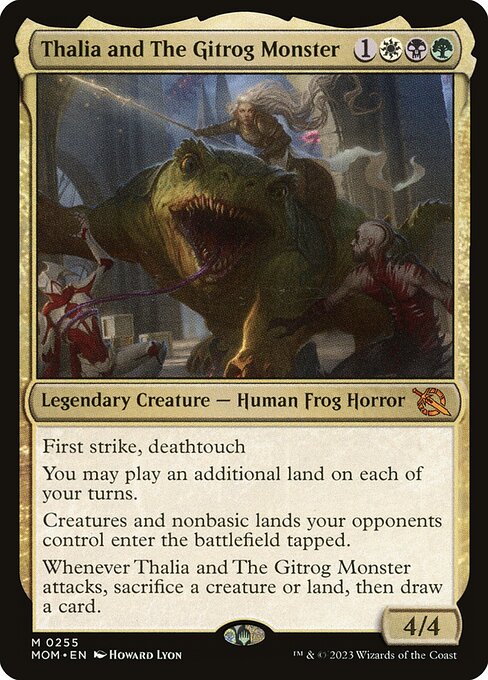
Thalia and The Gitrog Monster shows another side of Abzan’s ability to convert resources.
You may play an additional land on each of your turns. When Thalia and Gitrog attack, you sacrifice a creature or land, then draw a card. They also make opponents’ creatures and nonbasic lands enter tapped.
A token can become a card.
A land can become a card.
And with the right recursion, that land may come back anyway.
Nothing wasted.
Lifegain
White and black already give Orzhov excellent lifegain and life-drain strategies.
Green adds creature-based lifegain and payoffs for large creatures.
Abzan can gain enormous amounts of life without necessarily being a dedicated lifegain deck.
Creatures enter.
Creatures die.
Tokens appear.
Counters get added.
Something somewhere gains you life.
And once you’re gaining life regularly, there are plenty of cards that turn that into another resource.
Counters.
Cards.
Tokens.
Damage.
Your life total stops being simply the number keeping you alive.
It becomes part of the engine.
Creature Toolbox
Green and white are excellent at finding useful creatures.
Black adds some of the best tutors in Magic.
That makes Abzan very good at toolbox strategies.
Need removal?
Find a creature.
Need graveyard hate?
Find a creature.
Need protection?
Find a creature.
Need a sacrifice outlet?
Find one.
Need a combo piece?
Well, you know where this is going.
Abzan can build a creature package where individual cards solve very specific problems.
And because you’re playing a graveyard deck half the time, using the creature once doesn’t necessarily mean you’re finished with it.
Toughness and Combat
Not every Abzan deck needs to be about sacrifice and graveyards.
The color combination can also build extremely strong creature-based combat decks.
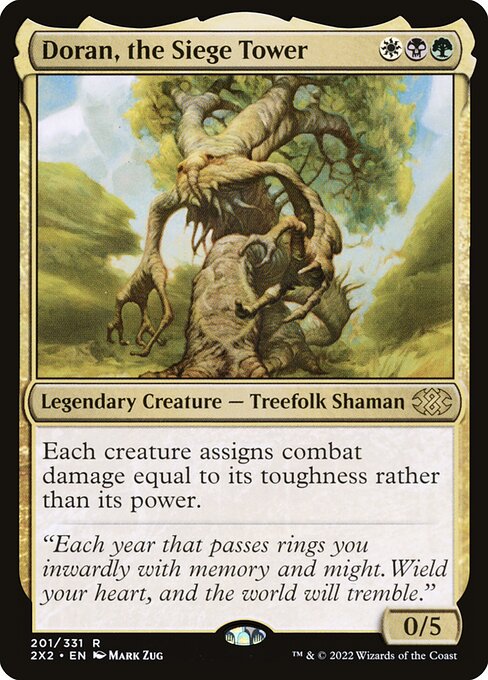
Doran, the Siege Tower is one of the classic examples.
He makes every creature assign combat damage using toughness rather than power, including your opponents’ creatures. This does not change power or toughness and does not allow creatures with defender to attack.
Suddenly creatures with enormous toughness and tiny power become legitimate threats.
A 0/5 doesn’t look especially dangerous.
Until it punches you for five.
Abzan has plenty of defensive creatures, counter synergies and ways to make combat considerably stranger than it initially appears.
Removal
Abzan has excellent removal.
Black kills creatures and planeswalkers.
White exiles almost anything and provides board wipes.
Green destroys artifacts and enchantments.
Together, the three colors can answer almost every permanent type efficiently.
You don’t have blue counterspells.
But once something reaches the battlefield, there’s a very good chance you can deal with it.
And unlike some color combinations, you rarely need to accept that a particular permanent type is simply going to be difficult to remove.
Abzan has answers.
Lots of them.
What Is Abzan Bad At?
The stack is the obvious weakness.
No blue means very limited access to counterspells.
You can attack hands with black.
You can remove combo pieces.
You can use hate pieces to prevent certain strategies.
But once a dangerous spell is on the stack, your options are more limited.
Graveyard hate can also be a serious problem.
If your deck depends heavily on recursion, something like Rest in Peace can switch off a significant part of your strategy.
Fortunately, you’re playing white and green.
You should be able to remove it, but that does not return cards it has already exiled.
The important part is actually including those answers.
Abzan can also become slow.
It’s very easy to build an incredible value engine that recycles creatures, gains life, creates tokens and moves counters around…
Without putting enough pressure on the table.
Eventually you need to do something with all that value.
How Does Abzan Usually Win?
Combat is common.
Large creatures.
Token armies.
+1/+1 counters.
Go-wide strategies.
Go-tall strategies.
Abzan can build an enormous battlefield and eventually overwhelm everyone.
Aristocrats is another obvious route.
Sacrifice creatures and drain the table through death triggers.
Graveyard loops can create repeated value or become full combos.
Counter strategies can also produce infinite loops surprisingly easily.
Especially with Ghave.
Again, Ghave seems to go infinite if you leave him alone near three other permanents for too long.
Some Abzan decks simply grind everyone out.
Your creatures die.
They come back.
Your opponents spend cards removing them.
They come back again.
Eventually everyone else has fewer resources than you.
Then the creatures that refused to stay dead finally start attacking.
What Does an Abzan Deck Need?
First, decide how much your graveyard matters.
If recursion is central to the deck, include ways to fill the graveyard deliberately.
Don’t wait for your opponents to do it for you.
Second, make sure your engines connect.
If you’re playing sacrifice outlets, include death payoffs.
If you’re creating tokens, give yourself something useful to do with them.
If you’re playing counters, include cards that reward counters rather than simply adding more of them.
Third, include protection and recursion in the right balance.
You don’t need to save everything.
Sometimes letting a creature die is perfectly fine.
But there will be permanents you actually need to keep.
Know the difference.
And finally, include a way to finish the game.
Generating value forever is not technically a win condition.
Although some Abzan decks seem determined to test that theory.
Is Abzan for You?
I’d look at Abzan if you enjoy resilient, permanent-based decks.
Especially if you like:
- +1/+1 counters
- Graveyards
- Recursion
- Sacrifice
- Aristocrats
- Tokens
- Lifegain
- Creature toolbox strategies
- Ramp
- Removal
- Long games
- Reusing the same creatures
- Turning death into value
- Watching somebody remove your creature and thinking, “That’s fine, I’ll need it again next turn anyway”
Abzan doesn’t always need to be fast.
It just needs to keep going.
And going.
And going.
Building Your First Abzan Commander Deck
Start by choosing the resource your deck cares about most.
Creatures dying?
+1/+1 counters?
Tokens?
Life?
The graveyard?
Lands?
Then connect the pieces.
If creatures are dying, reward yourself when they die.
If you’re using the graveyard, include ways to get cards into it and back out again.
If you’re making tokens, decide whether they’re attacking or being sacrificed.
If you’re putting counters on creatures, make those counters do something beyond increasing power and toughness.
Add ramp.
You’re playing green.
Add card advantage.
Black and green give you plenty of options.
Add removal.
All three colors are excellent at it.
Then make sure the deck can actually end the game.
Because Abzan is very good at surviving.
It’s very good at rebuilding.
It’s very good at getting its creatures back.
Eventually, though, you should probably use those creatures to make sure your opponents don’t come back too.
Ready to test your Abzan deck?
Analyze your list to check whether your counters, sacrifice outlets and recursion form a resilient engine with enough resources and a clear win plan.