
Bant Commander Guide: Creatures, Counters and an Unreasonable Amount of Value
By MTG Master EditorialPublished Updated 9 min read
Bant is green, white and blue.
Which means you take green’s ramp and creatures, white’s protection and removal, and blue’s card draw and interaction.
That’s already a fairly good starting point.
Bant is one of those color combinations that can look completely reasonable while quietly building a board that’s getting more difficult to deal with every turn.
Play a creature.
Draw a card.
Put a counter somewhere.
Blink the creature.
Get the ETB again.
Play a land.
Trigger something else.
Pass the turn with blue mana open.
Nothing suspicious happening here.
How Does Bant Play?
Bant usually likes permanents.
Creatures especially, but also enchantments, tokens and sometimes artifacts.
Unlike Naya, which often wants to turn its battlefield into immediate aggression, Bant is usually happier letting that battlefield generate value over time.
You build.
Protect.
Draw cards.
Add more pieces.
And eventually the board becomes a problem.
Bant is also extremely flexible.
You can play +1/+1 counters.
Enchantments.
Blink.
Tokens.
Creature toolbox.
Landfall.
Voltron.
Humans.
Angels.
Spirits.
Merfolk.
Big creatures.
Control.
Even combo.
Three colors give you plenty of options.
The common thread is often that your permanents aren’t simply sitting on the battlefield.
They’re doing things.
Usually several things.
What Is Bant Good At?
+1/+1 Counters
Green and white already give Selesnya excellent +1/+1 counter strategies.
Blue adds even more counter manipulation, card draw and proliferate effects.
That makes Bant one of the best homes for counters.
Put counters on creatures.
Double them.
Move them.
Proliferate them.
Get triggers when you add them.
Get more triggers when creatures with counters attack.
At some point your 2/2 has become a 14/14 and nobody remembers exactly how.
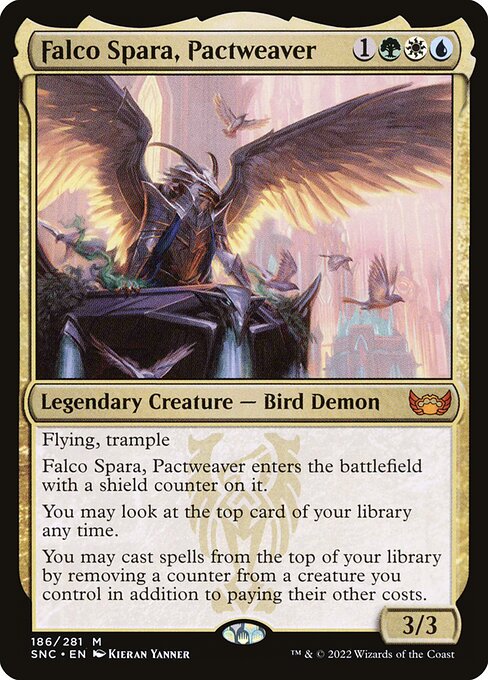
Falco Spara, Pactweaver is a good example of what Bant can do with counters.
You can look at the top card of your library at any time and cast spells from there by removing a counter from a creature you control in addition to paying the spell’s other costs. You still follow normal timing rules, and this does not let you play lands from the top.
Now the counters aren’t simply making your creatures bigger.
They’re also another resource.
Bant likes that sort of thing.
Enchantments
Green and white already make excellent enchantment decks.
Blue adds protection, card selection and additional enchantment synergies.
Bant can build very strong Enchantress-style engines.
Play an enchantment.
Draw a card.
Trigger another permanent.
Create a token.
Maybe gain life.
Play another enchantment.
Draw another card.
And suddenly the supposedly harmless enchantment deck has fifteen permanents and a full hand.
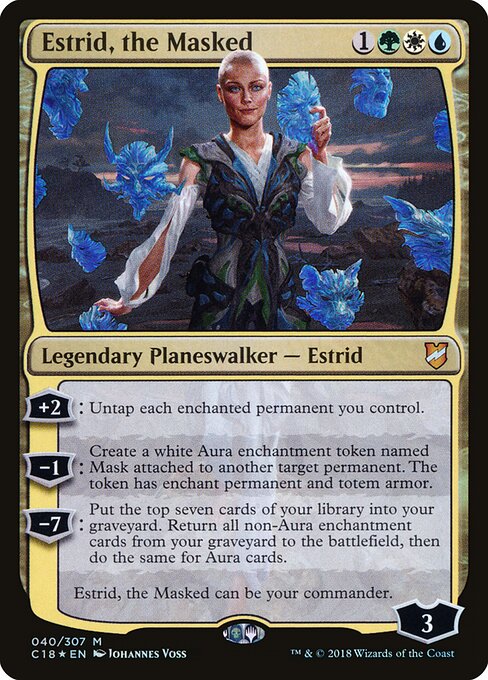
Estrid, the Masked is one of the classic Bant enchantment commanders.
She untaps enchanted permanents you control, creates Mask Auras with umbra armor to protect against destruction, and can eventually return a huge pile of enchantments from your graveyard. Umbra armor does not stop exile or sacrifice.
Destroying the enchantments was apparently only a temporary solution.
Blink
White and blue already make Azorius excellent at blink.
Green adds some of the best creature ETB effects in Commander.
That’s a very good combination.
Play a creature that does something when it enters.
Blink it.
Do it again.
Blink another creature.
Do that again too.
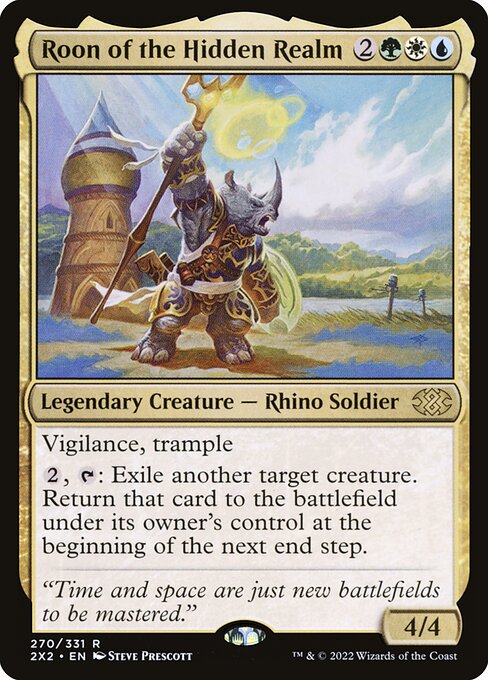
Roon of the Hidden Realm is basically built around this idea.
For two mana and tapping Roon, he can exile another target creature and return that card under its owner’s control at the beginning of the next end step. Tokens exiled this way do not return.
You can blink your own creatures for value.
You can temporarily remove an opponent’s creature.
You can save something from removal.
And because you’re playing green, white and blue, there is no shortage of creatures with useful ETB abilities.
Sometimes your creature doesn’t need to be particularly impressive.
Its textbox just needs to be annoying enough to use five times.
Creature Toolbox
Bant is excellent at using creatures as answers.
Green can tutor for creatures.
White and blue have creatures that interact with almost every part of the game.
Need artifact removal?
Creature.
Enchantments?
Creature.
Graveyard hate?
Creature.
Card draw?
Creature.
Counterspell attached to a creature?
Those exist too.
This lets Bant decks build a toolbox where the correct creature can solve the current problem.
And then, because you’re Bant, you can probably blink it and use the ability again.
Very efficient.
Possibly irritating.
Tokens
White and green provide excellent token generation.
Blue adds copying effects and some interesting creature types.
Bant token decks can go wide very quickly.
Soldiers.
Humans.
Birds.
Spirits.
Cats.
Beasts.
Merfolk.
And plenty more.
The interesting part is that Bant often combines tokens with other strategies.
Tokens plus counters.
Tokens plus enchantments.
Tokens plus blink.
Tokens plus creature-based card draw.
So creating a 1/1 often isn’t just creating a 1/1.
It’s creating something that immediately triggers three other permanents.
Creatures and Card Draw
This is one of Bant’s biggest advantages.
Green already has excellent ways to draw cards from creatures.
Blue simply draws cards because apparently that’s allowed.
White adds more conditional card advantage.
The result is that Bant can play a creature-heavy deck without necessarily running out of cards.
Play a creature.
Draw.
Creature enters with enough power.
Draw.
Put a counter on something.
Maybe draw again.
Attack.
Another trigger.
Bant can keep developing the board while maintaining a surprisingly full hand.
Which is exactly what you don’t want the player with fourteen permanents to be doing.
Protection
Bant is excellent at protecting its board.
White gives you protection, indestructible and blink effects.
Blue gives you counterspells.
Green adds hexproof-style effects and protection of its own.
This is important because Bant decks often invest heavily in their battlefield.
If you’ve spent several turns assembling an engine, losing everything to one board wipe is unpleasant.
Fortunately, Bant has plenty of ways to say:
“No.”
Or:
“Everything is indestructible.”
Or:
“My creatures aren’t actually here until the end step.”
All equally annoying when you’re the person casting the board wipe.
Exalted and Voltron
Historically, Bant is also strongly associated with Exalted.
Instead of attacking with an enormous army, you attack with one creature while everything else makes it stronger.
That naturally works well with Voltron strategies.
Equipment.
Auras.
Counters.
Combat triggers.
Protection.
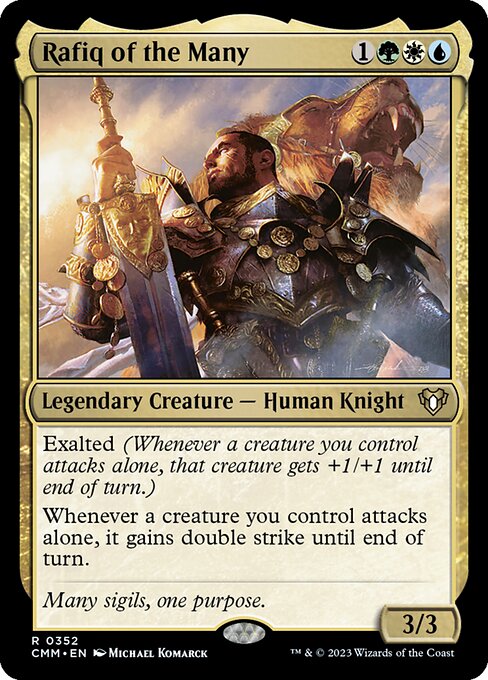
Rafiq of the Many is probably the classic example.
When a creature you control attacks alone, Rafiq’s exalted gives it +1/+1 and his other ability gives it double strike, both until end of turn. Other exalted abilities can add more bonuses.
Sometimes Bant doesn’t need twenty attackers.
It just needs one extremely unpleasant one.
Control
Bant can also play control surprisingly well.
Blue provides counterspells.
White provides excellent removal and board wipes.
Green handles artifacts and enchantments.
Together, the colors can answer almost anything.
The difference from Esper is that Bant often combines that interaction with a stronger permanent and creature-based game.
You can control the table while still building your own engine.
That’s a dangerous combination.
What Is Bant Bad At?
Direct creature removal can be slightly awkward compared with combinations containing black.
White has excellent removal, so this isn’t a major weakness.
But black simply kills creatures very efficiently, and Bant doesn’t have access to that.
Bant can also become overly dependent on its board.
You play creatures.
Enchantments.
Counters.
Tokens.
Value engines.
Everything is working beautifully.
Then the battlefield gets wiped.
If you didn’t keep protection or enough resources to rebuild, things can suddenly look much worse.
And because Bant decks are so good at generating incremental value, they can sometimes forget that they actually need to finish the game.
Drawing cards is good.
Putting counters on things is good.
Blinking creatures is good.
Generating tokens is good.
At some point, however, somebody needs to die.
Preferably an opponent.
How Does Bant Usually Win?
Combat is very common.
Go-wide token armies.
Huge creatures covered in counters.
Voltron commanders.
Flying creatures.
Overrun-style finishes.
Bant can build a battlefield that’s both wide and tall.
Combo is another possibility.
Blink loops.
Creature combos.
Counter-based combos.
Enchantments.
Infinite mana.
Three colors and excellent tutors give Bant plenty of possibilities.
Some Bant decks simply win through overwhelming value.
They keep drawing cards, protecting their board and producing threats until the other players can’t keep up.
That’s perfectly valid.
Just don’t confuse “I’m very far ahead” with “I’ve won.”
Commander has a way of punishing that.
What Does a Bant Deck Need?
First, a clear direction.
Bant has access to so many synergistic strategies that it’s easy to want all of them.
Counters.
Enchantments.
Blink.
Tokens.
Landfall.
Creature toolbox.
They’re all good.
That doesn’t mean they all belong in the same deck.
Pick the main engine.
Then choose cards that support it.
Second, protection.
If your deck depends heavily on permanents, protect them.
You have access to some of the best protection in Commander.
Use it.
Third, a way to finish.
This is important.
Don’t spend twelve turns constructing the world’s most beautiful value engine without including a way to actually kill anyone.
Your opponents will appreciate the demonstration.
Then they’ll probably combo off.
Is Bant for You?
I’d look at Bant if you enjoy building a battlefield where everything works together.
Especially if you like:
- +1/+1 counters
- Enchantments
- Blink
- Tokens
- Creature toolbox strategies
- Card draw
- Ramp
- Protection
- Voltron
- Exalted
- Landfall
- Creature-based engines
- Control with a strong battlefield
- Looking at six different triggers and deciding which order you’d like them to resolve
Bant can play fair Magic.
Very powerful fair Magic.
And sometimes “fair” means having fifteen permanents, nine cards in hand and three ways to protect everything.
Apparently that’s fair.
Building Your First Bant Commander Deck
Start with your engine.
What is the deck actually doing?
If it’s counters, focus on cards that create, multiply and reward counters.
If it’s blink, prioritize useful ETB creatures and enough blink effects.
If it’s enchantments, make sure playing enchantments actually generates cards and other resources.
If it’s tokens, include ways to make those tokens matter.
Then add ramp.
You’re playing green, so this part should be relatively painless.
Add card advantage.
Again, you’re playing green and blue.
You really don’t have much excuse here.
Add interaction and protection.
And finally, add a way to close the game.
Not another value engine.
Not another card that draws two cards whenever something incredibly specific happens.
A way to win.
Because Bant is extremely good at building something beautiful.
Just remember that eventually you’re supposed to use it to kill everyone.
Ready to test your Bant deck?
Analyze your list to check whether your ramp, card draw and protection support a focused engine with a clear way to finish the game.