
Grixis Commander Guide: Spells, Graveyards and Doing Terrible Things With Other People’s Cards
By MTG Master EditorialPublished Updated 9 min read
Grixis is blue, black and red.
Which already sounds slightly dangerous.
Blue gives you card draw, counterspells and ways to manipulate what everyone is doing.
Black gives you tutors, removal, sacrifice and graveyard recursion.
Red adds damage, Treasures, impulse draw, haste and a healthy amount of chaos.
Put all three together and you get a color combination that’s extremely good at finding resources, using them and making sure your opponents don’t get too comfortable.
Sometimes those resources are your cards.
Sometimes they’re in your graveyard.
Sometimes they’re your opponents’ cards.
Grixis isn’t particularly picky.
How Does Grixis Play?
There isn’t one Grixis playstyle.
You can build control.
Spellslinger.
Reanimator.
Artifacts.
Sacrifice.
Pirates.
Zombies.
Demons.
Theft.
Combo.
Or some strange mixture of several of them.
But many Grixis decks share one thing:
They like turning resources into more resources.
Discard a card to draw another.
Sacrifice a creature for value.
Pay life to draw cards.
Exile cards and play them later.
Put something into the graveyard so you can bring it back.
Steal somebody else’s permanent and sacrifice it before they get it back.
Why waste perfectly good cardboard?
Grixis can be patient and controlling, but it can also produce incredibly explosive turns.
Especially once Treasures, spells and graveyard recursion start interacting.
What Is Grixis Good At?
Spellslinger
Blue and red already give you Izzet, one of the best combinations for spellslinger.
Adding black makes it even more interesting.
You still have cantrips, counterspells, copying effects, damage and spell-based engines.
But now you also get tutors, life-for-cards effects and access to the graveyard.
Cast spells.
Copy spells.
Bring spells back.
Reduce their costs.
Generate mana from casting them.
Trigger something every time you cast one.
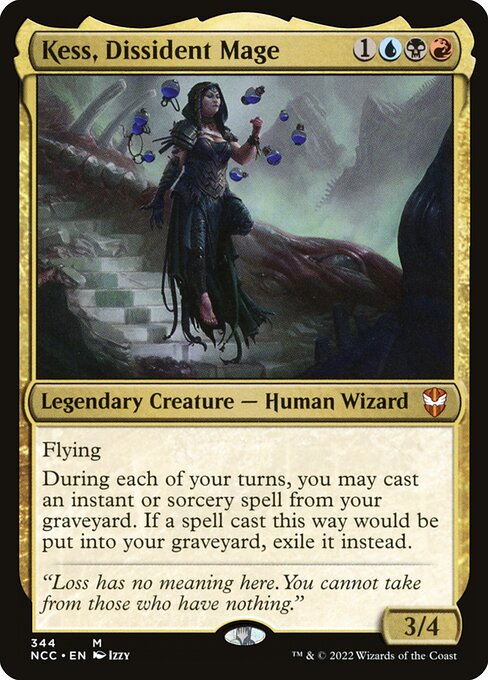
Kess, Dissident Mage is a classic example.
Once during each of your turns, Kess lets you cast an instant or sorcery from your graveyard. You still pay its costs and follow normal timing rules; this permission does not work during opponents’ turns. If that spell would go to your graveyard, it is exiled instead.
That means your graveyard effectively becomes an extension of your hand.
That counterspell you already used?
Useful again.
That tutor?
Also useful again.
That ridiculous spell that nearly won the game last turn?
Well…
Maybe let’s try that one again too.
Graveyards
Black and blue are already excellent at filling and using graveyards.
Red contributes looting, discard and several recursion effects of its own.
Grixis can put cards into the graveyard very deliberately.
And that’s important.
You’re often not losing a card when you discard it.
You’re moving it somewhere useful.
Large creatures can be reanimated.
Instants and sorceries can be cast again.
Artifacts can be recovered.
Sometimes you can even use your opponents’ graveyards.
A full graveyard isn’t necessarily a problem in Grixis.
Quite often it’s inventory.
Reanimator
Black does most of the heavy lifting here, but blue and red provide excellent support.
Blue helps you draw and discard.
Red has plenty of looting effects.
Black brings the dead things back.
The classic plan works perfectly:
Put something absurdly expensive into the graveyard.
Pay considerably less mana than you’re supposed to.
Put it onto the battlefield.
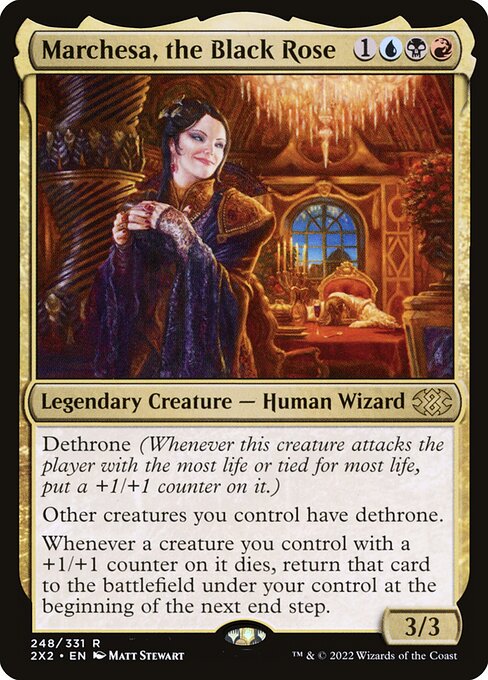
Marchesa, the Black Rose approaches recursion differently.
When a creature you control dies with a +1/+1 counter on it, Marchesa returns that card to the battlefield under your control at the beginning of the next end step. Tokens cannot return this way.
That makes sacrifice effects considerably more interesting.
Sacrifice a creature.
Get value.
It comes back.
Do it again later.
Now we’re getting somewhere.
Theft
Grixis is very good at playing with things that don’t belong to it.
Blue can steal or copy permanents.
Red can temporarily steal creatures.
Black can reanimate creatures from graveyards, including other people’s.
Some commanders let you cast cards directly from opponents’ libraries or graveyards.
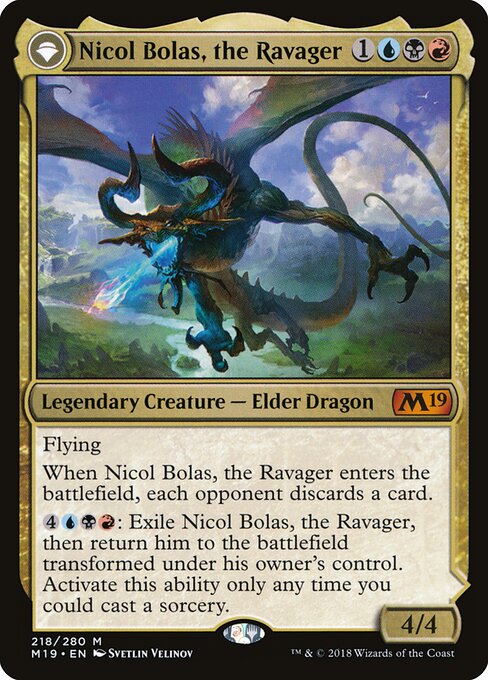
Nicol Bolas, the Ravager feels very appropriate here.
Discard, card advantage, removal, recursion.
Basically a collection of things Grixis enjoys doing anyway.
There’s something particularly satisfying about winning with someone else’s card.
They did bring it to the table.
You’re just helping them use it.
Sacrifice
Black and red are already excellent sacrifice colors.
Blue might not be the first color you associate with sacrifice, but it brings card draw, artifact synergies and plenty of creatures with useful ETB effects.
Grixis sacrifice decks can turn creatures, artifacts and Treasures into resources.
Sacrifice something.
Draw cards.
Deal damage.
Generate mana.
Trigger another permanent.
Bring the sacrificed thing back.
Repeat.
And if you temporarily stole an opponent’s creature first?
Even better.
Treasures
Red and black have excellent Treasure generation, and blue is very good at finding ways to exploit artifacts.
That makes Treasures especially strong in Grixis.
Obviously they fix your mana.
That’s already useful in a three-color deck.
But they can also trigger artifact abilities, be sacrificed for effects other than mana, feed combo engines or simply allow enormous turns.
Admiral Beckett Brass and other Grixis Pirate commanders can take this in a very thematic direction.
Attack.
Steal things.
Make Treasures.
Do pirate things.
Perfectly respectable Commander strategy.
Zombies
Blue and black already have enormous Zombie support.
Red adds several interesting Zombie commanders and aggressive tools.
If you want Zombies but want something more explosive than traditional Dimir, Grixis gives you another direction.
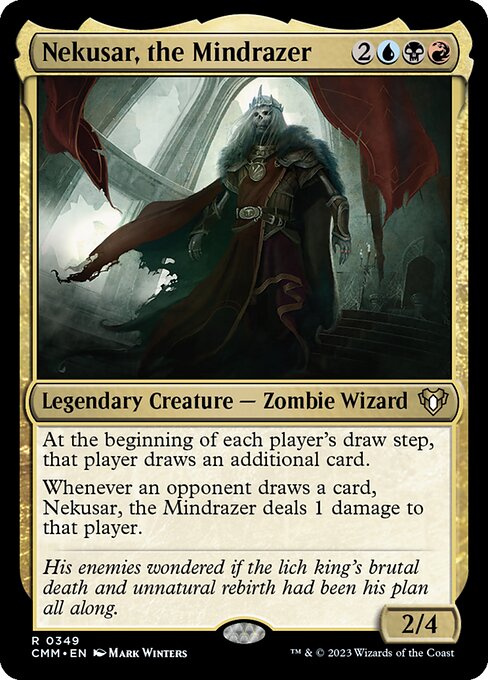
Nekusar, the Mindrazer is technically a Zombie Wizard, although his decks usually care much more about making everyone draw cards.
Lots of cards.
Which sounds generous.
Until every card they draw starts dealing damage to them.
Suddenly that Wheel of Fortune isn’t feeling quite as friendly.
Wheels and Discard
Grixis is excellent at forcing everyone to throw away perfectly good hands.
Wheel effects make players discard their hands and draw new ones.
This can refill your own hand.
Disrupt carefully sculpted hands.
Fill graveyards.
Trigger damage effects.
Enable reanimation.
And generally create a completely different game state in about five seconds.
With commanders like Nekusar, drawing those replacement cards can become actively dangerous.
“Everyone draws seven” sounds much less friendly when each of those cards hurts.
Combo
Grixis is extremely good at combo.
Blue provides counterspells and card selection.
Black provides tutors.
Red provides rituals, Treasures and explosive mana.
All three colors have plenty of combo pieces.
That gives Grixis the ability to find a combo, assemble it quickly and protect it on the stack.
You absolutely don’t need to build Grixis this way.
But if you want to…
You have options.
Lots of options.
What Is Grixis Bad At?
Enchantments can be annoying.
Very annoying.
Blue can counter them before they resolve.
Black and red have a few ways to interact with them depending on the card.
But once a problematic enchantment is sitting on the battlefield, your options are much worse than they would be in white or green.
Sometimes the correct answer really was:
“I should have countered that.”
Grixis also doesn’t have traditional green ramp.
Treasures, mana rocks and rituals help enormously, but you won’t usually be putting several extra lands directly onto the battlefield.
Life totals can also disappear surprisingly quickly.
Black likes paying life.
Red likes being aggressive.
Blue doesn’t particularly help you gain it back.
Starting at 40 feels like a lot.
Until it doesn’t.
How Does Grixis Usually Win?
There are plenty of possibilities.
Spellslinger decks can win through storm-style turns or spell-based combos.
Reanimator can put enormous threats onto the battlefield far earlier than expected.
Sacrifice decks can drain the table.
Treasure decks can generate absurd mana.
Wheel decks can punish opponents for drawing cards.
Theft decks can simply use everyone else’s win conditions.
And Grixis combo decks have access to some extremely efficient finishes.
You can also just attack.
Yes, even Grixis is allowed to do that.
Pirates, Zombies and reanimated monsters are perfectly capable of turning sideways.
It’s Magic.
Eventually creatures still solve quite a lot of problems.
What Does a Grixis Deck Need?
A clear plan.
Three colors give you access to an enormous number of powerful cards.
That’s useful.
It’s also dangerous when building the deck.
It’s very easy to add good card after good card and end up with something that technically contains 100 powerful cards but doesn’t really know what it’s doing.
Decide what the deck is first.
Spellslinger?
Reanimator?
Sacrifice?
Pirates?
Wheels?
Artifacts?
Then use the enormous Grixis card pool to support that plan.
Mana fixing is also important.
You’re playing three colors and Grixis decks can have demanding mana costs.
Make sure your lands and mana rocks can actually produce the colors you need.
And think about enchantments.
You don’t necessarily need some obscure answer to every possible enchantment.
But you should know what your deck does when one particularly nasty enchantment resolves.
Hopefully the answer is better than staring at it.
Is Grixis for You?
I’d look at Grixis if you enjoy having lots of resources and don’t particularly care where they came from.
Especially if you like:
- Spellslinger
- Graveyards
- Reanimator
- Sacrifice
- Treasures
- Theft
- Pirates
- Zombies
- Wheels
- Discard
- Control
- Tutors
- Combos
- Playing cards from graveyards
- Playing cards from opponents’ decks
- Looking at someone else’s commander deck and thinking, “You’ve got some nice cards in there.”
Grixis can be controlling.
It can be explosive.
It can be chaotic.
And it can be extremely efficient.
What it usually isn’t is particularly innocent.
Building Your First Grixis Commander Deck
Start with the commander and decide what resource you’re trying to exploit.
Spells?
Graveyards?
Creatures?
Artifacts?
Treasures?
Your opponents’ cards?
All perfectly acceptable answers.
Then make sure the deck has enough ways to generate that resource and enough payoffs for using it.
If you’re playing graveyard recursion, put cards into the graveyard deliberately.
If you’re playing sacrifice, make sure you actually have things worth sacrificing.
If you’re playing Treasures, give yourself reasons to care about artifacts beyond simply producing mana.
If you’re playing spellslinger, don’t accidentally build a deck containing 38 instants and sorceries with no way to actually finish the game.
And don’t forget interaction.
You’re playing blue, black and red.
You have access to some excellent removal and counterspells.
Use them.
Just remember the enchantment problem.
Because eventually someone is going to resolve one that completely ruins your plan.
And at that moment you’ll probably look at the three counterspells sitting in your graveyard and think:
“I really should have countered that.”
Ready to test your Grixis deck?
Analyze your list to check whether your mana, engines and interaction turn your resources into a clear plan to win.