
Jund Commander Guide: Sacrifice, Graveyards and Getting Value From Everything
By MTG Master EditorialPublished Updated 9 min read
Jund is black, red and green.
And Jund likes resources.
Creatures are resources.
Lands are resources.
Your graveyard is a resource.
Life is a resource.
Treasures are resources.
Sometimes your opponents’ creatures are resources too, although they may disagree.
Green gives you ramp, creatures and lands.
Black gives you sacrifice, tutors, removal and graveyard recursion.
Red adds damage, haste, Treasures and explosive turns.
Put them together and you get a color combination that’s extremely good at turning one thing into another.
Sacrifice a creature.
Get a trigger.
Draw a card.
Create a Treasure.
Bring the creature back.
Sacrifice it again.
That’s a perfectly normal Jund afternoon.
How Does Jund Play?
Jund usually wants to build a machine.
Not necessarily a complicated combo machine.
More often, it’s a collection of permanents that make every normal action slightly better.
A creature dies?
Something triggers.
A land enters?
Something triggers.
You sacrifice a permanent?
Something triggers.
You create a token?
Yes, something probably triggers.
Jund decks are very good at accumulating value through normal gameplay.
Unlike more controlling color combinations, Jund often prefers putting its resources onto the battlefield and forcing everyone else to deal with them.
And if those resources die?
That’s fine.
You can probably use the graveyard too.
What Is Jund Good At?
Sacrifice
This is one of the most natural homes for sacrifice decks.
Black and red already give you excellent sacrifice outlets and death payoffs.
Green gives you creatures, tokens and recursion to make sure you don’t run out of things to sacrifice.
The basic idea is simple.
Have something you’re happy to lose.
Have something that lets you sacrifice it.
Have something that rewards you when it dies.
Then start connecting the pieces.
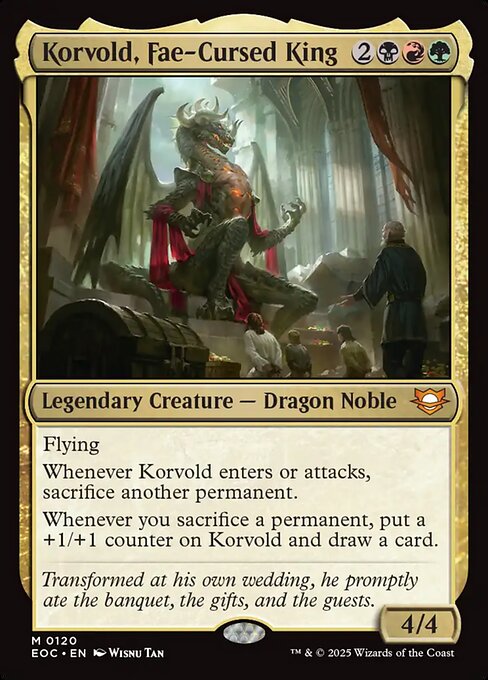
Korvold, Fae-Cursed King is probably one of the clearest examples.
Whenever you sacrifice a permanent, Korvold gets bigger and you draw a card.
And when he enters or attacks, you have to sacrifice another permanent anyway.
Creatures.
Treasures.
Food.
Clues.
Lands.
Whatever you’ve got.
Apparently throwing your own permanents into the bin is excellent card advantage.
Graveyards
Black and green already make Golgari one of the best graveyard combinations in Magic.
Red adds looting, discard and additional recursion.
Jund can fill its graveyard quickly and then treat it almost like another hand.
Creatures can come back.
Lands can come back.
Some spells can come back.
And cards in the graveyard can fuel all sorts of other effects.
This means destroying a Jund player’s permanent doesn’t always accomplish as much as you’d hope.
Sometimes you’ve just moved it somewhere useful.
Aristocrats
Jund is excellent at Aristocrats.
Create creatures.
Sacrifice them.
Trigger death effects.
Drain opponents.
Create more creatures.
Repeat.
Black provides many of the classic Aristocrats payoffs.
Red adds damage and sacrifice effects.
Green makes sure there are plenty of bodies available.
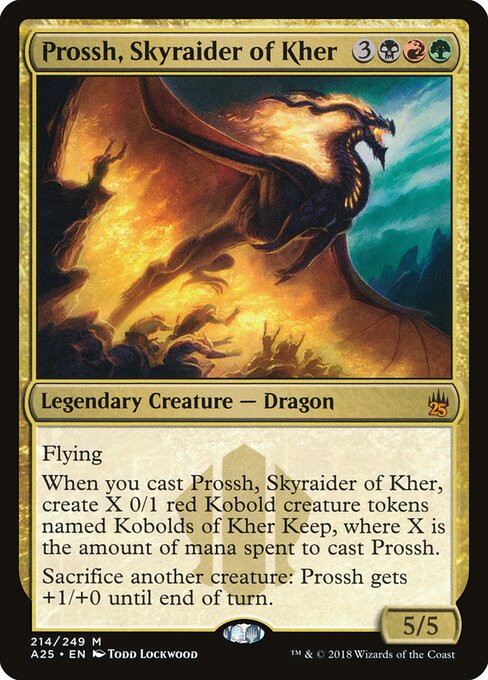
Prossh, Skyraider of Kher demonstrates this extremely well.
When you cast Prossh, you create a pile of Kobolds.
Then Prossh can sacrifice other creatures to get +1/+0 until end of turn for each one.
Conveniently, you have just created a pile of creatures.
Those Kobolds can also trigger every other sacrifice and death payoff you have on the battlefield.
Things can escalate fairly quickly.
Tokens
Jund can generate a ridiculous number of tokens.
Creature tokens.
Treasures.
Food.
Clues.
Saprolings.
Goblins.
Insects.
And unlike some token decks, Jund often doesn’t particularly care whether those tokens survive.
Sometimes they exist specifically to be sacrificed.
Create three tokens.
Sacrifice them.
Generate three triggers.
Draw some cards.
Make some mana.
Maybe create more tokens.
The tokens did their job.
Treasures
Black and red are already excellent Treasure colors.
Green adds even more mana generation and artifact synergies depending on the deck.
Treasures fix your colors.
They accelerate you.
They trigger sacrifice abilities.
They trigger artifact abilities.
And they can enable some extremely explosive turns.
In Jund, a Treasure often represents considerably more than one mana.
Especially when sacrificing it also makes three other permanents trigger.
Lands
Green gives Jund excellent land strategies.
Ramp.
Landfall.
Playing lands from the graveyard.
Sacrificing lands.
Returning them.
Putting multiple lands onto the battlefield.
Black and red then add plenty of ways to reward you for those lands being sacrificed or entering.
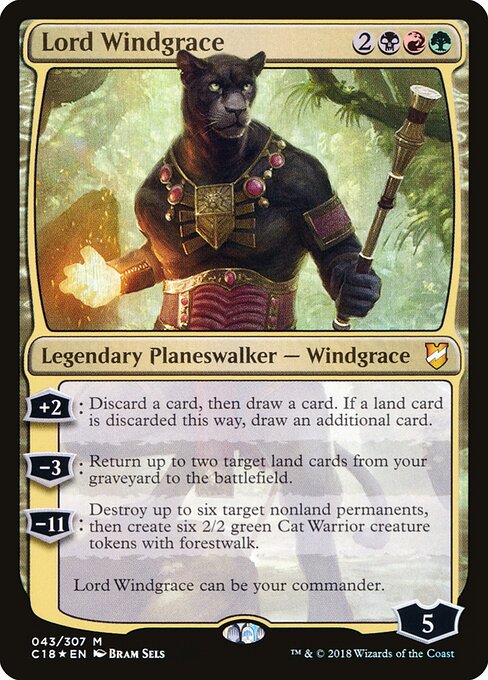
Lord Windgrace is one of the classic Jund lands commanders.
Discard lands for cards.
Bring lands back from the graveyard.
Destroy nonland permanents while creating Cat Warrior tokens.
A fetch land in a Windgrace deck isn’t just fixing your mana.
It’s something you can potentially use again.
And again.
Jund doesn’t like wasting resources.
Even lands.
Big Creatures
Green and red already give you Gruul’s collection of enormous creatures.
Black adds some very unpleasant threats of its own.
Jund can simply ramp into giant creatures and start attacking.
Dragons.
Demons.
Dinosaurs.
Hydras.
Whatever large horrible thing you feel like playing.
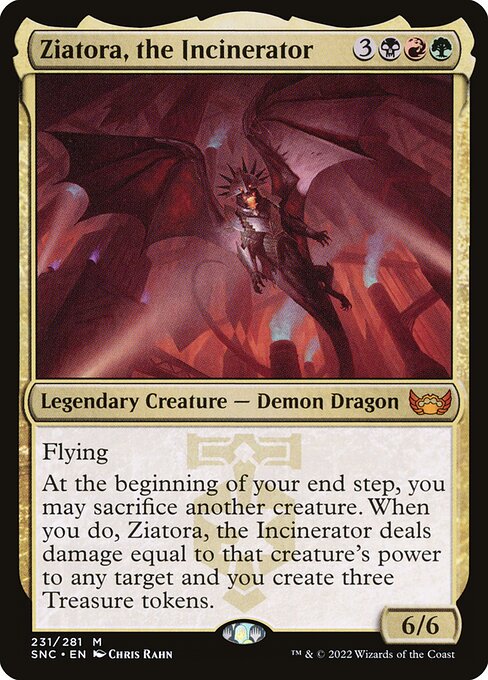
Ziatora, the Incinerator takes this one step further.
At the beginning of your end step, you can sacrifice another creature.
When you do, Ziatora deals damage equal to that creature’s power to any target and you create three Treasures.
So your giant creature attacks.
Then you throw it at somebody.
Then you get mana.
Very efficient.
Possibly not great for the creature.
Removal
Jund is excellent at removing permanents.
Black kills creatures and planeswalkers.
Red handles creatures and artifacts.
Green destroys artifacts and enchantments.
Together, they cover most permanent types extremely well.
You don’t have blue’s counterspells, so stopping things on the stack is more difficult.
But once something reaches the battlefield?
Jund can probably kill it.
And sometimes that’s enough.
Value
This deserves its own section because it’s probably the thing Jund does best.
Jund is extremely good at making sure its cards generate something before disappearing.
Creatures have ETB effects.
Creatures have death triggers.
Lands come back.
Tokens get sacrificed.
Treasures trigger things when they’re used.
Your graveyard contains cards you can still access.
Removing one permanent often doesn’t completely solve the problem.
There’s always another piece.
And another trigger.
And something coming back from the graveyard.
Jund doesn’t necessarily need one enormous engine.
Sometimes the entire deck is the engine.
What Is Jund Bad At?
The stack.
That’s probably the clearest weakness.
You don’t have blue.
If someone casts a dangerous spell, your options for stopping it before it resolves are much more limited.
You can remove combo pieces already on the battlefield.
You can attack hands with black discard.
You can kill players.
But you’re not generally sitting there with Counterspell.
This makes timing important.
If you know an opponent is assembling something dangerous, deal with the pieces before they get the opportunity to use them.
Jund can also struggle against graveyard hate.
If a large part of your value depends on bringing things back, a Rest in Peace can be extremely annoying.
Fortunately, you’re playing green.
Destroy the enchantment to stop it exiling more cards. That does not bring back cards it has already exiled.
Problem solved.
Usually.
How Does Jund Usually Win?
Jund has plenty of ways to finish games.
Combat is an obvious one.
You have green and red, so playing enormous creatures and attacking people works perfectly well.
Aristocrats decks can drain the entire table through sacrifice triggers.
Token decks can build huge armies.
Treasure decks can generate absurd amounts of mana.
Graveyard decks can keep recurring threats until opponents run out of answers.
Land strategies can turn normal land drops into win conditions.
And there are plenty of combos available.
Jund also has a very simple way of winning longer games:
Keep generating value until everyone else runs out of resources.
They destroy your creature.
You bring it back.
They wipe the board.
Your death triggers happen.
You rebuild.
Eventually somebody runs out of answers.
Hopefully it isn’t you.
What Does a Jund Deck Need?
Synergy.
Jund has access to a lot of individually powerful cards, but it becomes much more interesting when those cards interact.
Don’t just include sacrifice outlets.
Include things you actually want to sacrifice.
Don’t just include graveyard recursion.
Include ways to deliberately put useful cards into the graveyard.
Don’t just create Treasures.
Give yourself reasons to care when artifacts are sacrificed.
That’s when the deck starts feeling like Jund.
You also need card advantage.
Fortunately, black and green are both very good at it.
And sacrifice strategies often generate cards naturally.
Ramp shouldn’t be a major problem either.
You’re playing green.
Enjoy it.
The main thing to think about is interaction on the stack.
You can’t counter everything.
So identify the permanents and players that are likely to cause problems before it’s too late.
Is Jund for You?
I’d look at Jund if you enjoy getting value from absolutely everything.
Especially if you like:
- Sacrifice
- Graveyards
- Aristocrats
- Tokens
- Treasures
- Lands
- Ramp
- Big creatures
- Death triggers
- Recursion
- Removal
- Creature-based engines
- Turning one resource into another
- Watching your creature die and thinking, “Good.”
Jund can be aggressive.
It can be grindy.
It can be explosive.
It can play huge creatures or tiny sacrifice fodder.
What it generally doesn’t do is waste much.
If something is going to die anyway, you might as well get paid for it.
Building Your First Jund Commander Deck
Start by deciding what kind of resource engine you want.
Sacrifice?
Graveyards?
Lands?
Treasures?
Tokens?
Big creatures?
Then look for cards that connect those pieces together.
If creatures are going to die, reward yourself when they die.
If you’re creating Treasures, reward yourself when you sacrifice artifacts.
If you’re filling the graveyard, make sure you can use the cards you’ve put there.
If you’re playing lands from the graveyard, give yourself ways to sacrifice or discard them.
The best Jund decks often feel like everything is connected.
One action generates another resource.
That resource triggers something else.
That something else gives you another card.
And suddenly sacrificing a 1/1 token has somehow resulted in drawing two cards, creating a Treasure, dealing one damage and returning a creature from your graveyard.
Exactly as planned.
And don’t be afraid of losing your permanents.
They’re resources.
Use them.
Because in Jund, dying isn’t necessarily the end of a card. Sometimes it’s just the part where the value starts.
Ready to test your Jund deck?
Analyze your list to check whether your sacrifice outlets, resources and payoffs work together and give your engine a clear way to win.