
Sultai Commander Guide: Graveyards, Ramp and Having More Resources Than Everyone Else
By MTG Master EditorialPublished Updated 10 min read
Sultai is black, green and blue.
Which is already slightly unfair.
Green gives you ramp, creatures and lands.
Blue gives you card draw, counterspells and selection.
Black gives you tutors, removal and graveyard recursion.
So you have mana.
You have cards.
You have interaction.
And the cards you’ve already used aren’t necessarily gone because your graveyard is probably another resource.
This is how Sultai games tend to start looking suspicious.
“How many cards do you have?”
“Eight.”
“And how many lands?”
“Fourteen.”
“And why are you looking through your graveyard?”
“No reason.”
How Does Sultai Play?
Sultai is extremely good at accumulating resources.
Cards in hand.
Lands.
Creatures.
Cards in the graveyard.
Mana.
Sometimes cards in exile too, depending on the deck.
The important part is that Sultai rarely wants to waste anything.
A creature can enter and generate value.
Then die and generate more value.
Then sit in the graveyard until you decide to use it again.
A land can ramp you.
Trigger Landfall.
Get sacrificed.
Come back.
Trigger Landfall again.
Meanwhile you’re drawing cards.
And probably holding a counterspell.
Sultai can play very slowly and grind everyone out.
Or it can assemble a powerful engine and suddenly become explosive.
Or it can combo.
Very easily.
Sometimes accidentally.
What Is Sultai Good At?
Graveyards
Let’s start with the obvious one.
Sultai is one of the best graveyard color combinations in Commander.
Black and green already make Golgari excellent at recursion.
Blue adds self-mill, card selection and even more ways to put useful cards into the graveyard.
That means Sultai can deliberately fill the graveyard and then treat it like another collection of available resources.
Creatures.
Lands.
Instants.
Sorceries.
Sometimes almost anything.
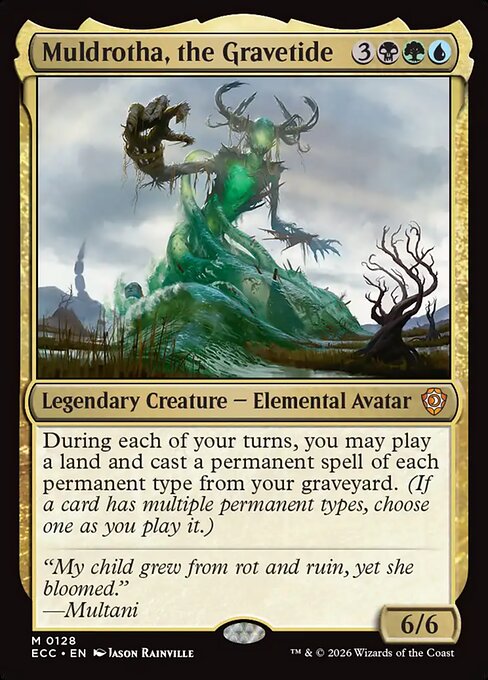
Muldrotha, the Gravetide is probably the clearest example.
During each of your turns, Muldrotha lets you play one land and cast one permanent spell of each permanent type from your graveyard. You still pay costs, follow normal timing rules and obey your land-play limit. For a card with multiple permanent types, choose which type’s permission you use.
Creature.
Land.
Artifact.
Enchantment.
Planeswalker.
Battle.
Your graveyard stops looking particularly dead.
Destroying a Muldrotha player’s permanent can occasionally feel like politely putting it somewhere they can use it later.
Self-Mill
If the graveyard is useful, you need ways to fill it.
Sultai is excellent at self-mill.
Mill yourself.
Surveil.
Loot.
Discard.
Dredge.
Tutor cards directly into the graveyard.
A normal deck might look at ten cards in the graveyard and think something has gone wrong.
A Sultai deck looks at ten cards in the graveyard and thinks:
“We’re getting started.”
The important part is making sure those cards actually do something there.
Milling yourself just for the sake of having a large graveyard isn’t particularly useful.
Unless your commander specifically disagrees.
Ramp
You’re playing green.
So yes, you have ramp.
A lot of it.
Land ramp.
Mana creatures.
Creature-based ramp.
Land recursion.
Extra land drops.
Sultai can generate enormous amounts of mana surprisingly quickly.
And unlike some green decks, it also has blue and black to make sure it keeps drawing useful things to spend that mana on.
That’s the dangerous part.
Having fifteen lands is good.
Having fifteen lands and eight cards in hand is considerably better.
Card Draw
Blue.
Black.
Green.
All three colors are good at generating cards in different ways.
Blue simply draws.
Black trades life for cards.
Green rewards creatures, power and permanents.
Sultai can combine all of them.
This makes running out of cards surprisingly difficult if the deck is built properly.
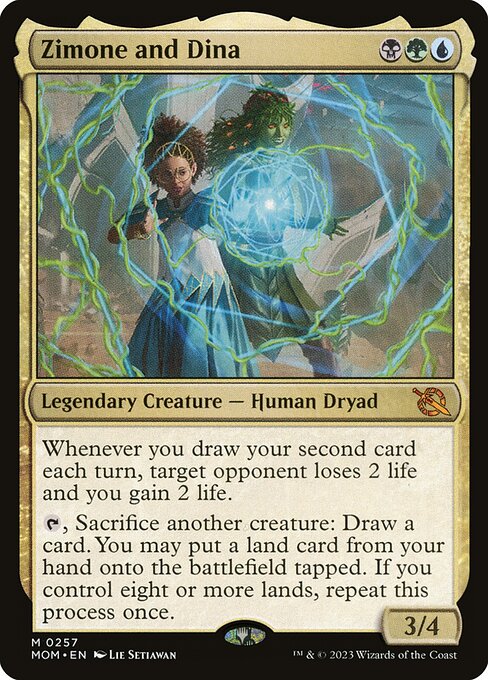
Zimone and Dina is a good example of how Sultai turns different resources into each other.
You can tap Zimone and Dina and sacrifice another creature to draw a card, then optionally put a land from your hand onto the battlefield tapped. If you control eight or more lands, repeat the draw-and-land process once without sacrificing again. Whenever you draw your second card each turn, one target opponent loses 2 life and you gain 2 life.
Creatures become cards.
Cards become lands.
Lands become more resources.
Sultai approves.
Lands
Green already makes land strategies powerful.
Black adds ways to sacrifice and recur lands.
Blue adds card selection and Landfall-style value engines.
Sultai can build very strong decks around lands.
Play additional lands.
Return lands from the graveyard.
Sacrifice lands.
Trigger Landfall.
Use fetch lands repeatedly.
Turn lands into creatures.
Turn lands into cards.
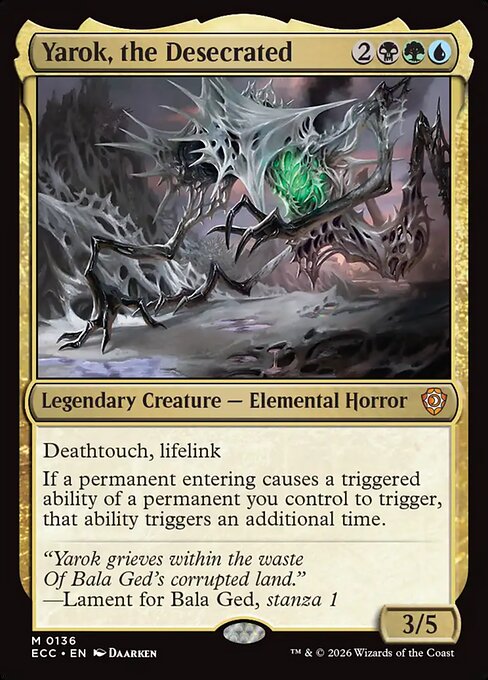
Yarok, the Desecrated adds one additional trigger when a permanent entering the battlefield causes an ability of a permanent you control to trigger. It does not duplicate opponents’ abilities or replacement effects such as entering with counters.
Play a land.
Landfall triggers twice.
Play a creature.
Its ETB triggered ability triggers twice.
Play another permanent.
More triggers.
Yarok isn’t exclusively a land commander, but lands are one of the easiest ways to make things get ridiculous.
Recursion
Sultai doesn’t particularly enjoy losing resources permanently.
Creature died?
Bring it back.
Land in the graveyard?
Play it again.
Important spell?
There are ways to recover that too.
This makes Sultai very resilient in longer games.
Removing one important permanent may not be enough.
You might need to exile it.
And even then the Sultai player is probably checking whether there’s some strange card that gets it back anyway.
Sacrifice
Black and green already provide excellent sacrifice strategies.
Blue adds card draw and some unusual sacrifice payoffs.
Sultai can sacrifice creatures for value, recur them and repeat the process.
It can also sacrifice lands, artifacts and other permanents depending on the deck.
The key difference from something like Jund is that Sultai often feels less interested in explosive death triggers and more interested in turning sacrifice into long-term resource advantage.
Although it can certainly do both.
+1/+1 Counters
Green and blue already make Simic excellent with counters.
Black adds sacrifice and death-related payoffs.
That creates some interesting strategies where creatures grow, counters move around and eventually those creatures become resources themselves.
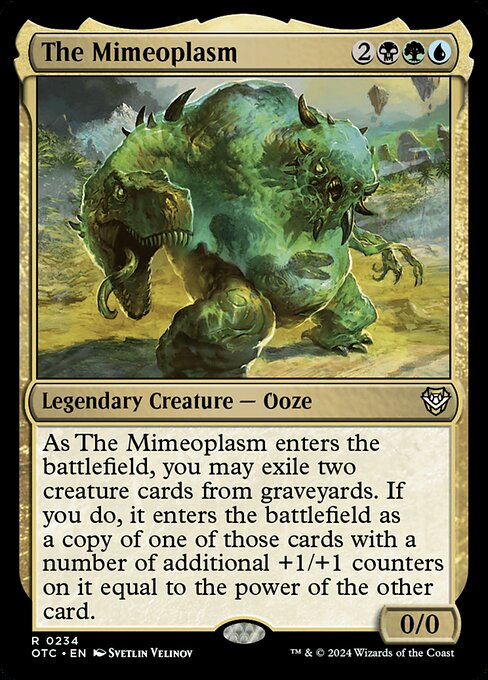
The Mimeoplasm is one of the classic Sultai commanders and shows how strange this can get.
As it enters, you may exile two creature cards from graveyards. If you do, it enters as a copy of one of those cards with additional +1/+1 counters equal to the power of the other card.
Your graveyard.
An opponent’s graveyard.
Doesn’t really matter.
Apparently dead creatures are just construction materials now.
Interaction
Sultai has excellent interaction.
Black handles creatures and planeswalkers.
Green handles artifacts and enchantments.
Blue gives you counterspells.
Together, the colors can answer almost anything.
This is one of Sultai’s biggest advantages.
You aren’t forced to let many types of threats resolve and hope you can deal with them later.
You can counter them.
Destroy them.
Exile them.
Bounce them.
And then continue building your own engine.
Very considerate.
Tutors
Black and green provide excellent tutors.
Blue adds card selection and ways to dig through the library.
That makes Sultai extremely consistent.
Need a creature?
Find it.
Need a land?
Find it.
Need an answer?
Probably find that too.
Need one specific card that makes the entire deck suddenly become much more dangerous?
Yes.
That’s also an option.
This is one reason Sultai can become very strong at higher power levels.
The deck doesn’t just contain powerful engines.
It can reliably find them.
What Is Sultai Bad At?
Direct damage isn’t really Sultai’s thing.
You don’t have red.
If you want to deal twenty damage directly to someone’s face, you’ll probably need to find a more complicated way to do it.
Fortunately, Commander players are very good at making simple things complicated.
Sultai can also become too focused on generating value.
This is a recurring problem with these colors.
Ramp.
Draw cards.
Mill yourself.
Return something.
Draw more cards.
Play another land.
Counter something.
Return another permanent.
Excellent.
Are we winning?
Not necessarily.
You need a way to convert all those resources into an actual victory.
Graveyard hate can also be brutal.
If your deck treats the graveyard like a second hand, Rest in Peace exiles that hand and sends future cards headed for the graveyard to exile instead. Removing it does not return cards already exiled.
You have answers.
Use them.
How Does Sultai Usually Win?
Sultai can win in a lot of ways.
Large creatures.
Graveyard recursion.
Landfall.
Token armies.
+1/+1 counters.
Reanimator threats.
Drain effects.
But combo is especially common.
Sultai has mana.
Card draw.
Tutors.
Recursion.
Counterspells.
That’s a fairly good collection of tools for assembling and protecting combos.
Infinite mana is common.
Graveyard loops are common.
Creature combos are common.
Sometimes you start with an innocent value engine and discover that two additional cards make it infinite.
Very unfortunate.
Some Sultai decks don’t need a specific combo.
They simply generate so much value that everyone else eventually runs out of resources.
Then whatever creatures happen to be on the battlefield finish the job.
What Does a Sultai Deck Need?
First, decide how important the graveyard is.
If it’s central to the strategy, include deliberate ways to fill it.
Self-mill.
Discard.
Surveil.
Sacrifice.
Don’t simply hope things eventually die.
Second, include enough ways to use the graveyard.
Putting thirty cards there looks impressive.
It isn’t useful if none of them do anything.
Third, think about how the deck wins.
This is important with Sultai.
It’s extremely easy to build an engine that generates absurd amounts of value without actually ending the game.
And finally, don’t forget interaction just because your own engine is powerful.
You’re playing blue, black and green.
You have access to excellent answers.
Use them.
Is Sultai for You?
I’d look at Sultai if you enjoy having resources everywhere.
Especially if you like:
- Graveyards
- Self-mill
- Recursion
- Ramp
- Card draw
- Lands
- Sacrifice
- +1/+1 counters
- Reanimator
- Tutors
- Counterspells
- Value engines
- Combo
- Long games
- Looking at your graveyard before looking at your hand
Sultai is very good at making it feel like nothing is truly gone.
Cards in hand are resources.
Cards on the battlefield are resources.
Cards in the graveyard are resources.
Lands are resources.
Life can be a resource too.
At some point your opponents may reasonably ask what exactly they are supposed to remove.
Good question.
Building Your First Sultai Commander Deck
Start with the engine.
What resource are you trying to exploit?
The graveyard?
Lands?
Creatures?
Counters?
Sacrifice?
Then make sure the pieces actually connect.
If you’re milling yourself, include recursion.
If you’re sacrificing creatures, include reasons for them to die.
If you’re playing lands from the graveyard, include ways to put them there.
If you’re generating huge amounts of mana, include something worth spending it on.
Add interaction.
You have some of the best colors in Magic for it.
Add card advantage.
This really shouldn’t be difficult.
Then add a clear way to finish the game.
Because Sultai can generate an almost ridiculous amount of value.
The trick isn’t getting more resources. The trick is remembering that eventually you’re supposed to use them to win.
Ready to test your Sultai deck?
Analyze your list to check whether your ramp, graveyard tools and interaction support an engine that can turn all those resources into a win.