
Temur Commander Guide: Big Creatures, Big Mana and Doing Ridiculous Things
By MTG Master EditorialPublished Updated 10 min read
Temur is green, blue and red.
Green gives you ramp and enormous creatures.
Blue gives you card draw, counterspells and ways to manipulate everything.
Red gives you haste, damage and the ability to turn a perfectly reasonable board state into complete nonsense.
Together, they produce a color combination that is very good at doing big things.
Generate a lot of mana.
Play something enormous.
Draw cards because you played something enormous.
Copy it.
Give it haste.
Attack.
Maybe take another combat.
Maybe copy the trigger too.
Temur isn’t particularly interested in subtlety.
Although the blue player will insist there was a lot of careful planning involved.
How Does Temur Play?
Temur usually wants to generate resources and then use them explosively.
Ramp early.
Develop an engine.
Draw cards.
Then start doing things that require everyone else to read your cards.
Temur can play huge creatures.
It can play Spellslinger.
It can build around Landfall.
It can copy spells and permanents.
It can play Dragons.
Elementals.
Sea monsters.
Big X spells.
Extra combats.
Combo.
Sometimes all of those things appear in the same deck.
The common thread is usually scale.
Temur doesn’t just want mana.
It wants a lot of mana.
It doesn’t just want a creature.
It wants a creature that makes somebody say:
“Wait, how big is that?”
What Is Temur Good At?
Ramp
Let’s start with green.
Temur is excellent at generating mana.
Land ramp.
Mana creatures.
Extra land drops.
Treasure.
Cost reduction.
Untapping lands.
And once blue and red get involved, there are plenty of stranger ways to generate even more.
The important part is what Temur does with that mana.
Because this isn’t usually a deck ramping from four mana to six so it can cast a slightly better creature.
Temur wants eight.
Ten.
Fifteen.
Twenty.
Now we’re getting somewhere.
Big Creatures
Green provides some of the largest creatures in Magic.
Red isn’t exactly shy about big Dragons either.
Blue contributes Krakens, Leviathans, Serpents and other completely reasonable sea creatures that cost approximately your entire turn.
Temur loves them.
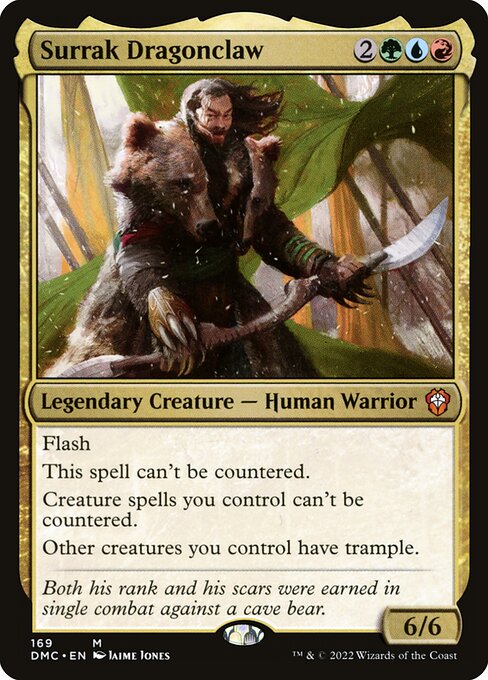
Surrak Dragonclaw represents the straightforward side of this strategy very well.
Your creature spells can’t be countered.
Your other creatures get trample.
Surrak himself has flash and cannot be countered as a spell.
The message is fairly clear.
We’re playing creatures.
They’re large.
Please move.
Power Matters
Temur frequently rewards you simply for controlling creatures with high power.
Draw cards based on power.
Deal damage based on power.
Create tokens based on power.
Fight things.
Give creatures trample.
Copy large creatures.
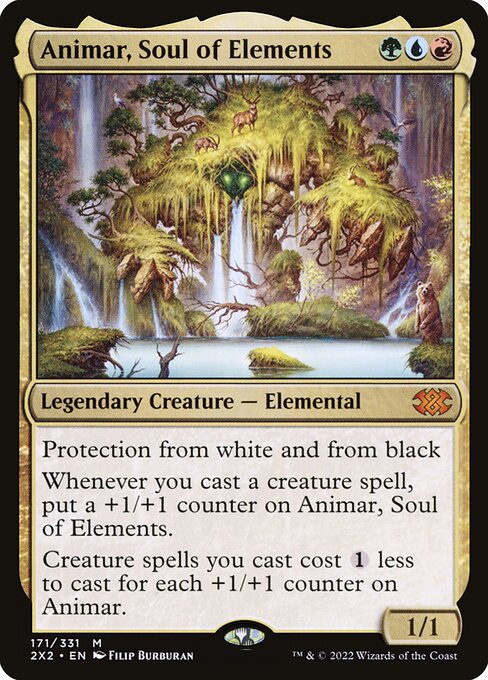
Animar, Soul of Elements takes creature-heavy Temur in a different direction.
Whenever you cast a creature spell, Animar’s triggered ability puts a +1/+1 counter on him.
Each +1/+1 counter on Animar reduces the generic cost of creature spells you cast by one mana. This does not reduce colored mana costs.
Play creatures.
Make Animar bigger.
Make creatures cheaper.
Play more creatures.
Eventually some of them cost almost nothing.
This is generally considered a good moment to become concerned.
Card Draw
Green and blue together already provide absurd amounts of card advantage.
Blue draws cards directly.
Green rewards you for playing creatures, controlling large creatures or doing things with lands.
Red adds impulse draw and other ways to keep cards moving.
Temur can have the classic green problem of generating enormous amounts of mana.
Except it doesn’t really have the second part of that problem, because blue makes sure you still have cards.
Ten mana.
Nine cards in hand.
Seems fine.
Landfall
Green and blue are already excellent Landfall colors.
Red adds some of the most aggressive Landfall payoffs.
Temur can play additional lands, search for lands, return lands, copy triggers and turn those land drops into creatures, cards or damage.
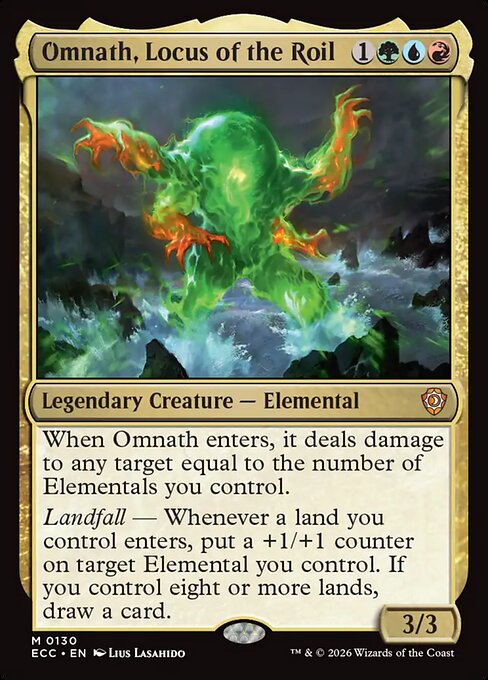
Omnath, Locus of the Roil is a good example. When it enters, it deals damage to any target equal to the number of Elementals you control. Its landfall trigger puts a +1/+1 counter on an Elemental you control, then draws a card if you control eight or more lands.
Elementals matter.
Lands matter.
Counters matter.
Card draw matters.
It’s a very Temur collection of things.
Play lands.
Get value.
Play Elementals.
Get value.
Eventually the deck is doing several things every time a land enters.
Which is slightly inconvenient considering you probably have several land drops per turn.
Copying Things
Blue and red love copying things.
Spells.
Creatures.
Triggered abilities.
Artifacts.
Tokens.
Green provides excellent things worth copying.
That’s the important part.
Copying a small value creature is nice.
Copying a giant creature with an absurd ETB is better.
Copying the ETB as well?
Now we’re playing Temur.
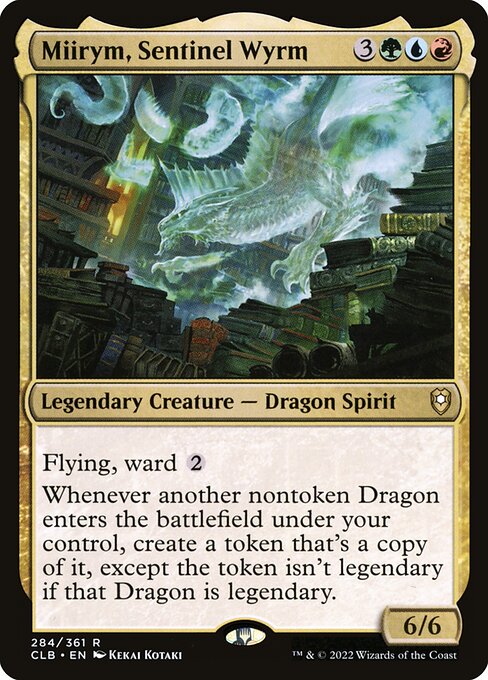
Miirym, Sentinel Wyrm is one of the clearest examples.
Have another nontoken Dragon enter under your control.
Miirym creates a token copy of that Dragon, except the token is not legendary. The token enters but is not cast, so it does not trigger Animar.
If the original Dragon has an ETB triggered ability, the copy can trigger it too.
If you have something that copies tokens or triggers…
Well.
At some point there are simply too many Dragons.
Actually, no.
Apparently that number doesn’t exist.
Spellslinger
Temur doesn’t have to be creature-focused.
Blue and red already make Izzet excellent at Spellslinger.
Green adds ramp and some unusual spell payoffs.
That means Temur can cast enormous X spells, copy spells, generate mana and chain everything together.
Some Temur Spellslinger decks feel like Izzet decks that suddenly discovered they can have fifteen mana.
This turns out to be useful.
Who knew?
Haste
One problem with playing enormous creatures is that everybody gets an entire turn cycle to deal with them.
Red has a solution.
No.
Attack now.
Haste is especially dangerous in Temur because the creatures you’re giving haste to aren’t always small.
You spend eight mana on something horrible.
It enters.
It triggers something.
You draw cards.
Then it immediately attacks somebody.
Much better.
Combat
Temur is very good at combat.
Green provides size and trample.
Red provides haste, double strike and extra combats.
Blue provides evasion and ways to protect your creatures.
This means Temur can build boards that become lethal surprisingly quickly.
Especially when power-doubling effects or extra combat phases get involved.
A creature doesn’t need to attack many times if it’s a 32/32 with trample.
Once may be enough.
Elementals
Temur is also a natural home for Elemental tribal strategies.
All three colors have excellent Elementals.
And many of them care about lands, +1/+1 counters, entering the battlefield or raw power.
This gives Temur Elemental decks a nice mixture of ramp, Landfall and creature synergy.
You play lands to help cast creatures.
Those lands trigger your creatures.
Those creatures help you play more things.
And eventually the battlefield becomes a weather event.
Combo
Temur is extremely capable of combo.
You have green mana.
Blue card draw.
Red and blue copying effects.
Untap effects.
Creature tutors.
Counterspells.
Large mana engines.
That’s a lot of useful ingredients.
Infinite mana is especially natural.
Once you have infinite mana in green and blue, finding something ridiculous to do with it isn’t usually the difficult part.
Temur can also create loops involving creatures, ETBs, spell copies or untapping permanents.
Sometimes the deck starts as “big creatures”.
Then somebody notices two cards interact strangely.
Then a third card gets added.
Congratulations.
You’re a combo deck now.
What Is Temur Bad At?
Creature removal can be awkward.
Red can burn creatures.
Green can fight them.
Blue can bounce them.
But you don’t have the straightforward creature destruction of black or the exile removal of white.
Large or indestructible creatures can sometimes require more creative solutions.
Board wipes are another weakness.
Temur doesn’t have the same selection of efficient creature wipes available to white and black.
You can still reset boards.
You just have fewer easy options.
Temur can also become greedy.
Very greedy.
One more seven-mana creature.
One more enormous spell.
One more engine.
One more card that does something ridiculous once you have twelve mana.
Then you draw your opening hand and discover it contains four cards costing six or more.
Excellent.
See you on turn five.
Maybe.
How Does Temur Usually Win?
Combat is probably the most natural answer.
Big creatures.
Trample.
Haste.
Dragons.
Elementals.
Power-doubling effects.
Extra combats.
Temur can kill players extremely quickly once its engine is running.
It can also win with huge spells.
Generate absurd amounts of mana and cast something that ends the game.
Copying those spells tends to help.
Combo is another common route.
Infinite mana.
Infinite ETBs.
Infinite combat phases.
Infinite tokens.
Repeated spell loops.
Plenty of options.
And sometimes you simply play one enormous creature after another until everyone runs out of removal.
Not everything needs to be complicated.
What Does a Temur Deck Need?
First, enough ramp.
If your deck contains lots of expensive cards, you need to reach them.
Actually count your ramp.
Don’t just look at the green color identity and assume everything will somehow work.
Second, card draw.
Fortunately, this should be easy.
Third, interaction.
This is where Temur decks sometimes become too greedy.
Yes, your twelve-mana creature is fantastic.
No, it does not stop the other player from winning on turn six.
Play some interaction.
And finally, pay attention to the mana curve.
Temur makes expensive cards very tempting.
You still need to play Magic before turn five.
Probably.
Is Temur for You?
I’d look at Temur if you like doing big, explosive things.
Especially if you like:
- Ramp
- Big creatures
- Card draw
- Landfall
- Dragons
- Elementals
- +1/+1 counters
- Copying spells
- Copying creatures
- Spellslinger
- Haste
- Extra combats
- Huge X spells
- Combo
- Generating far more mana than any reasonable person needs
- Asking “how much mana do I have?” and needing a calculator
Temur is great if you enjoy decks that start by building resources and eventually explode.
The first few turns can look harmless.
A land.
A mana creature.
Some ramp.
Another land.
Then suddenly you have twelve mana, six cards in hand and two enormous creatures with haste.
Things escalated quickly.
Building Your First Temur Commander Deck
Start by deciding what you’re ramping into.
Big creatures?
Dragons?
Landfall?
Huge spells?
A combo?
Don’t add ramp simply because you’re playing green.
Give that mana a purpose.
Then add enough card draw to keep the engine moving.
Blue and green make this easy.
Add interaction.
Counterspells.
Artifact and enchantment removal.
Creature interaction.
Don’t make the classic Temur mistake of assuming your giant creatures will solve every problem.
Sometimes they will.
Not always.
Keep an eye on the mana curve.
A deck full of spectacular eight-mana cards looks fantastic until you actually shuffle it.
And finally, give all that mana and card advantage a clear way to finish the game.
Because generating twenty mana is impressive.
Drawing ten cards is impressive.
Having three enormous creatures is impressive.
But attacking with those enormous creatures while somebody is still counting how much mana you have is much better.
Ready to test your Temur deck?
Analyze your list to check whether your ramp, curve, card draw and interaction let you reach the big threats and turn them into a clear way to win.