
Jeskai Commander Guide: Spells, Prowess and Turning One Card Into Five Things
By MTG Master EditorialPublished Updated 9 min read
Jeskai is blue, red and white.
Blue gives you card draw, counterspells and manipulation.
Red gives you damage, explosive spells and aggressive creatures.
White gives you protection, removal, tokens and ways to keep everything under control.
Put them together and you get one of the best color combinations in Commander for players who enjoy casting spells.
Lots of spells.
Preferably cheap ones.
Cast a cantrip.
Draw a card.
Trigger prowess.
Create a token.
Deal one damage.
Untap something.
Maybe copy the spell.
Draw another card.
You paid one mana.
Seems reasonable.
How Does Jeskai Play?
Jeskai often plays a very spell-focused game.
Instants.
Sorceries.
Noncreature spells.
Cantrips.
Artifacts.
Interaction.
The battlefield still matters, but many Jeskai decks care more about what you’re casting than simply how many creatures you control.
A single spell can trigger several permanents.
And because many Jeskai spells are cheap, one turn can quickly become five or six spells.
Or ten.
Or considerably more if something has gone terribly right.
Jeskai can play aggressively with prowess creatures.
It can play control.
It can create token armies.
It can build artifact engines.
It can play Voltron.
It can combo.
And it can spend a surprisingly long time resolving triggers from a spell that originally cost one blue mana.
What Is Jeskai Good At?
Spellslinger
This is probably the first thing most people associate with Jeskai.
Cast instants and sorceries.
Get rewarded for casting instants and sorceries.
Then cast more.
Blue and red already make Izzet one of the best spellslinger combinations in Magic.
White adds protection, removal and additional payoffs.
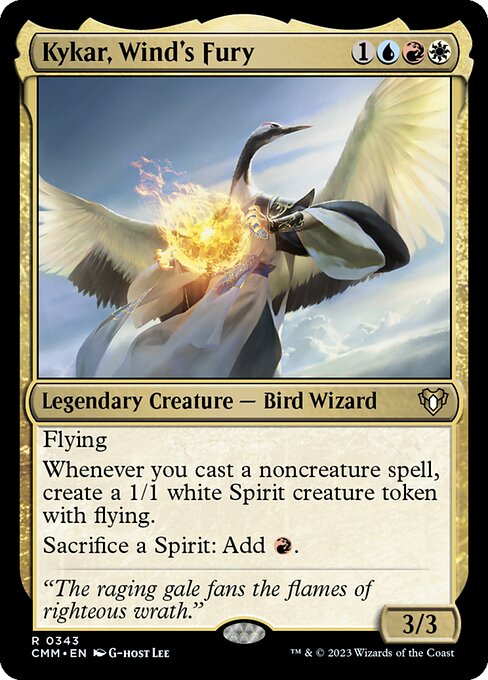
Kykar, Wind’s Fury is a great example.
Whenever you cast a noncreature spell, you create a Spirit.
Those Spirits can attack.
They can block.
And you can sacrifice them for red mana.
So casting spells creates creatures.
Those creatures create mana.
That mana lets you cast more spells.
Which create more creatures.
You can probably see where this is going.
Prowess
Jeskai is the home of prowess.
Whenever you cast a noncreature spell, each instance of prowess gives that creature +1/+1 until end of turn.
Simple.
Except you probably aren’t casting one spell.
You’re casting several.
A 2/2 suddenly becomes a 7/7.
Another creature has double strike.
Something can’t be blocked.
You’ve drawn four cards.
And the opponent who said “no blocks” two minutes ago is reconsidering several life choices.
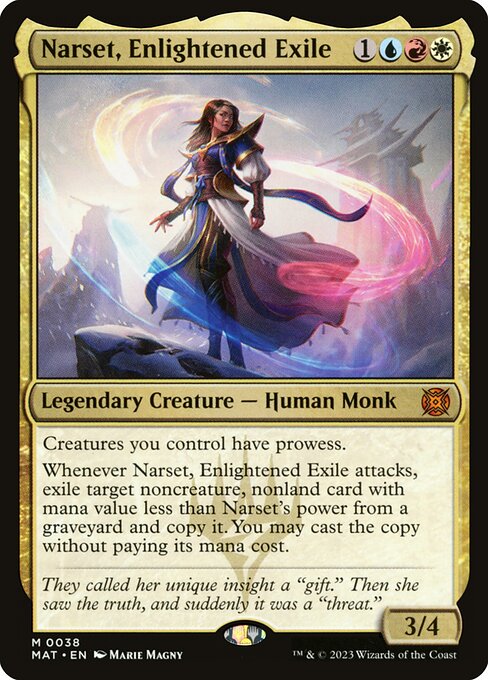
Narset, Enlightened Exile takes this idea even further.
She gives your creatures prowess. When she attacks, she exiles a target noncreature, nonland card from a graveyard with mana value less than her power, copies it, and lets you cast the copy without paying its mana cost.
Your graveyard.
An opponent’s graveyard.
Jeskai isn’t particularly fussy.
If there’s a useful spell available, somebody should probably cast it.
Cantrips
One-mana spells that replace themselves are excellent in Jeskai.
Draw a card.
Scry.
Target something.
Give protection.
Change combat.
The effect itself may be small.
The triggers aren’t.
If one cheap spell triggers prowess on three creatures, creates a token and triggers another permanent, that spell has done considerably more than the text printed on it suggests.
This is why Jeskai decks can sometimes look like they’re doing almost nothing.
Then somebody casts Ponder and the entire board starts moving.
Tokens
White and red are excellent token colors.
Blue adds plenty of spell-based token generation.
Jeskai can create armies simply by doing what the deck already wanted to do.
Cast spells.
Create Monks.
Create Spirits.
Create Soldiers.
Create Thopters.
Create Treasures.
Then cast more spells.
The interesting part is that the tokens don’t always need to be the main strategy.
Sometimes they’re simply a side effect of your engine.
A fairly dangerous side effect when there are suddenly twelve of them.
Control
Jeskai has excellent interaction.
Blue provides counterspells.
White provides some of the best removal and board wipes in Commander.
Red handles creatures and artifacts and can provide direct damage.
Together, Jeskai can answer a very wide range of threats.
That makes it a natural home for control.
But Jeskai control doesn’t necessarily need to sit there doing nothing except countering spells.
You can interact while building tokens.
Or triggering prowess.
Or developing an artifact engine.
Or slowly setting up a combo.
You’re saying no.
But productively.
Artifacts
Blue, red and white all have strong artifact synergies.
That makes artifacts another major Jeskai strategy.
Mana rocks.
Equipment.
Thopters.
Treasures.
Clues.
Artifact creatures.
Cards that care about casting artifacts.
Cards that care about sacrificing artifacts.
Cards that bring artifacts back.
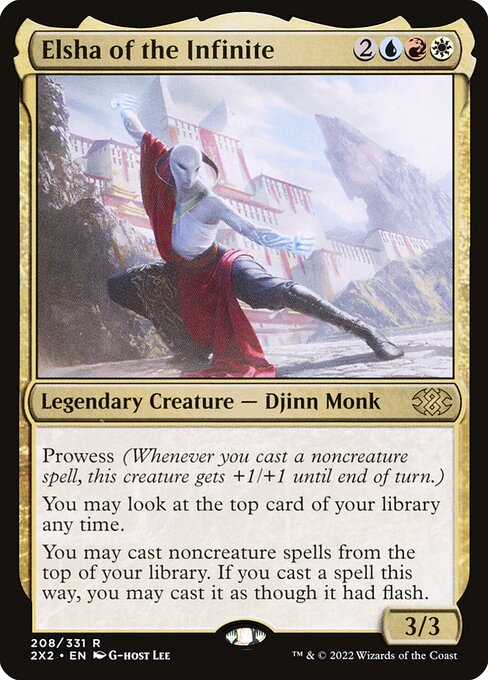
Elsha of the Infinite is an excellent example of the more engine-focused side of Jeskai.
You can look at the top card of your library at any time and cast noncreature spells from there as though they had flash. You still pay their costs; Elsha does not let you play lands from the top.
Now the top of your library is basically another card in your hand.
Until you cast it.
Then there’s another one.
This can become dangerous surprisingly quickly.
Voltron
Jeskai can also build excellent Voltron decks.
White provides Equipment and protection.
Red gives aggressive combat tools and double strike.
Blue adds evasion, card draw and protection of its own.
And prowess means your commander can become much larger simply because you’re casting spells.
You don’t necessarily need ten creatures.
Sometimes one commander, three spells and an opponent who forgot commander damage exists are enough.
Copying Spells
Red and blue are excellent at copying spells.
White adds more ways to protect the engine while you’re doing it.
Copy a draw spell.
Copy removal.
Copy an extra turn spell if your group still invites you back after that.
Copy something enormous that an opponent cast.
One spell becomes two.
Then maybe three.
And because copied spells can interact with other parts of your deck, things can get complicated very quickly. A spell copied directly onto the stack is not cast, so it does not trigger prowess or Kykar. Casting a copy of a card, as Narset allows, does.
In a good way.
For you.
Combat Tricks
Jeskai is also one of the few Commander color combinations where combat tricks can genuinely become part of the engine.
Protection spells.
Pump spells.
Double strike.
Evasion.
Untap effects.
Cheap spells that replace themselves.
When your creatures have prowess or other spell triggers, a combat trick doesn’t simply change combat.
It may also trigger half your battlefield.
That makes blocking a Jeskai creature much more dangerous than it initially appears.
You know they have cards in hand.
You know they have mana open.
You know something stupid is probably about to happen.
Good luck.
What Is Jeskai Bad At?
Ramp is one of the obvious limitations.
You don’t have green.
That means you’re usually relying more heavily on artifacts, Treasures, cost reduction and other forms of acceleration.
This isn’t a disaster.
Commander has plenty of mana rocks.
But you don’t have the effortless land ramp available to green decks.
Jeskai can also become dependent on having the right balance between spells and payoffs.
A hand full of cantrips with nothing that rewards you for casting them can feel underwhelming.
A battlefield full of prowess creatures with no spells in hand is also not ideal.
You need both sides of the engine.
And like Izzet, Jeskai can occasionally perform an impressive amount of activity without actually accomplishing very much.
Cast seven spells.
Draw six cards.
Create four tokens.
Trigger twelve abilities.
Spend five minutes resolving everything.
Pass.
That was exciting.
Did anyone die?
No.
Maybe work on that.
How Does Jeskai Usually Win?
Combat is more common than it might initially appear.
Prowess creatures can become enormous.
Token armies can grow very quickly.
Voltron commanders can kill through commander damage.
Double strike can make relatively small creatures suddenly lethal.
Jeskai can also win through direct damage.
Repeated spell triggers can slowly burn the table.
Or not so slowly.
Combo is another major route.
Jeskai has access to excellent card draw, interaction and plenty of combo pieces.
Artifact combos.
Spell loops.
Infinite mana.
Infinite tokens.
Repeated spellcasting.
There are plenty of possibilities.
And some Jeskai decks simply control the game until they have enough resources to safely deploy their win condition.
The important part is actually having one.
What Does a Jeskai Deck Need?
First, the correct balance between payoffs and spells.
If your commander rewards noncreature spells, you need enough noncreature spells.
Seems obvious.
It’s surprisingly easy to get wrong.
Second, cheap interaction.
One of Jeskai’s biggest strengths is being able to interact while still advancing its own game.
Use that.
Third, card draw.
Again, you’re playing blue.
There really isn’t much excuse.
And finally, pay attention to your mana curve.
Spellslinger decks work because they can cast several spells in the same turn.
If every spell costs four mana, you’re not really doing that.
Cheap spells matter.
Especially ones that replace themselves.
Is Jeskai for You?
I’d look at Jeskai if you enjoy casting lots of spells and making those spells do more than what’s printed on the card.
Especially if you like:
- Spellslinger
- Prowess
- Cantrips
- Tokens
- Control
- Artifacts
- Voltron
- Copying spells
- Combat tricks
- Counterspells
- Playing at instant speed
- Explosive turns
- Having six triggers from a spell that cost one mana
- Saying “hold on, I have another trigger”
Jeskai rewards sequencing.
The order in which you cast your spells matters.
The moment you use your interaction matters.
Even which spell you cast first can completely change the turn.
And when everything lines up, a handful of apparently harmless cards can become a ridiculous turn.
Building Your First Jeskai Commander Deck
Start by deciding what casting spells is supposed to accomplish.
Are spells making creatures bigger?
Creating tokens?
Dealing damage?
Generating mana?
Drawing more cards?
Feeding an artifact engine?
Once you know that, choose your payoffs.
Then add the spells that make those payoffs work.
Keep many of them cheap.
Cantrips are especially useful because they trigger your engine without costing you a card.
Add interaction.
You have access to excellent counterspells and removal.
Add mana rocks or other acceleration.
You’re going to notice the absence of green eventually.
And then make sure all those spells are actually leading somewhere.
Because casting ten spells in one turn feels fantastic.
Casting ten spells and then killing someone feels considerably better.
Ready to test your Jeskai deck?
Analyze your list to check whether your cheap spells, payoffs, mana and interaction work together and give all those triggers a clear way to win.